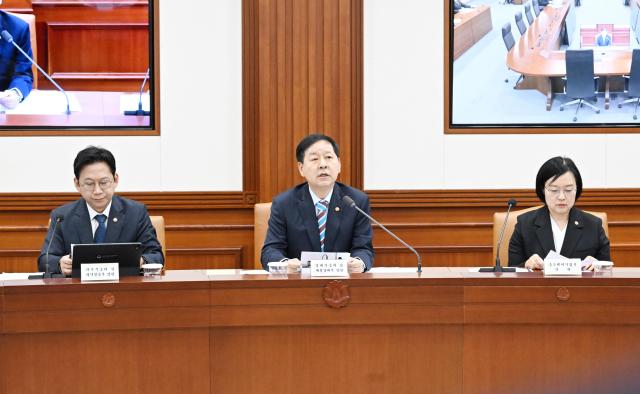
SEOUL, April 9 (AJP) —South Korea will reimpose a cap on retail fuel prices to contain a renewed surge in gasoline costs triggered by the prolonged blockade of the Strait of Hormuz, while signaling potential upside for the battered won through parallel market-stabilization measures.
Deputy Prime Minister and Finance Minister Koo Yun-cheol said Thursday the government will unveil a third round of emergency price ceilings on petroleum products at 7 p.m., with the new caps to take effect from midnight Friday. Final levels will be set after inter-agency consultations, factoring in global crude trends and the burden on households.
At an emergency price meeting, Koo stressed that earlier caps had functioned as an effective “safety net,” cushioning logistics costs and easing pressure on consumers, and pledged to act decisively against renewed energy-driven inflation.
On financial markets, he said volatility is showing early signs of easing, pointing to foreign inflows into Korean government bonds following the country’s inclusion in the World Government Bond Index (WGBI). Offshore investors have bought a net 6.8 trillion won ($4.6 billion) in sovereign debt, helping stabilize sentiment.
Koo also highlighted structural support for the currency. More than 114,000 accounts have been opened under the Reshoring Investment Account (RIA) scheme, which offers tax incentives for repatriated funds, while the National Pension Service’s new investment framework — aimed at recalibrating currency hedging and offshore allocation — is expected to further ease pressure on the foreign exchange market.
The government also flagged emerging inflation in consumer electronics, as a spike in memory chip prices — driven by the expansion of high-bandwidth memory (HBM) production — has lifted general DRAM costs. Prices of personal computers and laptops have risen by more than 10 percent over the past seven months.
To cushion the impact, authorities plan to recycle used PCs from central government agencies for vulnerable groups and expand financial support for low-income students purchasing new devices, backed by 4.8 trillion won in additional local education grants from the supplementary budget.
Despite elevated geopolitical risks, officials assessed that core service prices — including courier and moving costs — as well as daily necessities remain broadly stable. To guard against market distortion, the government will maintain strict bans on hoarding of petroleum products and urea solution, with contingency measures ready should price volatility intensify.
Copyright ⓒ Aju Press All rights reserved.