
Celltrion expands Omliclo prescriptions across Europe

Celltrion said April 13 that Omliclo (omalizumab), used to treat chronic idiopathic urticaria and allergic asthma, is gaining prescriptions across Europe and posting tender wins.
In Italy, Celltrion’s local unit won bids from 10 regional governments. Supply has begun in some areas, including Umbria, Trentino-Alto Adige and Tuscany, the company said.
In the United Kingdom, Celltrion said it won National Health Service tenders in all four administrative areas, including England, the largest omalizumab market. As of January, before the official tenders opened, Omliclo had already reached a double-digit market share, it said.
In Germany, Celltrion said Omliclo, launched in September last year, reached a double-digit share within one month and continues to grow. The German unit completed listing agreements with all public health insurers shortly after launch, it said.
In Northern Europe, Celltrion said results are becoming clearer. In Denmark, after winning a national tender, the company moved the launch up by four months through talks with the tendering body and secured exclusive supply status through September. Omliclo held a 98% share in Denmark as of January, based on IQVIA and market data, it said. In Finland, it posted a 73% share as of February, as switching from the original product accelerates in key Nordic markets.
In Spain, Celltrion said it was selected as the top-ranked supplier in tenders to supply all public medical institutions in Catalonia and the Basque Country.
Ha Tae-hoon, head of Celltrion’s Europe headquarters, said, “We will continue expanding our sales coverage so the results achieved in launch countries can spread across Europe.”
Daewoong Bio launches 5 mg Glivixa, completing full lineup

Daewoong Bio said April 13 it will launch a 5 mg low-dose version of Glivixa (memantine hydrochloride), a treatment for Alzheimer’s-type dementia. The addition completes the product’s dose lineup alongside 10 mg and 20 mg tablets.
The company said Glivixa posted a compound annual growth rate of 18% from 2021 to 2025. It ranks No. 2 among prescription memantine products by outpatient prescription sales, and No. 1 in the generic market excluding the original product, it said. Daewoong Bio said it plans to accelerate prescribing based on the full lineup and to maximize synergy with its central nervous system portfolio, including Gliatamin, Cerebrain and Beacept.
Memantine hydrochloride works by regulating excessive activity of glutamate, a neurotransmitter linked to Alzheimer’s-type dementia, helping prevent brain-cell damage and improve cognitive function, the company said. It added that early treatment can cause side effects such as dizziness, headache and drowsiness, requiring careful dose adjustment.
Memantine therapy typically starts at 5 mg and is increased gradually over three weeks to reduce the risk of adverse reactions, it said. Patients with moderate or worse renal impairment must reduce the dose to 10 mg per day, which has driven steady demand for low-dose products.
A Daewoong Bio official said the 5 mg product is expected to provide a safer option for patients starting treatment or those with moderate renal impairment, improving tolerability.
Yuyu Pharma pushes AI-based work innovation toward a smart factory

Yuyu Pharma said April 13 it is expanding AI-based work innovation beyond its factory, sharing use cases with staff in sales and marketing, research and development, and management support, and rolling out the enterprise AI solution WorksAI companywide.
The company said it formed a production AI task force in the second half of last year to support smart-factory operations, including process optimization. The team identified six improvement areas, including manual Excel work, document review and the risk of human error. It compared five paid AI tools, including ChatGPT and Claude, and began applying selected tools tailored to each factory team’s work, it said.
Yuyu Pharma said the effort produced practical tools, including production and quality data dashboards, precise comparisons of labeling materials and design drafts, searches and interpretation for GMP and regulatory documents, and equipment manual troubleshooting.
The company said frontline staff in production management, quality management and product technology built the tools using AI despite limited IT expertise, with the IT department stepping in only where technical support was needed, such as real-time connections to internal servers.
Yuyu Pharma said the tools are now being used to optimize processes, reduce bottlenecks by shifting repetitive tasks to AI, and lower risk factors by detecting structural errors, improving confidence in quality and safety.
CEO Park No-yong said the company will deepen and expand AI use in production, including automating labor-hour analysis through data integration and conducting industrial safety risk assessments, while continuing to identify AI models suited to factory needs.
CHA Women’s Medical Center signs agreements with Jeju providers to build infertility-care network
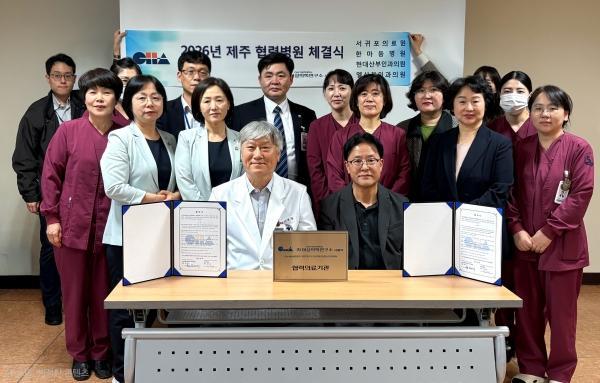
CHA Women’s Medical Center Seoul Station said April 13 it has signed a series of agreements with four major medical providers in Jeju to build an infertility-care network: Hanmaeum Hospital, Seogwipo Medical Center, Hyundai Obstetrics and Gynecology Clinic, and L Obstetrics and Gynecology Clinic.
Under the agreements, the organizations will work on referrals and return referrals based on patient symptoms, share clinical information to ensure continuity of care, and operate a cooperative system aimed at improving public health, the center said.
A key goal is to help patients in Jeju receive follow-up care near home after undergoing advanced infertility procedures at the Seoul Station center, it said. The center said the network is expected to help patients focus on preparing for pregnancy and prenatal care without gaps caused by long-distance travel.
Director Yoon Tae-gi said, “Through a close referral and clinical cooperation system, we will do our best to provide patients with the greatest convenience and, together with regional hub hospitals, contribute to the task of addressing the low birthrate.”
* This article has been translated by AI.
Copyright ⓒ Aju Press All rights reserved.