
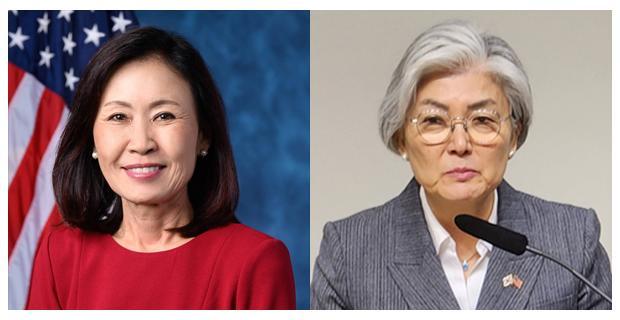
The White House on Monday (local time) nominated Michelle Steel, a former California congresswoman, as ambassador to South Korea, formally requesting Senate confirmation. If confirmed, Steel would return to her birthplace as Washington’s top envoy.
Her counterpart, Kang Kyung-wha, has been serving as South Korea’s ambassador to the United States since December.
Kang is President Lee Jae Myung’s first envoy to Washington, while Steel is Donald Trump’s first pick for Seoul in his second term after leaving the post vacant for more than a year.
The overlap is more than anecdotal.
Both women were born into a Korea emerging from the devastation of the 1950–53 war. Decades later, they return to the same alliance — now as its diplomatic stewards — armed with careers built across borders rather than within the confines of traditional state bureaucracies.
Neither followed the conventional path of elite foreign service grooming.
Steel, a Korean American politician whose Korean name is Park Eun-joo, emigrated to the United States in her 20s and climbed through local and state politics in California before serving two terms in Congress from 2021 to 2025.
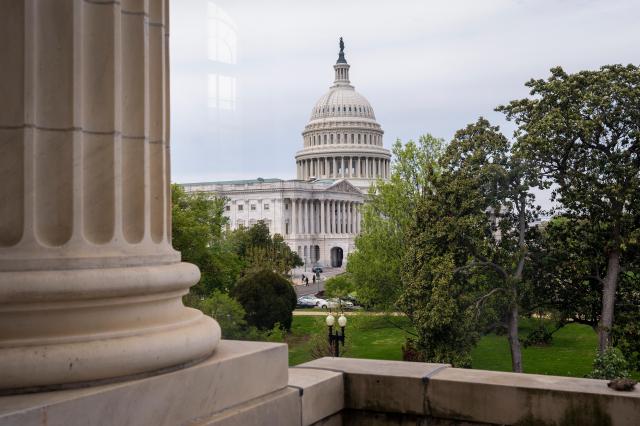
Their appointments also mark a milestone for gender representation.
Kang broke ground as South Korea’s first female foreign minister and later its first female ambassador to Washington. Steel, pending confirmation, would become the second Korean American to serve as U.S. ambassador to South Korea, following Sung Kim.
Both embody transnational identities — but in different ways.
Steel’s trajectory reflects the Korean diaspora experience. Having spent her youth in Korea and Japan, she built her political base within immigrant and Asian American communities in the United States. The 1992 Los Angeles riots served as a turning point, shaping her political awakening and eventual entry into public service.
Kang’s path, while rooted in South Korea, is no less global. She spent decades within the United Nations system, including as deputy high commissioner for human rights, operating at the intersection of global governance, diplomacy and humanitarian affairs.
That is where the symmetry ends.
Steel is a political appointee shaped by partisan U.S. politics. A Republican aligned with former President Trump, she has taken conservative positions on security, trade and China, advocating a tougher stance on North Korea and human rights.
Her nomination reflects not only her heritage and language skills, but also her political network and access to Trump’s inner circle.
Kang, by contrast, represents a hybrid model — a career diplomat with political experience at the highest level. As foreign minister from 2017 to 2021 under President Moon Jae-in, she was at the center of a volatile period of summit diplomacy involving North Korea and the United States.
The contrast is not merely biographical. It could shape how each side approaches core issues — from North Korea policy to alliance burden-sharing and the broader Indo-Pacific strategy.
Steel’s nomination also comes at a delicate moment.
The U.S. ambassadorial post in Seoul has remained vacant for more than a year following the departure of Philip Goldberg, raising concerns about gaps in alliance coordination at a time of mounting geopolitical strain.
Acting envoys have cycled through the role as tensions surrounding North Korea’s nuclear program and regional security architecture continue to intensify.
Steel’s confirmation, once secured, is expected to restore a measure of stability to diplomatic channels and reinforce coordination with Seoul.
South Korea’s presidential office struck a cautious but positive tone, expressing expectations that Steel would help strengthen bilateral ties and deepen people-to-people exchanges.
Steel must pass a Senate confirmation hearing and secure approval — a procedure that typically takes several months — before formally assuming her post.
Copyright ⓒ Aju Press All rights reserved.
