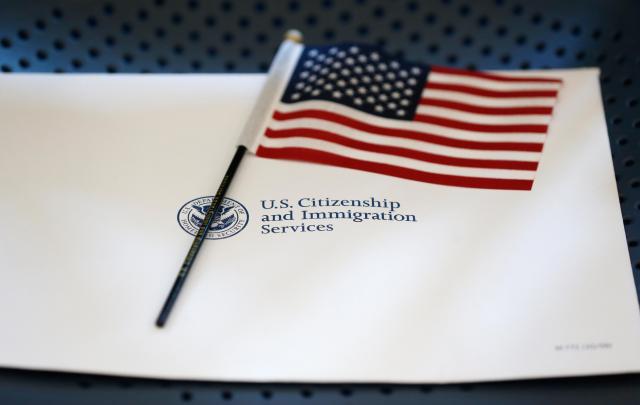
SEOUL, May 23 (AJP)-The Trump administration’s latest immigration crackdown is sending shockwaves through Korean American and broader Asian immigrant communities after the government announced that most foreigners seeking U.S. permanent residency will now have to leave the United States and apply for green cards from their home countries.
The policy, unveiled Friday by the U.S. Citizenship and Immigration Services (USCIS), effectively dismantles a decades-old practice known as “adjustment of status,” under which temporary visa holders already living in the United States could apply for permanent residency without leaving the country.
USCIS said green cards granted from within the U.S. would now be limited to “extraordinary circumstances,” though it did not clearly define what qualifies.
The move marks one of the most aggressive restrictions on legal immigration since President Donald Trump returned to office, broadening the administration’s hardline agenda beyond undocumented immigration and into employment-, student- and marriage-based migration channels that have long underpinned Asian immigration to the United States.
For Korean Americans, the impact could be especially significant.
According to South Korea’s Overseas Koreans Agency, about 2.56 million ethnic Koreans and Korean nationals live in the United States, making it the world’s largest Korean diaspora community and accounting for roughly 36 percent of all overseas Koreans globally. While most are already U.S. citizens, a substantial share remain on temporary visas, green cards or in transition toward permanent residency — precisely the groups affected by the new rule.
The policy threatens to disrupt a well-established immigration pipeline heavily used by Koreans: student visa to Optional Practical Training (OPT), then H-1B work visa, followed by permanent residency. South Korea sent more than 42,000 students to U.S. universities during the 2024–25 academic year, ranking third globally after India and China.
Many later pursue jobs in technology, engineering, medicine and finance sectors that depend on employment-based green card sponsorship.
Under the new system, however, such applicants may now have to leave the United States mid-career and wait abroad — potentially for months or even years — while U.S. consulates process their cases.
Immigration lawyers warn the disruption could be severe not only for immigrants but also for American employers already facing shortages in high-skilled industries.
“Consular processing” abroad is already burdened by long backlogs, and shifting hundreds of thousands of applications overseas could create bottlenecks that separate families and interrupt employment.
More than 820,000 green cards were granted to people already inside the U.S. through adjustment of status in 2024 alone, according to Department of Homeland Security data.
Marriage-based immigration may face some of the harshest consequences. More than 70 percent of marriage green cards issued last year were processed through adjustment of status inside the United States. Korean nationals married to U.S. citizens — a growing demographic among professionals and students — may now be forced to return to South Korea while applications are reviewed, raising the prospect of lengthy family separations.
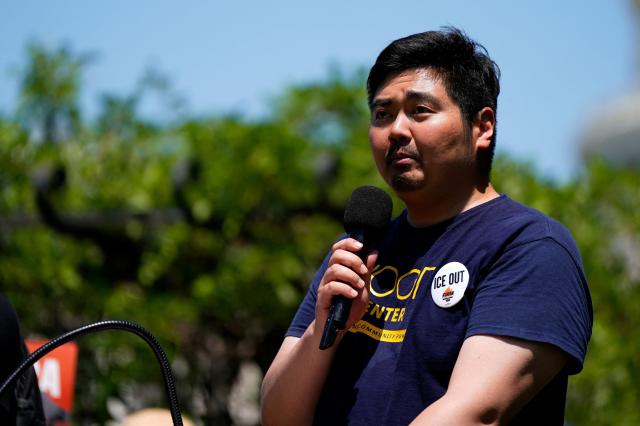
Advocacy groups such as AAPI Data have warned that South Koreans, Chinese, Taiwanese, Japanese and Indian immigrants are especially vulnerable because they are heavily concentrated in professional and education-linked visa categories.
The policy also arrives amid a broader climate of intensified immigration enforcement.
Research cited by advocacy organizations found that Immigration and Customs Enforcement arrests involving Asians more than tripled during the early months of the Trump administration compared with the previous year.
Many Asian Americans reported feeling less secure and less willing to participate publicly in civic or political life as anti-immigration rhetoric escalated.
The administration defended the move as a return to the original intent of U.S. immigration law.
“This policy allows our immigration system to function as the law intended instead of incentivizing loopholes,” USCIS spokesman Zach Kahler said, arguing that requiring applicants to process from abroad would reduce the number of people remaining illegally in the U.S. after visa denials.
Critics, however, say the measure amounts to a structural rollback of legal immigration itself rather than a procedural adjustment.
Immigration attorneys and former Department of Homeland Security officials expect multiple court challenges in the coming months, especially because USCIS has yet to clarify which immigrants may qualify for exemptions under “extraordinary circumstances.”
For Korean Americans and many Asian immigrant families, the uncertainty has already begun reshaping calculations about education, work and life in the United States. What had long been viewed as a predictable pathway toward permanent residency — study, work, settle, naturalize — is suddenly far less certain.
Copyright ⓒ Aju Press All rights reserved.