
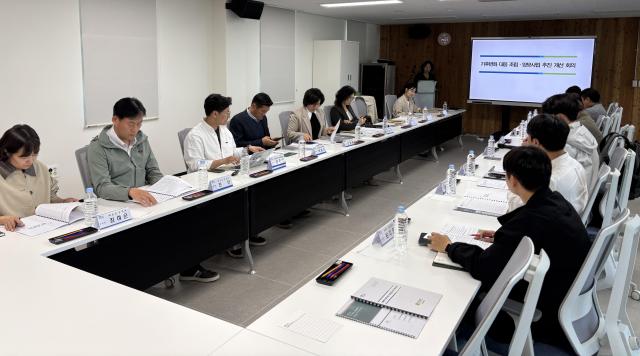
South Jeolla Province said it held a meeting April 21 at its Forest Research Institute in Naju to discuss a structural overhaul of how it develops forest resources, including tree species selection and seedling production, in response to climate change.
The meeting was aimed at preparing for shifting forest growing conditions, rising forest disasters and changes in forest-creation patterns linked to climate change. Eighteen people attended, including officials from the province and its cities and counties, forest research institutions and seedling producers.
Participants focused on expanding climate-adapted species, meeting demand for large-tree plantings, and improving the seedling production and supply system.
The province said it plans to move away from conifer-centered forest creation by expanding climate-adapted species such as warm-temperate broadleaf trees and nectar-producing trees, and by introducing tailored species suited to local climate conditions. It said the goal is to build forests more resilient to disasters such as wildfires while strengthening ecological stability and public benefits.
The Forest Research Institute presented recommendations for key warm-temperate broadleaf and nectar-producing species based on matching species to suitable sites. The province said it plans to secure seed sources for species including inamu, aweenamu and odongnamu within this year and then build out a full-scale seedling production system.
The province said nectar-producing trees are a key resource for protecting both the beekeeping industry and forest ecosystems because they provide food not only for honeybees but also for a range of forest insects. It said it will actively secure major nectar-producing species.
It also said demand is rising for large-tree plantings to secure carbon absorption earlier, improve scenery and support species conversion as part of efforts to control pine wilt disease. To address supply-demand imbalances, the province said it will improve seedling-age standards and diversify specifications.
For seedling production, which the province called critical to long-term forest planning, it said it will build a systematic supply system based on mid- to long-term supply-and-demand forecasts. It also plans to gradually establish an integrated forest resource management system linking seedling production, forest creation and follow-up management to improve policy effectiveness.
Kang Sin-hui, head of the province’s Forest Resources Division, said rapid changes in forest conditions driven by climate change require a fundamental shift in forest-creation methods and nursery policy. “Based on field input and scientific data, we will actively push sustainable forest resource development and strengthen the competitiveness of the forestry sector,” Kang said.
* This article has been translated by AI.
Copyright ⓒ Aju Press All rights reserved.