
According to the Financial Supervisory Service’s financial statistics system, Samsung Card’s durable-goods installment financing assets totaled 361.3 billion won at the end of last year, down 1.3% from 365.9 billion won a year earlier. Among six card companies that handle durable-goods installment financing — Shinhan, Samsung, KB Kookmin, Hana, Lotte and Woori — Samsung Card’s total was the smallest.
Durable-goods installment financing is a loan-type product in which a card company provides financing for high-priced purchases such as cars and appliances, and consumers repay it in installments over an extended period.
Within that category, Samsung Card’s consumer appliance installment financing stood at just 12 million won. Samsung Card has operated appliance financing largely tied to affiliate Samsung Electronics. Its related loan balance reached 149.5 billion won in 2013 but has declined sharply since then. Installment financing assets for business-to-business items such as multifunction printers fell to 2.8 billion won from 4.9 billion won a year earlier, a drop of 42.4%. That figure has declined for three straight years since reaching 10 billion won in 2022.
The decline is seen as structural, reflecting shifts in how consumers pay. In the past, long-term financing helped reduce the upfront burden for expensive items such as TVs and refrigerators. More recently, consumers have increasingly been able to cover purchases with lump-sum payments or short-term card installments, reducing demand for long-term loans. Shinhan Card’s appliance installment financing also disappeared after 2015.
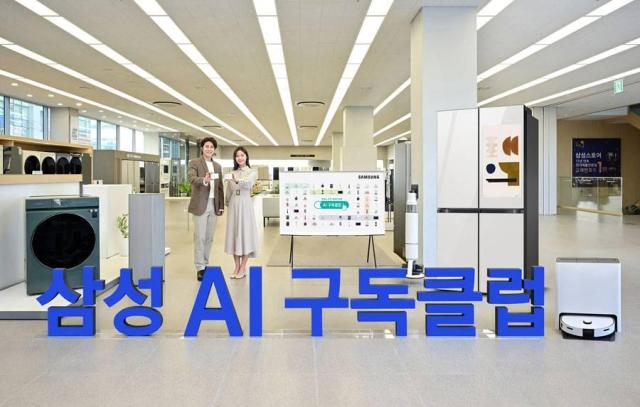
The spread of appliance subscription services is expected to accelerate the drop in loan-based purchases. Subscriptions reduce upfront costs and include regular care services, becoming a broader trend among appliance makers including Samsung Electronics and LG Electronics.
As appliance-focused installment financing fades, Samsung Card has also taken a cautious approach to auto installment financing. Its auto installment financing assets totaled 358.4 billion won at the end of last year, just 3.6% of the combined total of the six card companies, which stood at 9.8302 trillion won.
Instead, Samsung Card has pursued exclusive partnerships with major imported car brands including Tesla, BYD, Polestar and BMW (through some dealers), focusing less on loan-type products and more on payment-based revenue, its core business.
A Samsung Card official said the company is running its auto finance strategy with an emphasis on profitability and how it connects to the credit card business.
* This article has been translated by AI.
Copyright ⓒ Aju Press All rights reserved.