

Masan Gapo New Port on April 29 was packed with finished vehicles lined up for export, with a large car carrier preparing to load. The cars had been built at a domestic plant and were awaiting shipment overseas.
Most of the vehicles carried the Chevrolet badge. They were largely the Chevrolet Trax Crossover, a small SUV produced at GM Korea’s Changwon plant. Since its 2023 launch, the model has sold about 1 million units cumulatively and ranked No. 1 in South Korea’s passenger-car exports for three consecutive years from 2023 through last year, filling the port’s staging area.
Standing near a Hyundai Glovis vessel, Kim Hyeon-uk, deputy head of the logistics team at GM Korea, said he takes pride in “vehicles made in Changwon meeting global customers.” He described the loading as “the final step” in a long value chain linking the Changwon plant, Masan Gapo New Port and overseas markets.
At the port, the ship GLOVIS CAPTAIN was preparing to depart with 350 Trax Crossovers bound for the port of Benicia near San Francisco. The vessel can carry up to 4,700 passenger vehicles, and the day’s loading took about two hours. The cars are expected to reach the west coast of North America after a 15-day voyage.
Son Yong-jun, North America team leader for Hyundai Glovis’ car-carrier business, said GLOVIS CAPTAIN was deployed on short notice after delays to a scheduled vessel. He added that a significant portion of passenger vehicles loaded are exclusively GM vehicles, contributing to South Korea’s auto exports.
Cho Heung-je, head of operations at Masan Gapo New Port, said the port expects a record 300,000 vehicles shipped this year, with GM Korea accounting for about 55% of total cargo volume.
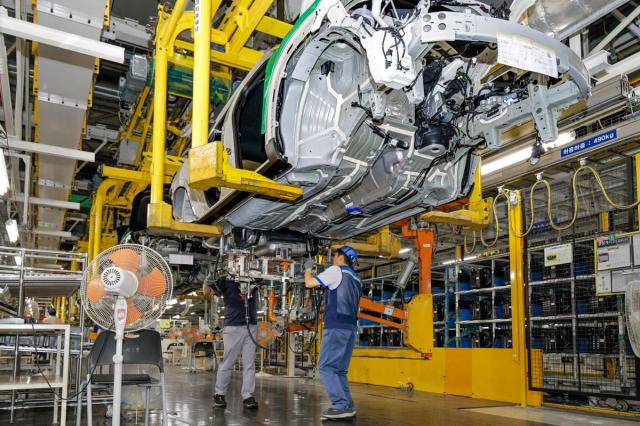
A banner at the assembly shop entrance read, “We will achieve our business plan,” underscoring the company’s focus on exports. Inside, a height-adjustment system moved vehicle bodies up and down to fit workers’ average height. In the body shop, welding is fully automated, with large arm-like robots moving continuously as sparks flew. The body shop has 627 industrial robots.
Bok Im-seong, who oversees the assembly shop at GM Korea, said robots identify and follow four types of tires — including alloy and steel wheels — and install them on vehicles. He said GM is reviewing the approach for possible benchmarking globally after seeing GM Korea’s application.
* This article has been translated by AI.
Copyright ⓒ Aju Press All rights reserved.