
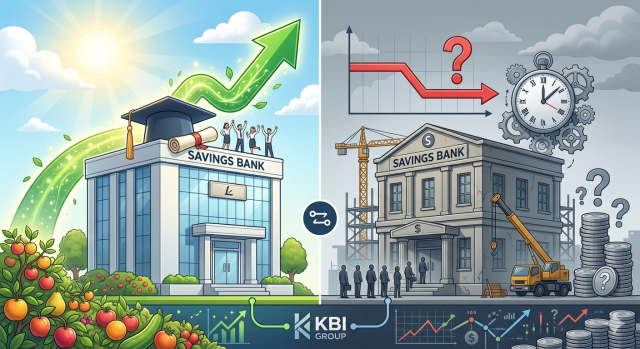
The Financial Services Commission said it notified Raon Savings Bank and Anguk Savings Bank on April 30 that their management improvement recommendations had been lifted. The two banks had been under the measures since December 2024, exiting about 16 months later.
Raon Savings Bank is a regional lender acquired in July last year by KBI Kukin Industry, an affiliate of KBI Group. At the time, financial authorities described the deal as the first case showing market-led restructuring working for a regional savings bank. Since then, Raon’s key soundness indicators have improved: its delinquency ratio fell to 10.42% at the end of last year from 19.03% in 2024, and its liquidity ratio rose to 150% from 109%.
By contrast, KBI Group’s additional push to acquire SangSangIn Savings Bank has yet to be completed. SangSangIn agreed to sell about 1.35 million shares of the bank for 110.7 billion won, but the closing date—initially set for the end of March—was postponed to the end of April and has now been extended again to Aug. 31.
The transaction has not entered the formal stage of regulators’ review of KBI Group’s eligibility as a major shareholder. The group is believed to be continuing pre-consultations with financial authorities on the deal structure and capital-raising plans before applying for approval of the ownership change. While the sale price is said to have been agreed, the need for additional funding after the acquisition—aimed at improving soundness indicators and boosting capital—has been cited as a key variable.
Acquiring a troubled savings bank does not end with buying shares, as buyers typically must follow with cleanup of bad assets, improvements in key indicators and stronger capital buffers. SangSangIn Savings Bank’s burden remains heavy: as of the end of last year, its delinquency ratio stood at 16.9%, among the highest for savings banks with more than 1 trillion won in total assets. Its ratio of substandard-or-worse loans was 22.53%, the highest in the industry.
A financial industry official said KBI Group may not feel strong pressure to rush the SangSangIn deal after already acquiring Raon. The official added that because SangSangIn’s delinquency and substandard-loan ratios are high, the burden of normalizing the bank after an acquisition would likely be heavier than it was for Raon.
* This article has been translated by AI.
Copyright ⓒ Aju Press All rights reserved.