
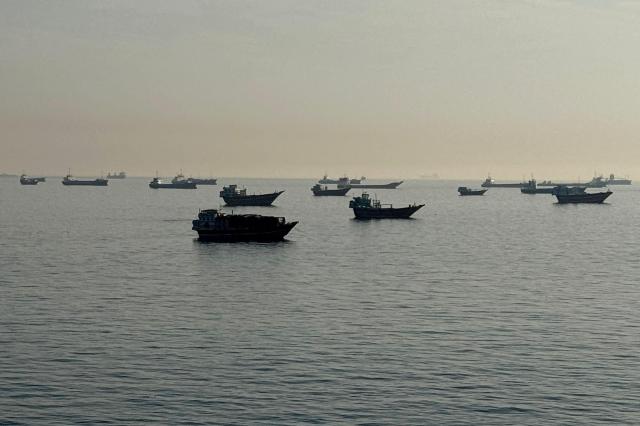
SEOUL, May 24 (AJP) -A draft framework between the United States and Iran to reopen the Strait of Hormuz is nearing finalization, Washington claims, offering hopes for relief from one of the worst energy supply disruptions in recent years.
But for energy-dependent Asian economies including South Korea, the shock is far from over as crude shipments from the Gulf still require weeks to reach refineries even after maritime traffic resumes.
U.S. President Donald Trump said Saturday that an agreement with Iran was “largely negotiated” and would include reopening the Strait of Hormuz, the strategic waterway through which roughly one-fifth of the world’s oil supply flows.
The emerging framework would halt fighting, reopen shipping lanes and begin broader negotiations over Iran’s nuclear program and sanctions relief, according to U.S. and regional officials.
Yet even if the strait reopens within days, the economic aftershocks from the nearly three-month disruption are expected to cut deep across Asia’s manufacturing economies well into the second half.
Very Large Crude Carriers departing Persian Gulf terminals typically require about 15 to 25 days to reach East Asia, meaning Korean, Japanese and Chinese refiners will continue to face delayed arrivals, elevated freight costs and inventory pressure even after maritime passage normalizes.
South Korea’s latest trade data already show the scale of the disruption.
According to Korea International Trade Association data, Korea’s crude oil imports fell 22.8 percent on year in April to about 8.46 million tons. Imports from the Middle East plunged 37.3 percent to about 4.49 million tons amid the Strait of Hormuz crisis.
The Middle East still accounted for the largest share of South Korea’s crude imports, but its portion dropped sharply to 53.1 percent from 65.2 percent a year earlier.
Imports from Saudi Arabia, Korea’s largest supplier, fell 37.6 percent to roughly 2.15 million tons. Iraqi shipments dropped 42.4 percent while imports from Kuwait nearly collapsed, plunging 98.2 percent. Qatari crude imports were completely halted.
The data underscore how rapidly Asian buyers were forced to redraw energy supply chains as the Hormuz disruption intensified.
The United States, already South Korea’s second-largest crude supplier, nearly overtook Saudi Arabia last month.
Imports of U.S. crude rose 13.4 percent to around 2.145 million tons, narrowing the gap with Saudi shipments to barely 1,000 tons. Just a month earlier, the difference exceeded 1.45 million tons.
Seoul also accelerated diversification toward North America, Oceania and Africa.
Crude imports from Australia surged 89 percent while Canadian shipments more than tripled. Imports from African producers including the Democratic Republic of Congo, Nigeria and Mozambique jumped more than fivefold.
North America’s share of South Korea’s crude imports climbed to 28.3 percent, up 10.3 percentage points from a year earlier. Africa and Oceania also expanded their presence in Korea’s energy mix.
Industry officials said the shift highlighted both the flexibility and structural vulnerability of Asia’s refining system.
Korean refiners are heavily optimized for Middle Eastern medium and heavy crude grades, making a sudden switch operationally difficult and more expensive. Industry Minister Kim Jung-kwan previously said U.S. light crude had become the “most convenient” alternative for blending with Middle Eastern heavy crude during the crisis.
Still, the replacement barrels came at a cost.
Longer shipping distances from the Atlantic basin, elevated war-risk insurance premiums and vessel shortages sharply increased freight expenses during the crisis. Even after a reopening agreement, shipping markets are expected to remain volatile as insurers and operators assess security risks in the Gulf.
Physical reopening of the strait also does not immediately restore normal trade flows.
Hundreds of vessels were delayed, rerouted or stranded during the blockade period, creating a logistical backlog likely to persist for weeks.
Iran has also signaled that it may retain significant control over navigation procedures and permits in the waterway even under a diplomatic settlement, adding uncertainty over how freely shipping can resume.
The government has maintained that supply diversification and strategic stockpiles would stabilize energy procurement through July. The industry and resources ministry said Korea secured about 78.5 million barrels from 19 countries this month, up sharply from imports sourced from 14 countries in April.
Copyright ⓒ Aju Press All rights reserved.
