
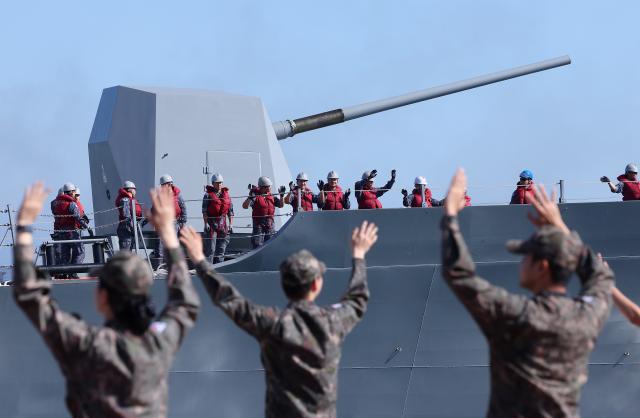
SEOUL, May 25 (AJP) - President Donald Trump’s warning on Sunday that U.S. negotiators should “not rush into a deal” with Iran underscored growing doubts over an emerging framework agreement that could reopen the Strait of Hormuz while leaving many of the Middle East conflict’s most dangerous questions unresolved.
The remarks came soon after Washington officials said a deal with Tehran had been “largely negotiated” aimed at ending the war that erupted in late February following U.S. and Israeli strikes on Iran.
“I have informed my representatives not to rush into a deal,” Trump wrote on Truth Social, adding that the U.S. blockade on Iranian shipping would remain “in full force and effect until an agreement is reached, certified, and signed.”
The evolving stance reflected mounting concern inside Washington that the framework under discussion remains politically risky, strategically incomplete and economically uncertain despite hopes that the Strait of Hormuz could soon reopen.
Under the proposed arrangement, Iran would restore commercial shipping access through Hormuz while the United States would eventually ease its naval blockade on Iranian ports. Tehran has also reportedly accepted the principle of disposing of its highly enriched uranium stockpile, although critical details remain unsettled.
Iranian officials insist that no binding nuclear commitments have yet been finalized and say substantive negotiations over uranium enrichment, sanctions relief and inspections would continue over the next 30 to 60 days.
Washington appears increasingly wary of locking in sanctions relief or military de-escalation before securing enforceable guarantees over Iran’s nuclear program. Major unanswered questions include whether Tehran would permanently dismantle uranium enrichment capability or merely suspend it temporarily, how long restrictions would last, and whether Iran’s ballistic missile program and regional proxy networks would be included in future negotiations.
Trump reportedly wants restrictions lasting up to 20 years, while Tehran is pushing for a significantly shorter timeline.
The deal has also triggered concern in Israel and Gulf Arab states, which fear the agreement could restore Iran’s economic breathing room while leaving its regional military leverage largely intact. Israeli officials remain especially uneasy that Hezbollah and Iran’s missile infrastructure have not been directly addressed in the framework.
At the same time, the White House is facing mounting pressure from energy markets and inflation concerns ahead of the U.S. midterm election cycle.
The Strait of Hormuz handles roughly one-fifth of global oil trade and a major portion of LNG shipments bound for Asia. Iran’s effective closure of the waterway following the outbreak of war triggered sharp increases in oil prices, tanker insurance premiums and fuel costs worldwide.
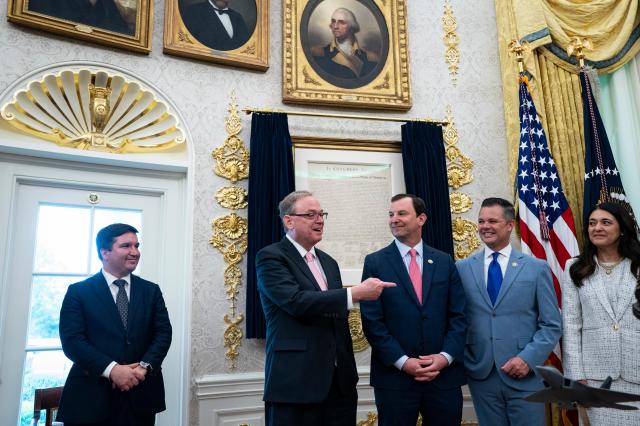
White House National Economic Council Director Kevin Hassett acknowledged during an interview with CBS News' Face the Nation Sunday that even after Hormuz reopens, energy markets will require weeks or months to normalize. “Once the straits are open, then the tankers are going to go back and they're going to refill the refineries almost right away,” Hassett said.
“A tanker goes about 300 nautical miles a day … between a month and two months, we expect everybody to have all the oil they need at every refinery on earth.” Hassett noted that nearby importers such as India and Pakistan would recover faster than more distant economies.
“Places like India and Pakistan, which are close to the straits, are going to get their oil and then turn it into refined product right away … if you're down in New Zealand, it'll take a little bit longer.”
For Asia, the comments reinforced expectations that oil and gas prices are unlikely to normalize any time soon even if the strait fully reopens. Physical energy deliveries to Northeast Asia still require roughly 15 to 20 days after loading resumes, while refiners continue processing expensive emergency inventories accumulated during the nearly three-month disruption.
Shipping bottlenecks, elevated insurance costs and uncertainty over whether the ceasefire will hold are also expected to keep volatility high.
Markets are particularly concerned that Hormuz may no longer function as a stable commercial waterway but as a recurring geopolitical bargaining chip.
Iranian officials have suggested the strait would reopen under Iranian management terms, while Gulf states worry Tehran could emerge from the conflict with greater strategic leverage after demonstrating its ability to disrupt one of the world’s most vital energy corridors.
South Korea and other Asian economies remain especially vulnerable. Although Seoul has diversified portions of its energy imports in recent years through increased purchases from the United States and other suppliers, Gulf crude and LNG remain structurally critical for Korean refiners and petrochemical manufacturers.
That means even a successful diplomatic breakthrough may offer only partial relief.
Iran is meanwhile demanding broader sanctions relief and access to frozen overseas assets estimated at tens of billions of dollars. U.S. officials have so far resisted confirming any immediate economic concessions, insisting sanctions easing would depend on verified Iranian compliance.
The disagreement may become the defining obstacle in the next phase of negotiations.
For now, Trump’s insistence on slowing the process signals that Washington itself recognizes the emerging accord remains far from a final peace settlement.
Instead, the deal increasingly resembles a fragile economic truce designed to reopen Hormuz and calm energy markets temporarily while deeper disputes over nuclear capability, sanctions leverage and regional security remain unresolved.
Copyright ⓒ Aju Press All rights reserved.
