
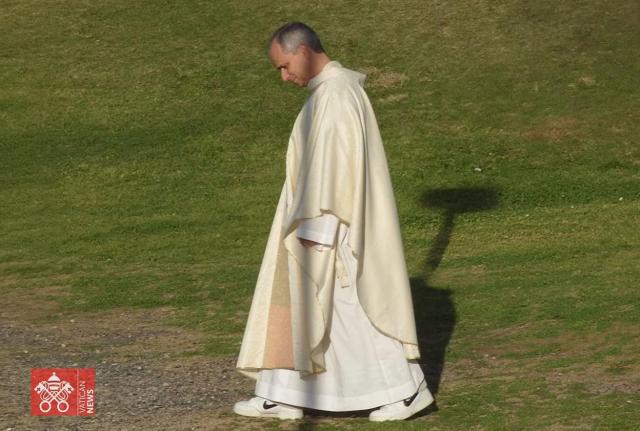
The symbol of religious leaders has always been solemnity, especially for the Catholic Pope, who stands at the pinnacle of tradition and authority. The fact that the Pope appeared wearing Nike sneakers transcends a mere incident and conveys a significant message.
The key is not 'style' but 'closeness.' While the Pope symbolizes transcendent authority, he must also understand suffering and life from the closest human perspective. Sneakers symbolize the bridging of that gap. If traditional authority implied a vertical order, modern leadership demands horizontal empathy. Change begins here.
Today, trust in authority is waning globally. Distrust in leaders spans politics, religion, and business, structurally expanding. As information asymmetry decreases and individual voices grow louder, authority is no longer automatically recognized. In this environment, leaders must shift from being commanding figures to those seeking understanding.
The Pope's image transformation aligns with this zeitgeist. Instead of emphasizing sanctity, he reveals a more human side, reducing distance and communicating in everyday language. Sneakers can be interpreted as a symbolic device indicating a willingness to step into the realities of life.
This change is not confined to religion. Similar trends are evident in politics. In the past, a leader's authority stemmed from their tone and formality, but now it is assessed based on actions and attitudes. The same applies to businesses. CEOs are no longer figures making decisions in closed spaces; they must constantly engage with society.
What matters is not formality but authenticity. Simply changing attire and projecting an image is meaningless. Changes aimed at fostering empathy must also transform lifestyles and decision-making structures. Otherwise, symbols quickly become consumed and can even undermine trust.
The depiction of the Pope as a 'sportsman' can also be viewed in this context. Regular exercise, a healthy lifestyle, and everyday hobbies make a leader appear not as a special figure but as someone living a 'common life.' This does not weaken authority; rather, it strengthens trust, as human empathy forms the foundation of trust.
In the context of international politics, these changes hold significance. The statements of religious leaders still serve as moral benchmarks. Particularly regarding issues of war and peace, the Pope's messages possess influence that transcends political interests. In this context, the image of a 'human Pope' enhances the effectiveness of his messages.
Ultimately, the core issue is the evolution of leadership. Authority-centered leadership may be efficient but is not sustainable. Empathy-based leadership takes time but fosters deeper trust. Modern society demands the latter.
The Pope's sneakers are not merely a fashion statement. They pose a question about what kind of leader the times require. Authority remains necessary, but it is no longer sufficient. People now seek to be understood, and that understanding begins not from a distance but from closeness.
Leaders must become increasingly human. This does not dismantle authority; rather, it paves the way for its renewal.
* This article has been translated by AI.
Copyright ⓒ Aju Press All rights reserved.