
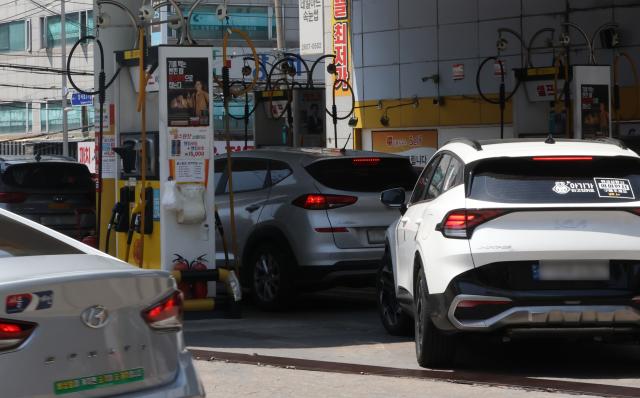
The government has been absorbing the impact of rising international oil prices through measures such as reducing fuel taxes and implementing price controls on petroleum products. However, market sentiment largely views the current price trends as 'suppressed' rather than 'stable.' While consumer price increases are currently limited, there are concerns that a 'price shock' could materialize in the second half of the year as the effects of these policies weaken.
According to the oil price information system Opinet, the average price of Dubai crude oil in April was $112.20 per barrel, a 49.4% increase compared to the average of $75.08 in the same month last year. This month, prices have hovered around $103, still significantly higher than pre-war levels.
The prolonged conflict in the Middle East has led to a simultaneous rise in international oil prices and the won-dollar exchange rate, increasing pressure on import prices. Domestic industries, which heavily rely on crude oil and raw material imports, are also feeling the strain.
However, this cost pressure has not yet been fully reflected in consumer prices. Last month, the consumer price inflation rate was 2.6%, the highest since July 2024, but excluding a 22% surge in petroleum products from the previous year, the rate drops to 1.8%.
Analysts attribute this to the government's strong 'price defense' measures. The government estimates that without the price controls, last month's inflation rate would have risen to 3.8%, indicating that the controls have lowered inflation by about 1.2 percentage points.
Gasoline and diesel prices are estimated to have soared to 2,200 won and 2,500 won per liter, respectively. Since March, the government has implemented price controls on petroleum products, adjusting or freezing prices five times to date.
In comparison to OECD member countries, South Korea's energy price inflation rate of 5.2% in March was lower than that of the United States (12.5%), Germany (7.6%), and France (7.1%).
However, some market observers argue that the shock has not disappeared but has merely been postponed. The prolonged high oil prices and exchange rates have led refiners and manufacturers to suppress price increases despite declining profitability.
The burden on the refining industry is also nearing its limits. The government has prepared supplementary budgets to compensate refiners for losses incurred due to price controls, but if high international oil prices persist, an increase in fiscal burdens is inevitable.
Concerns are growing that the accumulated pressures from high exchange rates and oil prices since the beginning of the year could lead to a sudden release of suppressed price increases if the effectiveness of policies diminishes.
Market analysts identify the timing of policy termination as a critical variable. If the reduction in fuel taxes is scaled back or price controls are lifted, there is a possibility that suppressed petroleum prices could surge in a short period.
For instance, Hungary, which implemented price controls in 2021, saw a 50% increase in fuel sales after the program ended, while Pakistan experienced a 66% spike in gasoline prices immediately after lifting price freezes from February to May 2022.
Consequently, experts are urging the government not to focus solely on short-term price suppression but to develop a gradual 'exit strategy.'
Lee Hong, a senior researcher at the Korea Institute for Industrial Economics and Trade, stated, "While price controls can temporarily suppress price surges and alleviate consumer burdens, prolonged measures can lead to shortages, supply distortions, and greater price rebounds after the program ends. Targeted support for industries heavily reliant on fuel costs and differentiated policy designs that consider supply stability are necessary."
* This article has been translated by AI.
Copyright ⓒ Aju Press All rights reserved.