
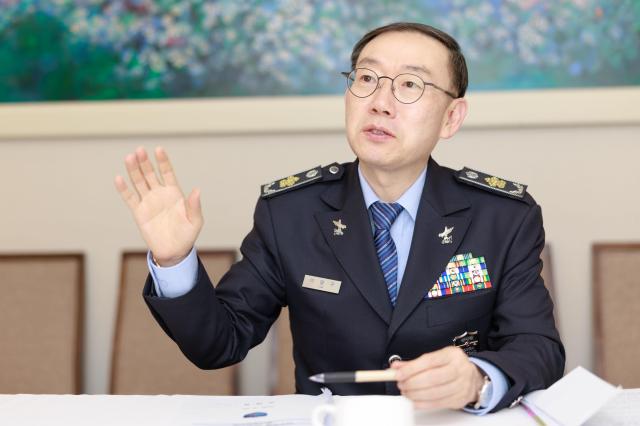
As uncertainty surrounding oil supplies through the Strait of Hormuz increases due to ongoing conflicts in the Middle East, the need for diversifying energy sources has become more pressing. Given South Korea's heavy reliance on Middle Eastern oil, there are concerns that escalating geopolitical crises could disrupt not only prices but also the overall industrial supply chain.
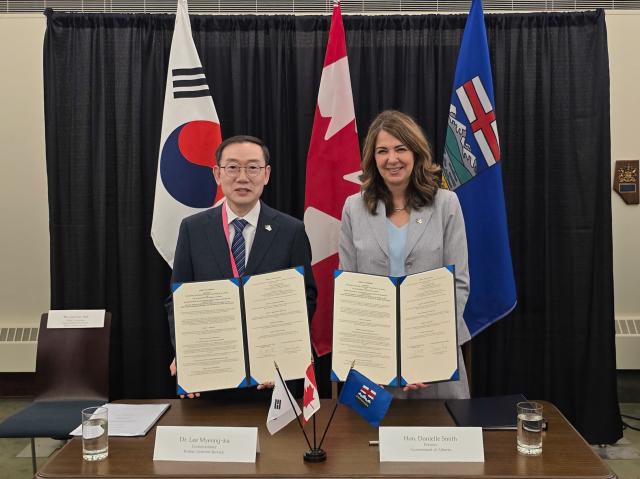
In this context, Customs Commissioner Lee Myung-koo spoke with Aju Economy, stating, "We recently issued a joint statement with the Alberta provincial government to simplify origin documentation for expanding the supply of Canadian crude oil. By utilizing the Free Trade Agreement (FTA), Alberta is optimistic about exporting an additional 33 million barrels of oil to Korea annually, reducing tariff burdens significantly."
Previously, Alberta crude oil faced challenges in benefiting from FTA tariff advantages due to the structural complexities of mixing oils from various producers during transport, making it difficult to prove origin. However, with the Alberta provincial government's official confirmation, it will now be possible to recognize the origin, allowing for the application of preferential tariffs. This is expected to reduce tariff burdens by approximately 3%, contributing to the stability of the energy supply chain.
Lee also emphasized the role of the customs agency in supporting exports. He noted, "To support exports in advanced industries such as semiconductors and biotechnology, we are improving the system to designate advanced research institutes as bonded factories, thereby assisting in securing cutting-edge technologies. We are also focusing on supporting K-food exports in line with the spread of Korean culture." He added, "We have submitted a proposal to the World Customs Organization for a dedicated HS code for kimchi, with plans to expand this to include ramen and rice cakes in the future."
Below is a Q&A with Commissioner Lee:
- The expansion of imports of Alberta crude oil has been achieved. What does this mean?
"Alberta accounts for about 80% of Canada's crude oil production. We have been gathering opinions from the refining industry and conducting legal reviews to diversify oil supply, and the need has increased following the Middle Eastern conflicts, prompting us to expedite the signing of a memorandum of understanding (MOU). Alberta crude oil is evaluated as highly usable by domestic refiners due to its medium to heavy oil characteristics. Expanding the supply of North American crude oil, which is relatively free from geopolitical risks from the Middle East, is expected to enhance supply stability and contribute to price stability and cost competitiveness through reduced tariffs."
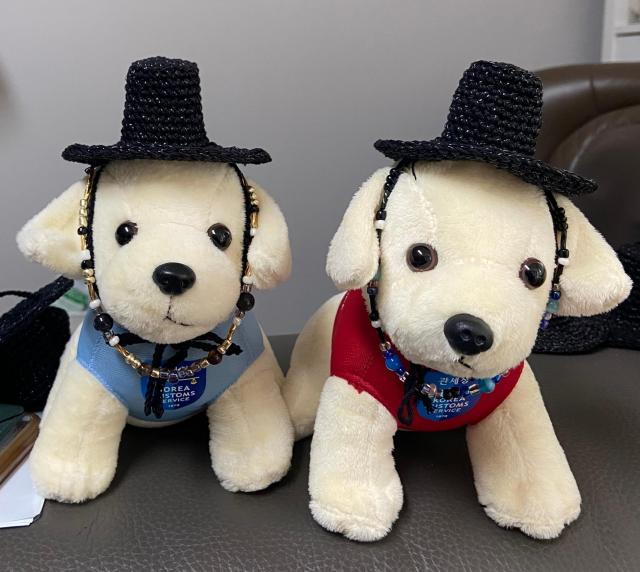
- It seems that the customs agency staff worked hard to achieve the joint statement.
"When the Ministry of Trade, Industry and Energy was negotiating tariffs with the U.S., they once created a special hat to promote the U.S. shipbuilding revival project known as the MASGA project. Inspired by this, our customs agency staff suggested putting a traditional hat on our mascot doll. One of our employees, who enjoys knitting, proposed this idea. Given that traditional hats have recently gained attention overseas alongside K-culture, we felt a more emotional approach was necessary. The response in Canada has been quite positive, helping to create a friendly atmosphere."
- Exports have exceeded $80 billion for two consecutive months. What are the customs agency's policies for expanding exports?
"One of the core tasks of the customs agency is to support the utilization of FTAs. We assist our exporting companies in receiving tariff benefits by issuing certificates of origin. Recently, we have been simplifying the origin certification process to reduce the burden on companies, particularly for consumer goods like K-beauty and K-food. We are continuously proposing the establishment of HS codes for K-food exports and are working on expanding this to various items in the future."
- The improvement in designating advanced research institutes as bonded factories is noteworthy.
"We are expanding the scope of the bonded processing system, which allows for the import of foreign raw materials for manufacturing and processing under deferred tariffs. Previously, research and development could not utilize this system, but as of April 29, we improved the system to allow for the designation of bonded factories through a ruling from the Ministry of Finance. Research and development is essentially a 'competition in seconds,' and this measure aims to reduce delays caused by customs procedures. We are also utilizing the bonded processing system to support Arctic shipping routes, focusing on continuously expanding comprehensive bonded zones to manufacture eco-friendly ship fuel."
- The reverse direct purchase market for K-consumer goods is also growing rapidly. What support measures are in place?
"Japan accounts for a significant portion of reverse direct purchases. Last October, Japan introduced a simplified customs clearance system for maritime cargo, allowing for the omission of specific reporting items for goods under 10,000 yen. Once this system is established, it will greatly assist domestic small and medium-sized enterprises in entering the Japanese market through e-commerce. We are also linking international postal export data with the National Tax Service to support the application of zero tax rates, and we are working on extending the deadline for price reporting for export companies utilizing fulfillment services. These related measures are set to be implemented in June, aiming to reduce institutional and administrative burdens so that our companies can more easily sell products directly to consumers worldwide."
- There is growing uncertainty regarding U.S. tariff policies and the EU's Carbon Border Adjustment Mechanism (CBAM). What are the response measures?
"In the face of rising global protectionism and geopolitical risks, we are preparing response measures to minimize damage to our companies. Regarding U.S. tariff policies, we are providing a linkage table of item numbers for South Korea and the U.S. to help companies accurately identify affected items. The core of the EU CBAM is the calculation of carbon emissions. We have developed a program for small and medium-sized enterprises to manage and calculate carbon emissions, and we are continuously updating it in line with EU regulatory changes."
- What is the direction for addressing circumvention of exports?
"As major countries like the U.S. strengthen their tariff policies, concerns about circumvention of exports through third countries are growing. To proactively respond to illegal trade, we are restructuring our existing temporary organization, the 'Trade Security Special Investigation Team,' into the 'Trade Security Investigation Team' and establishing a professional investigation system. Last year, the scale of trade security violations detected amounted to 655.6 billion won, nearly tripling from the previous year. As of the end of March this year, we have already detected violations amounting to 537.5 billion won. We will continue to strengthen our capabilities to crack down on trade security violations through a unified national command system."
- The spread of artificial intelligence (AI) has made AI transformation (AX) a key topic. What is the current status of customs administration's AX efforts?
"While the volume of customs transactions continues to increase, managing everything solely with personnel has its limits. Therefore, the customs agency is promoting an Information Strategy Plan (ISP) for transitioning to AI-based customs administration. We plan to redesign AI-based operations across all sectors by the second half of this year. Since AI performance ultimately depends on data quality, we are also focusing on establishing a system that can reliably generate, secure, and manage refined data."
- Any final message to the public?
"The customs agency is an institution that protects our society by preventing illegal activities that threaten the daily lives and economic security of citizens, establishing trade order through fair enforcement based on law and principles. We will thoroughly block the inflow of harmful goods and strictly crack down on trade crimes to strengthen the foundation of our economy. Additionally, we will create an optimal export-import environment that businesses and citizens can feel through communication that listens to on-the-ground voices and bold innovation based on that feedback."
Interview conducted by Jeon Un, Deputy Head of the Economy Department
Edited by Kim Seong-seo
* This article has been translated by AI.
Copyright ⓒ Aju Press All rights reserved.