
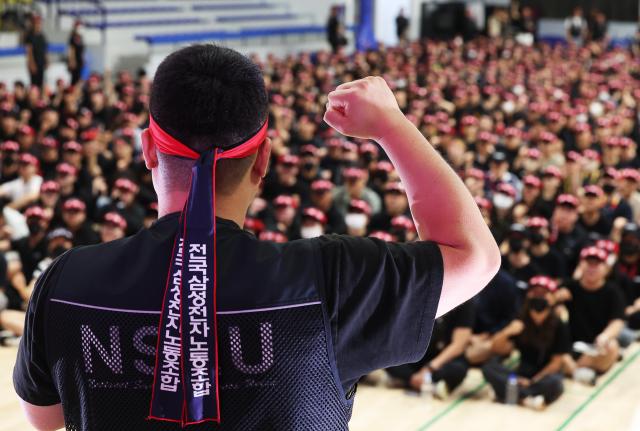
As a general strike at Samsung Electronics approaches, internal members are expressing growing fatigue regarding the union's demand for the institutionalization of performance-based bonuses. Critics argue that the request to fix a certain percentage of operating profit as a bonus fund and to eliminate the cap on excess profit bonuses (OPI) is excessive, separate from existing grievances about the company's compensation system.
On May 13, an employee from a manufacturing company affiliated with the metalworkers' union described the upcoming strike as "quite bizarre." He noted, "We have also made demands during wage negotiations for basic salary increases of around 150,000 won, hundreds of percent in bonuses, retirement extensions, and job security. However, the starting point for negotiations was to determine how to share based on actual results, inflation, and employment instability." He added, "The demand from the Samsung Electronics union to fix a certain percentage of yet-to-be-determined future operating profits as a bonus fund each year is fundamentally different. It sounds like they want to dictate the profit-sharing formula itself, rather than just asking for more bonuses."
Colleagues in the same industry are also critical. An employee in the electronics sector remarked, "I often discuss the Samsung Electronics strike with my peers, and many find it ironic that while some are discussing bonuses in the millions of won, they are resorting to a strike again." Another employee recalled, "I remember choosing not to join Samsung Electronics due to workplace preferences, even though we were both hired at the same time. I don't believe the current results solely belong to Samsung Electronics workers."
The atmosphere within Samsung Electronics is also divided. A staff member from the Device Experience (DX) division said, "Employees with around 15 years of service feel resentment towards newer employees who seem to demand credit for the company's achievements as if they built it themselves." Another employee raised concerns about whether it is fair for a 20-year veteran in memory to share performance outcomes in the same way as a one-year employee.
Criticism of the union's demands is strong among Samsung Electronics employees. One employee questioned, "Will we get paid for going on strike? If we keep incurring losses from strikes and then demand compensation, how can the company survive?" Another added, "While the company’s previous handling of issues was excessive, the current stance of the union also seems unreasonable."
The internal sentiment regarding the strike is complex. One union member stated, "I understand the intent behind the union's demands, but the psychological burden of a general strike is significant. I worry that we might be seen as hindering progress at a time when the semiconductor industry is recovering." While there is agreement on the need for performance-based bonuses, many internal voices draw the line at the strike as a means to achieve those demands.
Concerns have also been raised that this situation could exacerbate the controversy surrounding the 'elite union' status of the Samsung Electronics union. A business insider commented, "The issues of demanding higher compensation and fixing the profit-sharing structure are entirely different. If the strike proceeds, it is likely to be perceived as an unreasonable demand for profit distribution rather than a legitimate request for fair compensation."
* This article has been translated by AI.
Copyright ⓒ Aju Press All rights reserved.