
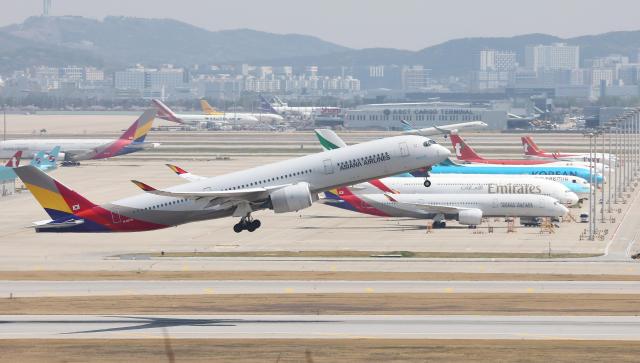
Korean Air has officially confirmed its merger with Asiana Airlines, setting the launch date for the new integrated airline for December 17. While the framework for the merger is in place, significant challenges remain, including the integration of mileage programs, adjustments to seniority, and internal organizational restructuring. With approximately seven months until the launch, last-minute complications related to stakeholder interests are expected.
According to industry sources, Korean Air and Asiana Airlines signed the merger agreement on May 14, marking the conclusion of a process that began with the resolution to acquire Asiana Airlines on November 16, 2020.
Korean Air has been progressing through the absorption merger process, including a 300 billion won investment in new shares of Asiana Airlines. The merger has received approval from the Korean Fair Trade Commission and 13 foreign competition authorities over a three-year period. In December 2024, Korean Air acquired a 63.88% stake in Asiana Airlines.
This merger agreement represents the final stage of the integration process. As the year-end launch approaches, Korean Air has submitted a request for merger approval to the Ministry of Land, Infrastructure and Transport immediately following the signing. In June, the airline plans to apply for approval of changes to operational standards that include safety compliance conditions and restrictions.
Asiana Airlines is scheduled to hold an extraordinary shareholders' meeting on August 12 to vote on the merger proposal. An industry insider stated, "Given the lengthy integration process, the merger proposal is expected to pass without issues at the shareholders' meeting, marking the final hurdle for the launch of the integrated full-service carrier (FSC)."
However, even if these legal procedures are completed, substantial challenges remain before achieving a true integration. Notably, the interests of employees from both airlines are intricately linked and are seen as key variables surrounding the launch of the new airline.
One significant issue is the integration of seniority. Pilots, due to the nature of their roles, are particularly sensitive to changes in seniority, which can affect promotion timelines, flight schedules, aircraft types, and work location choices.
Regarding seniority adjustments, it has been reported that Korean Air is not currently engaging in separate discussions with the union. No further four-party meetings involving both airlines and the pilots' union have occurred since March. Instead, Korean Air has been conducting HR integration briefings since last month, leading to tensions with the union. Consequently, it is anticipated that achieving harmony among employees and stabilizing the organization will take considerable time even after the physical merger.
The integration of mileage programs also remains an outstanding issue. The Fair Trade Commission is currently reviewing the third mileage integration proposal submitted by Korean Air. Previously, the commission rejected two proposals, citing insufficient consumer benefits.
An industry insider noted, "Once the FSC integration is completed, the three low-cost carriers (LCCs) will likely begin their integration efforts in the first quarter of next year, with the Korean Air-Asiana Airlines merger process potentially serving as a benchmark for future integrations."
* This article has been translated by AI.
Copyright ⓒ Aju Press All rights reserved.