
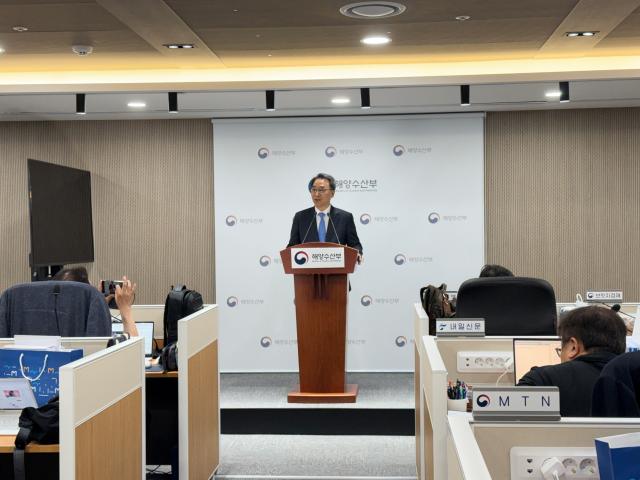
On May 14, Woo Dong-sik, the museum's director, held a press conference at the Ministry of Oceans and Fisheries in Busan, stating, "We will do our best to introduce marine culture to the public."
Woo explained that the museum was created to educate residents of the metropolitan area, where more than half of the country's population lives but has limited access to the sea and knowledge of the marine industry, through marine artifacts, history, and heritage.
Currently, there are two specialized maritime museums in South Korea, located in Busan and Incheon. Woo highlighted the difference in exhibition focus between the two: while the Busan Maritime Museum primarily showcases marine civilization, the Incheon museum centers on maritime exchange history and marine industry.
According to recent data, 48% of the Incheon Maritime Museum's visitors are from the Incheon area, followed by 28% from Gyeonggi Province, 15% from Seoul, and about 10% from other regions. Notably, family visitors, including children, account for 70% of total attendance.
In response to this demographic, the museum has established a children's section on the first floor, featuring a hands-on program titled "Little Navigator's Adventure." Additionally, it is collaborating with local artists to develop marine education programs that reflect regional characteristics.
Woo has set a goal of reaching 4 million cumulative visitors by 2029. He also plans to host an annual special exhibition on maritime trade, showcasing a series on global marine civilizations.
Regarding plans to attract foreign visitors, Woo noted that tourists arriving in Incheon typically head directly to Seoul. He mentioned that the museum is considering strategies to draw tourists in collaboration with relevant organizations such as the Incheon Tourism Organization and Incheon Port Authority.
However, he acknowledged that accessibility remains a challenge. To address this, the Incheon Maritime Museum plans to analyze visitor numbers and behaviors through a pilot shuttle bus service, with the possibility of expanding operations in the future.
Woo also introduced an upcoming special exhibition on Greece, scheduled for August. This exhibition follows a visit from the Greek Minister of Culture in 2024 and will focus on maritime exchanges between Greece and Korea.
"Currently, 50-60% of the ships ordered by Greek shipowners are being built in Korean shipyards," Woo said, adding that the exhibition will feature five sub-themes showcasing Greece's national treasures.
* This article has been translated by AI.
Copyright ⓒ Aju Press All rights reserved.