
The boundaries of the seasons are collapsing. Shortly after the Korea Disease Control and Prevention Agency activated its heat-related illness monitoring system, an 80-year-old man in Seoul was reported dead from heat-related illness. This marks the earliest recorded death since the monitoring system began, highlighting the significant implications of this event. It goes beyond a mere isolated incident, illustrating how climate change is altering the timeline of our daily lives.
On May 16, the highest temperature in Seoul exceeded 31 degrees Celsius, with the national average surpassing 28 degrees. This early onset of high temperatures is concerning. The critical issue is not just the temperature itself but the timing; extreme heat conditions have emerged in mid-May, before summer has even begun.
Heat-related illnesses have traditionally been associated with mid-summer, particularly during heat advisories. However, this incident demonstrates that this assumption is no longer valid. Heat does not adhere to seasonal boundaries and can arrive regardless of people's preparedness.
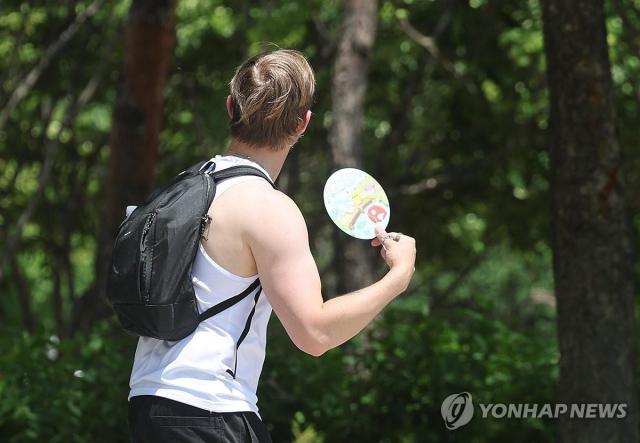
Ultimately, this incident is not just a statistical record but a signal. Climate change is rendering the question of 'when does it get hot?' meaningless, indicating that we have already entered a new environment.
The Disappearance of Spring... Changes in Daily Life Structure
A more fundamental change is occurring in the structure of daily life. In the past, Korea's seasons were relatively distinct. However, in recent years, spring has become shorter while summer has lengthened. This May heatwave starkly illustrates that change.
This shift is not merely about perceived temperatures; it affects the entire structure of industry, labor, consumption, and energy. For instance, outdoor work environments are becoming hazardous more quickly. Industries centered around construction, agriculture, and logistics must reassess their work schedules and safety standards.
Additionally, the demand for cooling is shifting the energy consumption structure. Peak electricity demand, which used to concentrate in July and August, may now extend to June and even May. This will inevitably impact energy policies and electricity supply plans.
Consumer patterns are also changing. The timing of seasonal product sales is moving earlier, necessitating adjustments in inventory and marketing strategies within the retail sector. Ultimately, the notion that 'spring is disappearing' is not just an emotional expression but a reflection of economic reality.
Urban environments are not exempt. The asphalt and concrete structures in cities exacerbate the 'urban heat island effect.' As temperatures rise more rapidly, the perceived temperature in urban areas increases, putting vulnerable populations at greater risk. Shade, green spaces, and wind corridors are no longer optional but essential survival infrastructure.
Inequality of Heatwaves... The Most Affected Populations
One of the most significant characteristics of climate change is 'inequality.' The impact of the same temperature rise varies among individuals and social classes. The recent heat-related death involved an elderly person, which is not a coincidence but a structural reality.
According to statistics from the Korea Disease Control and Prevention Agency, a significant number of heat-related deaths occur among those aged 65 and older. This is due to decreased thermoregulation abilities and a higher likelihood of chronic illnesses. Various factors, including access to cooling facilities, housing conditions, and social isolation, compound the risks.
Particularly, elderly individuals living alone or those in vulnerable situations face greater dangers during heatwaves. Unlike visible disasters such as typhoons or floods, heatwaves gradually and lethally deteriorate health. Consequently, the longer the response is delayed, the greater the damage becomes.
Pregnant women, children, and individuals with underlying health conditions are also classified as high-risk groups. Their ability to regulate body temperature is relatively weak, making them susceptible to even short periods of high heat exposure. The problem is that protective systems for these vulnerable groups are not yet sufficiently refined.
Ultimately, heatwaves are evolving from natural disasters into 'social disasters.' More critical than the temperature itself is the question of who suffers the most. The answer to that question is already clear.
Time for Action... A Shift in Policy and Awareness is Necessary
Now, the focus must be on response. However, the current response system is still designed based on past seasonal structures. Heatwave responses are concentrated over specific periods, and alerts are activated at certain times. But the climate has already surpassed those boundaries.
First, there is a need for the 'normalization' of heatwave responses. The system must transition to one that operates flexibly according to temperature changes rather than during a specific period. While the activation of monitoring systems has been advanced, more proactive preemptive measures are required.
Second, policies centered on protecting vulnerable populations must be strengthened. Beyond simple preventive guidelines, substantial support is necessary. Cooling facility assistance, health management visits, and community care systems must operate organically.
Third, a redesign of urban and industrial structures is essential. Long-term responses must include expanding green spaces, improving building standards, and enhancing safety in work environments. Particularly for outdoor workers, institutional measures such as adjusting work hours and ensuring breaks are crucial.
Most importantly, a change in awareness is vital. Heatwaves must be recognized not as temporary phenomena but as constant risks. Individuals must also alter their lifestyles. Basic responses such as adequate hydration, avoiding strenuous outdoor activities, and being mindful of vulnerable individuals can be life-saving.
The Questions Raised by May's Heat
The heatwave in May is not just a weather phenomenon; it is a question. How well are we accepting the changed climate as reality? And how quickly are we responding to that change?
This recent heat-related death cannot be dismissed as an individual misfortune. It signals that society as a whole is still unprepared. The seasons are already ahead of us. The problem is that our responses are not keeping pace with that speed.
The climate does not wait. Heatwaves are starting earlier, lasting longer, and are likely to become more intense. The heat of May is just the beginning.
It is now time to redesign policies and daily life based on climate rather than the calendar. If not, 'early heatwaves' will soon solidify into 'disasters that have become routine.'
* This article has been translated by AI.
Copyright ⓒ Aju Press All rights reserved.