
The candidate registration for the 9th nationwide local elections and the National Assembly by-elections, scheduled for June 3, highlights the current state of South Korean local politics. According to the National Election Commission, a total of 7,829 candidates have registered, with an average competition rate of 1.8 to 1, marking the lowest level historically, similar to the 2022 local elections. Notably, the number of uncontested candidates has reached a record high of 513.
Uncontested elections are a result of a system that allows candidates to be elected without a vote if the number of registered candidates is equal to or fewer than the number of positions available. However, the essence of democracy lies in competition and choice. When voters are deprived of the opportunity to compare and evaluate candidates, elections become mere formalities. The fact that voting will not take place in over 300 electoral districts in this election is a serious concern.
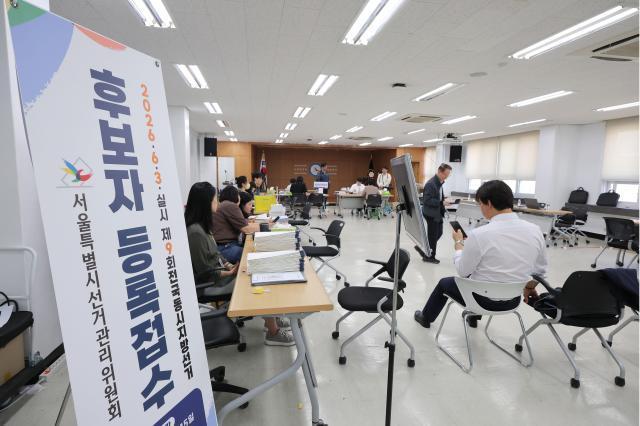
The concentration of uncontested elections among local councilors and regional representatives reveals structural issues. As local politics become increasingly dominated by specific parties, areas are emerging where competition is virtually nonexistent. In some regions, being nominated by a particular party effectively guarantees election, which severely limits voter choice.
The average competition rate of 1.8 to 1 is not just a statistic; it reflects a decline in political participation. Despite local politics being the most closely related to residents' lives, the decreasing number of candidates and competition indicates a weakening willingness to engage in the political process.
The reasons for this recurring phenomenon are complex. First, there is the issue of the party nomination system. When nominations in certain areas effectively guarantee election, it becomes difficult for new candidates to challenge. Second, there are significant barriers to entering politics, including the high costs of campaigning, the need for organization, and the challenge of gaining recognition. Third, a general distrust in politics discourages candidate participation.
The problem is that such a structure could deteriorate the quality of local governance in the long term. In a political environment devoid of competition, accountability diminishes. When candidates do not need to earn voter support, policy competition weakens, and the transparency and efficiency of administration may decline. Additionally, there is a risk that specific factions could monopolize local politics for extended periods.
The rise in uncontested elections is not merely a statistic; it serves as a barometer for the health of local governance. Local autonomy is the foundation of grassroots democracy. If that foundation weakens, central politics will inevitably be affected.
The solutions are clear. First, there is a need to reform the nomination structure. Institutional measures should be established to reduce the monopoly of specific parties and promote competition. Second, creating an environment that encourages broader political participation is crucial. Institutional support and the reduction of barriers are necessary to enable diverse talents, including youth, experts, and local activists, to enter politics. Third, efforts must be made to increase voter interest and participation. It is essential to raise awareness of the importance of local politics and to establish a policy-centered electoral culture.
Elections are not merely procedural; they are a process of choice. When choice is eliminated from elections, the meaning of democracy is diminished. The low competition rates and the increase in uncontested elections observed in this local election serve as a clear warning signal.
The record of 513 uncontested candidates is not a coincidence; it is the result of structural issues. Now is the time to decide whether to allow this trend to continue or to implement improvements. Reviving competition in politics and restoring the possibility of choice in elections is the starting point for normalizing local governance.
* This article has been translated by AI.
Copyright ⓒ Aju Press All rights reserved.