
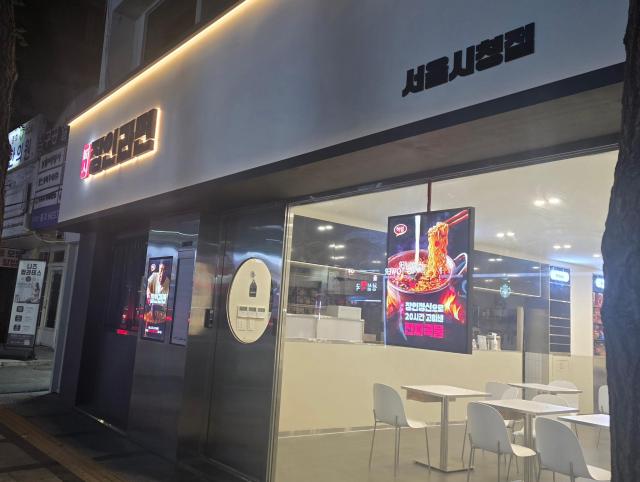
Food manufacturers are stepping out of their factories. The trend of offline marketing, which previously focused on short-term pop-up stores and limited-edition merchandise, is evolving into permanent brand spaces. These locations are designed to allow consumers to continuously experience the company’s food culture and brand philosophy in their daily lives, establishing a presence in key commercial areas throughout Seoul.
According to industry sources, Harim Industries opened a 'Jangin Ramen' snack bar near Seoul City Hall on May 8. This permanent location features a menu that includes its premium brand, featuring Jangin Ramen, bibim-myeon, and juicy dumplings. It is considered unusual for a ramen manufacturer to operate a direct snack bar centered around its own products. A Harim representative stated, "We focused on allowing consumers to naturally experience the brand by tasting finished dishes firsthand."
Ottogi is offering dining, café, and bakery services through its multi-cultural space 'Rolly Polly Cotto' in Nonhyeon-dong. The venue showcases a variety of unique dishes and desserts made with Ottogi products, along with exhibitions that highlight the brand's history. This initiative is interpreted as an effort to strengthen the image of Ottogi as a food culture brand, transcending its identity as a food manufacturer.
Dongseo Foods is enhancing its premium coffee expertise at 'Maxim Plant' in Hannam-dong, where it showcases the coffee roasting process and production methods. Visitors can observe the transformation of green coffee beans into roasted coffee and enjoy a selection of single-origin coffees and signature drinks. This experiential space emphasizes the company’s identity as a premium coffee specialist through its expertise and R&D capabilities.
Pulmuone is focusing on promoting plant-based food culture through its vegan restaurant 'Plantude.' While offering a menu composed entirely of plant-based ingredients, the restaurant does not overtly advertise itself as vegan. It aims to connect vegan food with a sophisticated and enjoyable dining experience. A Pulmuone representative described Plantude as a space that proposes a plant-based lifestyle.
A commonality among these spaces is their prioritization of building relationships with consumers over profitability. An industry insider noted, "Considering rent and operating costs, the profitability of the dining business itself is not significant, but the goal is to create experiences that allow consumers to remember the brand physically."
The strategic locations of these spaces in key commercial areas such as Hannam-dong, Nonhyeon-dong, and near City Hall are particularly significant. These areas attract a large influx of the trend-sensitive 2030 demographic and are frequented by foreign tourists. Another industry source remarked, "To move away from the outdated image of manufacturing companies, we needed spaces that young consumers would voluntarily visit and stay in."
Experts analyze this trend as a structural change rather than a temporary fad. In an era where differentiating brands solely based on taste and quality has become challenging, the competitive landscape is shifting towards integrating deeply into consumers' daily lives and preferences. Lee Eun-hee, a professor of consumer studies at Inha University, stated, "It is now difficult to achieve clear brand differentiation based solely on product taste or quality. The future competition in the food industry will revolve around not just 'what is being sold,' but 'how it integrates into consumers' daily lives and the experiences it offers.'"
* This article has been translated by AI.
Copyright ⓒ Aju Press All rights reserved.