
SEOUL, May 28 (AJP) - Over the past year, South Korea's manufacturing powerhouses — semiconductors and defense — have staged an epic rise with soaring share prices and record earnings reshaping the ambitions of the country's brightest young people.
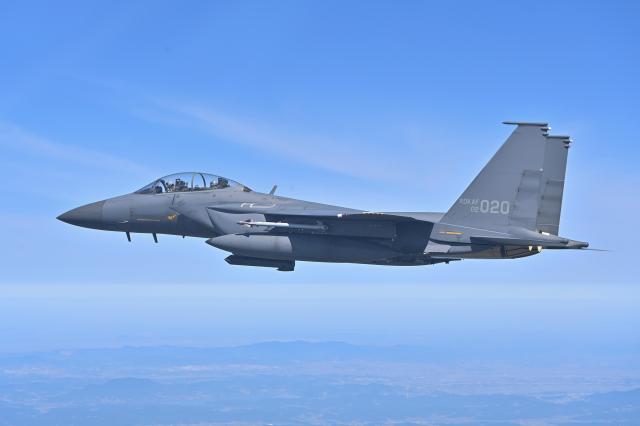
Semiconductor departments at Yonsei University and Korea University, once considered niche engineering tracks, are now competing directly with medical schools for top science students. The Air Force, meanwhile, has become one of the country's most sought-after military branches as recruits look to gain experience tied to careers in aerospace and defense.
Jongro Academy, one of South Korea's largest cram schools focused on top-tier university admissions, reports that admission cutoffs for semiconductor contract departments tied to Samsung Electronics and SK hynix climbed into the top 1 percent range this year.
Korea University's semiconductor engineering department recorded a 1.47 cutoff in its academic excellence admissions track for 2026, a sharp improvement from 2.40 in 2021.
Some admissions analysts say the programs are now competitive with lower-tier medical schools and could even surpass certain engineering departments at Seoul National University this year.
Lim Sung-ho, head of Jongro Academy, said the admissions market is undergoing a historic transformation.
"Regional medical schools and semiconductor contract departments at Yonsei and Korea universities have become equivalent choices," Lim said. "I have never seen anything like this in my 30 years working in this field."
The trend has become so widespread that South Koreans have coined a new admissions term, "uichihan-yaksu-ban," adding semiconductor departments to the traditional elite grouping of medical, dental, veterinary and pharmacy schools.
Hefty salaries, generous stock incentives and surging share prices have broken the long-held dominance of medical schools over the country's top students.
The momentum followed a stellar first quarter that reinforced expectations of a memory-chip bonanza during the AI transition.
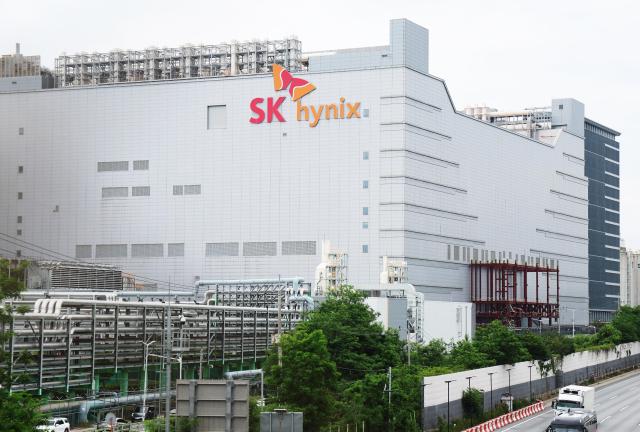
In the first quarter of 2026, Samsung Electronics posted record revenue of 133.9 trillion won and operating profit of 57.2 trillion won, while SK hynix reported revenue of 52.6 trillion won and operating profit of 37.6 trillion won.
Their stock prices have surged four- to fivefold in less than a year. Samsung Electronics shares have risen from roughly 80,000 won to 307,000 won over the past year, while SK hynix has jumped from about 230,000 won to 2.24 million won.
SK hynix joined the exclusive $1 trillion valuation club this week, following Samsung Electronics.
Samsung's semiconductor staff are set to receive bonuses of up to 626 million won this year, while SK hynix employees received profit-sharing bonuses worth up to 2,964 percent of annual base salary — pushing some payouts above 300 million won, roughly the median annual income of ordinary Korean salaried workers.
The scale of the payouts has become a national talking point, with some workers reportedly abandoning overseas MBA and training programs in order to remain eligible for bonuses.
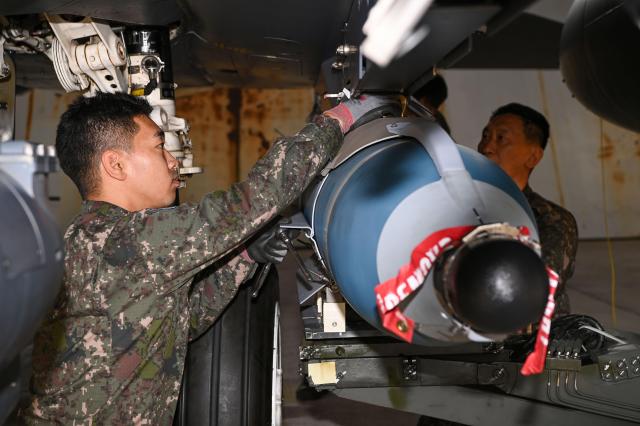
The Air Force is attracting unprecedented numbers of applicants as young men increasingly link military service to future careers in the defense and aerospace industries.
Data submitted by the Military Manpower Administration to Democratic Party lawmaker Park Sun-won showed that 80,968 people applied this year for 18,000 Air Force enlisted positions, producing a competition rate of 449.8 percent.
The March intake reached 936.4 percent, with nearly 15,000 applicants competing for 1,600 positions — the highest monthly figure in at least five years. February's competition rate stood at 891.9 percent, while April reached 849.6 percent.
Applications have climbed rapidly in recent years. Total Air Force applicants rose from 46,313 in 2022 to 55,591 in 2023 and 92,664 in 2024. The overall competition rate increased from 257.3 percent in 2022 to 496.5 percent in 2024, before easing slightly this year.
The Air Force, once avoided because its mandatory service period is longer than the Army's, is increasingly viewed as a gateway into aerospace engineering, aircraft maintenance, communications systems, software and drone technology.
Defense exports hit a record $17.3 billion in 2022 after overseas contracts involving the K2 tank, K9 self-propelled howitzer, FA-50 light attack aircraft and Chunmoo rocket launcher.
The boom accelerated after the United Arab Emirates signed a deal for the Cheongung-II missile defense system in 2021, followed by Poland's massive orders for Korean weapons systems in 2022.
Companies including Hanwha Aerospace, Korea Aerospace Industries, LIG Nex1 and Hanwha Systems are expanding recruitment in aerospace, radar, satellites, electronic warfare and software engineering.
The enthusiasm for semiconductors and defense also reflects broader anxieties among Korean youth over slowing social mobility and weakening job security outside a handful of strategic industries.
Artificial intelligence is beginning to reshape hiring in accounting, law and office administration, while semiconductors and defense are increasingly viewed as rare sectors still offering rising wages, export growth and long-term industrial investment.
Copyright ⓒ Aju Press All rights reserved.
