
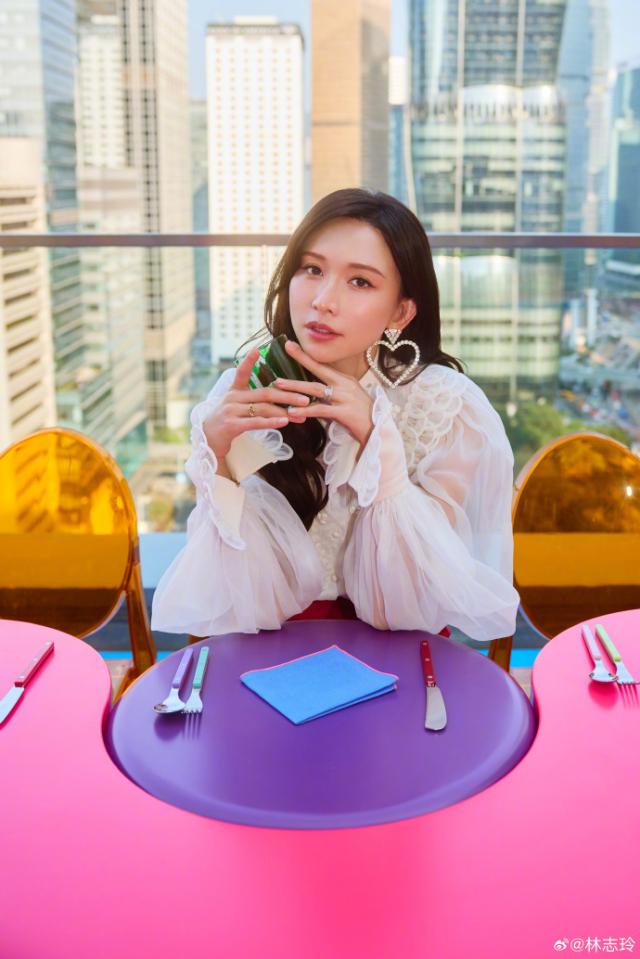
The phrase "Liang'an bushi ren" (兩岸不是人) reflects a cynical view that neither side of the Taiwan Strait—mainland China and Taiwan—welcomes certain individuals. Recently, this expression has resurfaced in discussions surrounding Taiwanese celebrity Lin Chi-ling's recent actions.
The controversy began when Lin was appointed to the board of the Taiwan Creative Content Agency (TAICCA), an organization established by the Taiwanese government in 2019 to promote the cultural content industry and support global marketing efforts. Her appointment aimed to leverage her international experience.
However, upon the announcement of her appointment, criticism arose from pro-independence factions in Taiwan. The backlash intensified after Lin shared a post on Chinese social media platform Weibo on October 1, 2023, celebrating the 74th anniversary of the founding of the People's Republic of China, along with a video of her singing a patriotic song in China. This fueled accusations of her pro-China stance.
Critics argued that her role on the board of an agency tasked with promoting Taiwanese identity and cultural content was inappropriate, especially during a sensitive period in cross-strait relations. Some claimed that the agency should maintain a certain distance from mainland China.
In response, Taiwan's Mainland Affairs Council publicly supported Lin's appointment, urging her to "disconnect from China and return to Taiwan" (脫中返台). However, this statement reportedly complicated Lin's position, as she has been active in both Taiwan and mainland China.
Ultimately, Lin broke her silence just nine days after her appointment, stating that she wished to prevent further "baseless speculation and misunderstandings" and announced her resignation. This led to a wave of criticism from Chinese netizens.
In China, many view TAICCA as part of the ruling Democratic Progressive Party's 'cultural Taiwan independence' policy. Some online commentators interpreted Lin's acceptance of the board position as a pro-independence move. Additionally, her quick resignation raised suspicions that it was a strategic decision to continue her activities in mainland China.
Lin hails from Tainan, a city known for its strong anti-China sentiment. Her father is a well-known supporter of former President Tsai Ing-wen, who advocates for Taiwanese independence. Consequently, Lin faced backlash when she began her career in mainland China. Despite this, she maintained popularity in China as cross-strait relations stabilized over time. After marrying a Japanese actor in 2019, she reduced her public appearances but resumed her activities in mainland China this year.
Following the recent controversy, Lin's name was removed from the cast list of a Chinese drama in which she was expected to make a special appearance, and other entertainment programs are reportedly seeking replacements for her. This indicates a growing atmosphere of boycott against Lin in mainland China.
This situation has drawn comparisons to the 2016 'Tzuyu incident,' where Tzuyu, a member of the K-pop group TWICE from Taiwan, faced backlash from Chinese netizens for waving a Taiwanese flag on a Korean broadcast. After publicly apologizing, she encountered a backlash in Taiwan as well.
Ultimately, the phrase "Liang'an bushi ren" encapsulates the precarious reality faced by Taiwanese celebrities amid escalating cross-strait tensions. They become targets of controversy without explicitly stating their political views, and any perceived alignment with one side can provoke backlash from the other. As cross-strait relations worsen, the space for Taiwanese entertainers continues to shrink.
* This article has been translated by AI.
Copyright ⓒ Aju Press All rights reserved.