
The competition between South Korea and Taiwan for dominance in the global artificial intelligence (AI) ecosystem is intensifying. Taiwan boasts a strong value chain in foundry, packaging, and fabless sectors, bolstered by its early partnership with NVIDIA. Meanwhile, South Korea aims to leverage its leading memory capabilities and top-tier physical AI expertise to emerge as a key player in the ecosystem.
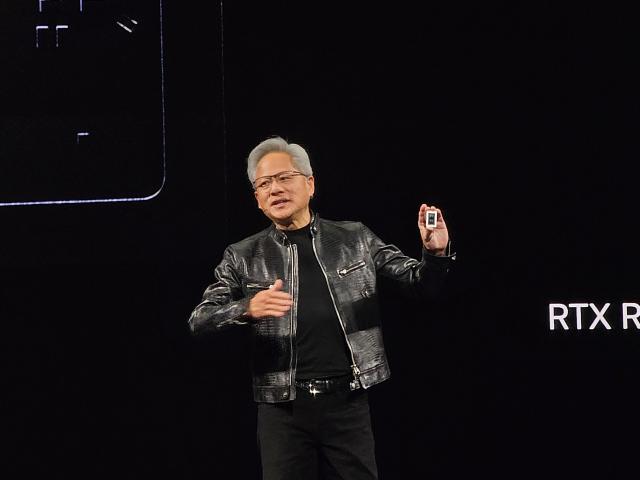
During the keynote address at the GTC 2026 event in Taipei on June 1, NVIDIA CEO Jensen Huang unveiled strategies for next-generation AI semiconductors and AI chips for PCs. Following this event, Computex 2026 will further establish Taiwan as a central hub for global AI business.
Taiwan's competitive edge lies in its dense supply chain. NVIDIA's core AI accelerators are produced through TSMC's advanced processes and packaging. Companies like Foxconn provide AI servers and power infrastructure, while fabless firms such as MediaTek and Alchip handle custom semiconductor designs for major tech companies. NVIDIA's plans to build a large new headquarters and research center in Taiwan are aimed at maintaining this supply chain density in the long term.
While Samsung Electronics and SK Hynix dominate the high-bandwidth memory (HBM) and next-generation DRAM markets, they appear more as key component suppliers compared to Taiwan's integrated value chain that encompasses chip design, manufacturing, packaging, server assembly, and power and cooling components.
However, there are opportunities for South Korea. The next wave of AI competition is shifting towards the integration of semiconductors, robotics, automotive technology, factory automation, and data center infrastructure. Notably, the physical AI sector, emphasized by NVIDIA, is seeing renewed interest in the capabilities of South Korean manufacturing giants. If sectors like automotive, robotics, shipbuilding, batteries, and smart factories can integrate with NVIDIA's platform, South Korea could establish a distinct AI ecosystem compared to Taiwan. The challenge will be to expand collaboration beyond individual companies to a national strategy that integrates semiconductors, manufacturing, software, and infrastructure.
After his visit to Taiwan, Jensen Huang is scheduled to travel to South Korea, where he will meet with prominent business leaders, including Naver founder Lee Hae-jin, LG Group Chairman Koo Kwang-mo, Hyundai Motor Group Chairman Chung Eui-sun, and Doosan Group Chairman Park Jung-won, starting June 5. There are also discussions about a potential visit to Naver's 1784 headquarters on June 8.
There are calls for Huang's visit to go beyond ceremonial meetings. It is essential for South Korean conglomerates to find various opportunities to integrate into the global AI ecosystem led by NVIDIA.
Kim Yong-seok, a distinguished professor at Gachon University’s Semiconductor College, stated, "Jensen Huang's visit aims to connect NVIDIA's chips and software solutions with South Korea's manufacturing sites and products. The key challenge will be to closely integrate South Korea's strengths in memory with NVIDIA's physical AI solutions."
* This article has been translated by AI.
Copyright ⓒ Aju Press All rights reserved.