
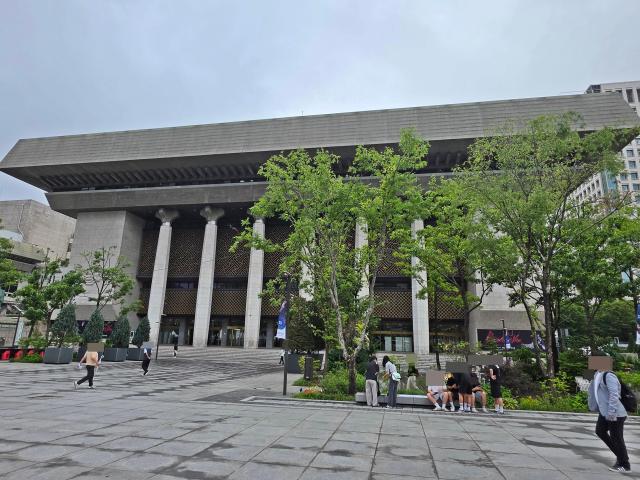
Gwanghwamun, the heart of South Korea's history, has evolved from the Joseon Dynasty's Six Ministries Street through the Japanese occupation to modern times. Behind the familiar hustle and bustle of this iconic area lies the 'heart of the arts,' the Sejong Center, which has remained largely hidden from public view.
On May 28, I embarked on a 'Backstage Tour' of this massive structure, which often goes unnoticed in daily life. The hidden efforts and years of dedication behind the glamorous stage left a lasting impression.
As I followed the calm narration of former announcer Yoo Jeong-a, I opened a firmly closed door and was greeted by the reality behind the stage, previously obscured by dazzling lights and applause. This secret space, not accessible to the general audience, evoked a mix of excitement and emotion as I acclimated to the unfamiliar surroundings.
This program, organized by the Seoul Tourism Foundation in collaboration with the Sejong Center, allowed participants to explore both the birthplace of performing arts and the historical traces within. It was not merely a tour of a landmark but a genuine journey into the city's deeper essence.
◆ From Ashes to 'Seoul's Living Room': The Grandeur of 1978
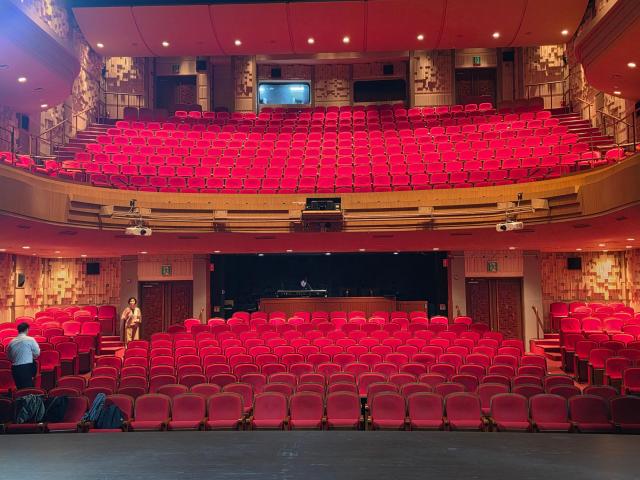
The Sejong Center stands on the site of the Seoul Citizens' Hall, a prominent performance venue completed in 1961. However, a tragic fire in December 1972 destroyed the building, leaving Seoul without a proper venue for performances. The following year, the Vienna Philharmonic Orchestra had to perform at Ewha Womans University auditorium, leading conductor Claudio Abbado to express his dissatisfaction and vow never to return. Thus, the construction of a comprehensive performance hall became a pressing issue.
Construction began in 1974, and the Sejong Center officially opened in April 1978. Built with an overwhelming capacity of over 3,800 seats, it was designed with an awareness of the North Korean Mansudae Art Theater amid the division of the Korean Peninsula. After a remodeling in 2004, it now accommodates 3,022 seats. Herbert von Karajan, the renowned conductor of the Berlin Philharmonic, praised it as a "wonderful hall" in 1984.
The architect of this building, the late Um Deok-mun, defined the Sejong Center as 'Seoul's living room.' He modernized the traditional concepts of the main house and annex of a hanok, incorporating corridors and courtyards. For instance, the main theater serves as the main house, while the Chamber Hall and M Theater correspond to the annex.
At the time, President Park Chung-hee insisted on a tiled roof design, but Um maintained that he could preserve tradition through the curves of the corridors and eaves without using tiles, ultimately realizing his vision for the building.
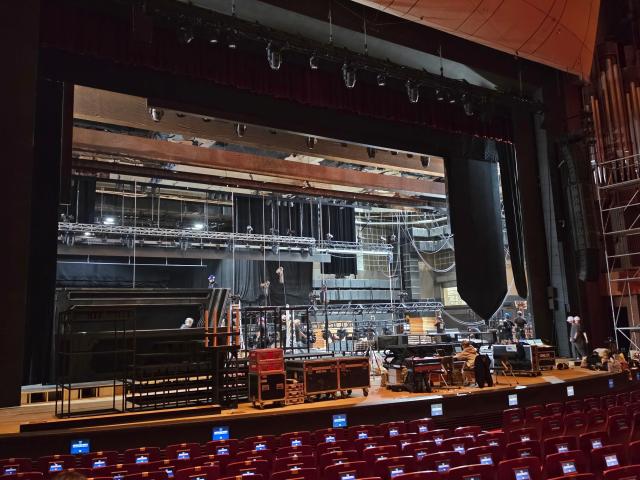
The grand pipe organ, occupying the left wall of the main theater, is the most significant legacy of this space. Custom-built in Germany by Karl Schuke, the installation and tuning took 13 months, involving a total of 4,000 personnel, including 1,400 German technicians. With 8,098 pipes, six keyboards, a height of 11 meters, a width of 7 meters, and weighing 45 tons, its current value is estimated at 6 billion won. This organ, which embodies the shape of a geomungo and the curves of traditional tiled eaves while incorporating the sound of Buddhist bells, has become a symbol of the space.
◆ The Aesthetics of One Inch Behind the Stage and the Boundary-Crossing 'S Theater'
While the sound-reflecting panels are usually down, a much larger auxiliary space is hidden behind the stage. Moving to 'Stage Right,' where staff were busy preparing for the rehearsal of the musical 'Beethoven,' the backstage area moved like a massive organism.
The heavy revolving stage, with a diameter of 17 meters, takes 27 seconds to rotate 90 degrees and 55 seconds to turn 180 degrees. Inside, a lifting platform allows the lead actor to rise and descend from the floor. The 43 suspension bars hanging from the ceiling and the 11 dressing rooms extending underground hint at the intense efforts of countless individuals who work behind the scenes to create spectacular performances.
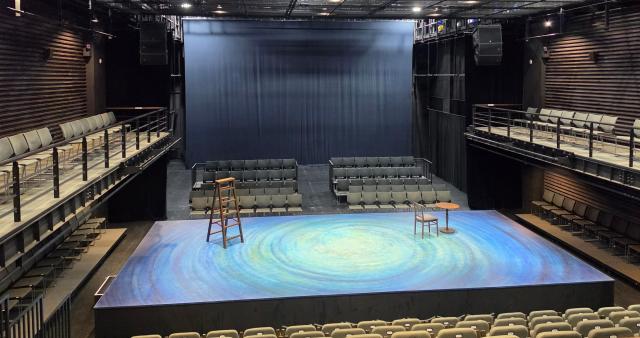
Exiting the main theater leads to the S Theater, a flexible black box theater with around 300 seats that opened in 2018. This space boldly breaks down the boundaries between the audience and the stage, providing a vibrant experience. When all the seats are pushed in, it transforms into a flat stage. A guide shared a delightful anecdote about a patron who dozed off on a plush cushion and was startled to find an actor standing right in front of them upon waking, illustrating the freedom of this space.
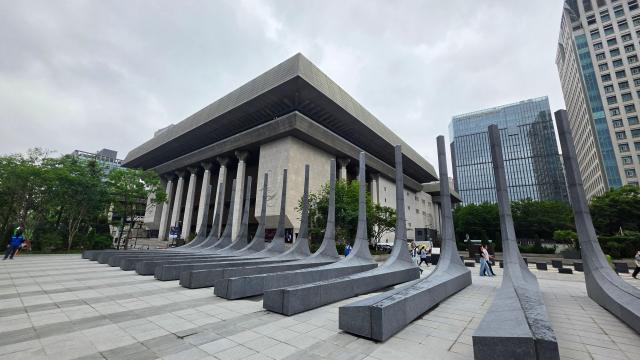
◆ The Garden of Gratitude: A Memorial Space in the City and the Future of Arts Tourism
The journey through the arts naturally led to Gwanghwamun Square, where the newly opened 'Garden of Gratitude' serves as the final destination. This memorial space honors the countries that participated in the Korean War.
Similar to the Vietnam Veterans Memorial in Washington, D.C., or the National Memorial Arboretum in the UK, the Garden of Gratitude is situated in an open public space where citizens bustle about. This location reflects South Korea's commitment to remembering its painful history and honoring the sacrifices of the participating nations in the heart of Gwanghwamun.
In the garden, 23 sculptures stand silently, symbolizing the date of the Korean War's outbreak, June 25. The number 23 represents the noble dedication of the countries that shed blood to defend this land (the Korean military and 22 allied nations). Notably, some sculptures are made from stones donated by the participating countries, enhancing the significance of the space.
Every evening, a laser show titled 'Light of Gratitude 23' illuminates the sky from the 23 symbolic structures. Walking beneath the beams of light that adorn the night sky, one can feel the connection between past sacrifices and the peaceful nightscape of the present.
The tour naturally led underground to the immersive media exhibition space 'Freedom Hall,' which powerfully projects the painful memories and tears of war, as well as South Korea's remarkable growth from the ashes through media art, leaving a profound impact.
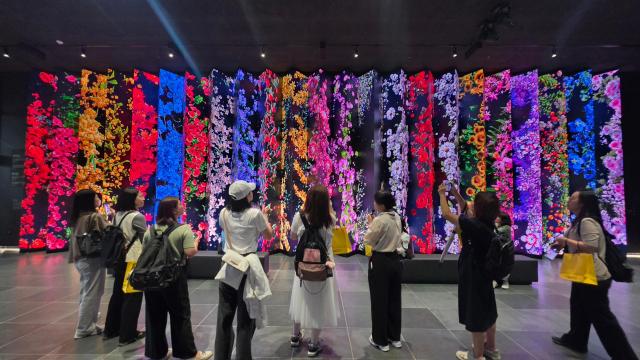
Ki Gi-yeon, the head of the Seoul Tourism Foundation, noted, "With the addition of the Garden of Gratitude and the underground media art, a new combination of attractions has been created in Gwanghwamun Square, previously guarded by the statues of General Yi Sun-sin and King Sejong the Great." He added, "Just as we feel a sense of pride and emotion when we encounter the South Korean flag while traveling abroad, foreign tourists will also experience a valuable connection when they discover their own flags in this land of freedom, preserved through the sacrifices of our ancestors." This highlights how art and space can comfort a painful history and embrace daily life.
A representative from the Sejong Center mentioned that over 60 foreign tourists have already visited after seeing reports in international media. The cost of over 30,000 won and the 70-minute duration of the tour are deemed worthwhile, as they provide a profound experience of the 600-year history of Gwanghwamun, the philosophy of architect Um Deok-mun, and the heart of the arts.
Currently, the tour is exclusively for foreigners, but the foundation plans to open it to locals based on demand. It seems that the day will soon come when we can eagerly explore this familiar yet unfamiliar world behind the stage that we pass by every day. I await that day with anticipation.
* This article has been translated by AI.
Copyright ⓒ Aju Press All rights reserved.