
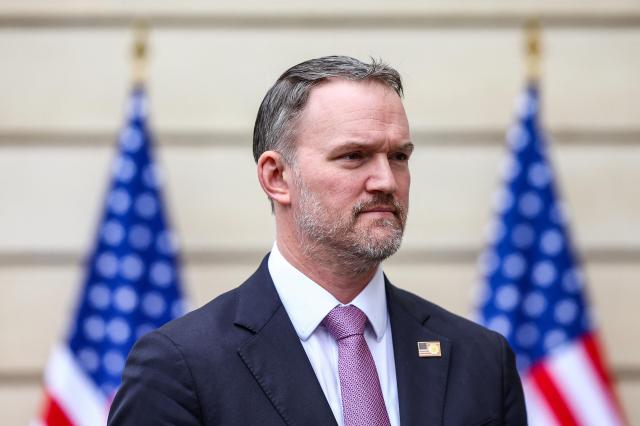
In a commentary titled "Trade Theory Must Catch Up with Tariffs, Industrial Policy, and the Costs of Globalization" published in the June issue of the International Monetary Fund's (IMF) Finance & Development magazine, Grier noted that for nearly 30 years, tariffs and import regulations have been excluded from policy options due to economic models and elite consensus, and that President Trump is changing this.
"The return of tariffs and import regulations presents an opportunity to update outdated assumptions and models with evidence from real-world data and experience," he stated, pointing out that existing free trade theories fail to adequately reflect the real costs of labor market shocks, supply chain vulnerabilities, and the decline of manufacturing bases.
Grier explained that even those who designed the post-World War II international economic system recognized the risks of unrestricted trade. He emphasized that the General Agreement on Tariffs and Trade (GATT) was designed to allow the use of tariffs for essential security guarantees, preventing domestic industry harm, responding to unfair competition, promoting economic development, and addressing balance of payments issues.
He criticized policymakers, economists, and business leaders since the 1990s for forgetting this pragmatism and embracing hyper-globalization. As a result, multinational corporations relocated production bases in search of subsidies and lax labor and environmental regulations, leading to the loss of quality manufacturing jobs and factories in the U.S.
Grier argued that modern economics must reflect structural trade imbalances that cannot be explained solely by comparative advantage. He questioned, "How can the U.S., with the richest farmland in the world, run a trade deficit in agriculture? How could South Korea, with limited energy resources and no coal or iron ore, become a steel powerhouse?"
He pointed out that economic interventions by various countries have distorted the global economy, placing some nations in chronic trade deficits while others enjoy surpluses, stating, "This is unhealthy for both sides."
Grier criticized the IMF for warning about the U.S. current account deficit while only proposing large tax increases, austerity measures, and cooperation with trading partners as solutions. He argued, "The imbalances that have grown over the past decade show that politely requesting structural economic changes is ineffective."
He also emphasized that tariffs are a key tool for encouraging domestic production and altering trade patterns. Citing the Reagan administration's restrictions on Japanese auto imports and the safeguard tariffs on washing machines during Trump's first term, he explained that tariffs have led to increased investment and job creation in the U.S.
Grier stated, "Tariffs that directly target the main sources of deficits are a simpler and more flexible solution," adding that the U.S. is encouraging productive investment through tariffs and reciprocal trade agreements, increasing domestic production incentives, and opening U.S. export markets.
Meanwhile, following the Supreme Court's ruling on the invalidation of reciprocal tariffs in February, the Trump administration has imposed a 10% 'global tariff' on all trading partners based on Section 122 of the Trade Act. The deadline for imposing tariffs under this provision is up to 150 days, with new tariffs expected to be introduced based on the findings of Section 301 investigations by late July.
In a CNBC interview, Grier announced that the results of the Section 301 investigation, which includes South Korea and dozens of other countries, will be released in the coming weeks.
* This article has been translated by AI.
Copyright ⓒ Aju Press All rights reserved.