
The first nationwide election since the launch of the Lee Jae-myung administration has concluded. In the June 3 local elections, 4,227 officials were elected, including heads of regional governments, education superintendents, local government heads, and various council members. Additionally, 14 vacant National Assembly seats were filled by local voters.
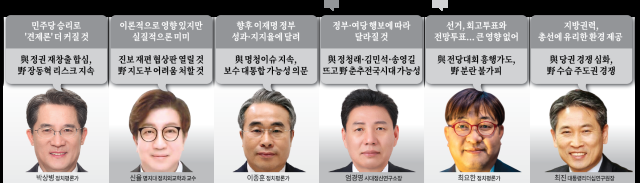
In an interview with Aju Economy on June 3, six political analysts identified improving livelihoods and revitalizing local economies as the top priorities for the newly elected officials. They also emphasized the need to unify a divided public sentiment during the election period. It was suggested that this process could lead to competition for party leadership and a realignment of the political landscape between progressive and conservative factions.
In an interview with Aju Economy on June 3, six political analysts identified improving livelihoods and revitalizing local economies as the top priorities for the newly elected officials. They also emphasized the need to unify a divided public sentiment during the election period. It was suggested that this process could lead to competition for party leadership and a realignment of the political landscape between progressive and conservative factions.
"Livelihoods Are on the Brink... Local Governments Must Step Up"
Eom Kyung-young, head of the Era Spirit Research Institute, stated, "Despite recent positive developments in exports and the stock market, the polarization of real income and regional economic stagnation are worsening. Improving livelihoods and revitalizing local economies should be the top priority through collaboration with the central government or alliances with other regional governments."
Political analyst Park Sang-byeong remarked, "Livelihoods are not just on the brink; they have already fallen off the edge. The central government must look at the entire nation, so local governments need to take responsibility for livelihoods. It is the mandate of the citizens for mayors and governors to embrace the declining livelihoods."
Choi Jin, head of the Presidential Leadership Research Institute, advised, "Do not be overly swayed by central politics; focus all efforts on revitalizing the local economy. Given the difficulties in local economies, there must be a concerted effort to recover in the short term."
The intense rivalry between the ruling and opposition parties during the local election process, along with internal conflicts over party nominations, underscored the importance of unity. Leaders must demonstrate the ability to mend divided public sentiment and move toward common goals.
Political analyst Lee Jong-hoon emphasized, "It is crucial for elected officials to fulfill their campaign promises, but those who win by narrow margins must pay more attention to unity. They should pursue a pragmatic approach to foster community integration."
Choi Yo-han, another political analyst, added, "I hope the government and local authorities can work together as co-responsible entities chosen by voters, transforming crises into opportunities, rather than engaging in passive administration where the state supports and the region merely executes."
Next Nationwide Election in Two Years... Accelerating Political Landscape Changes
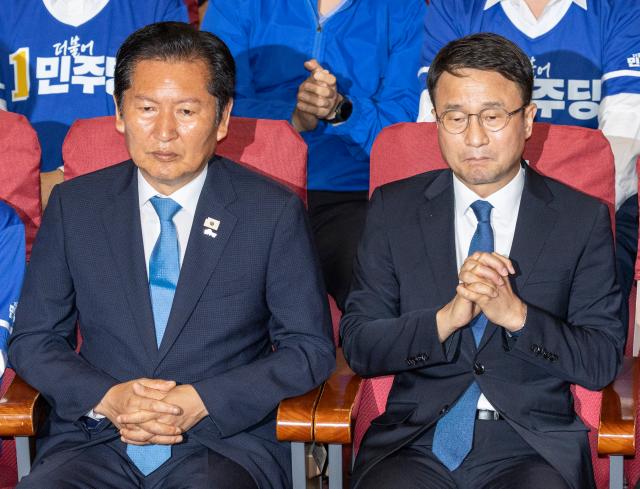
The results of this local election are not anticipated to significantly impact the next general election. Voters are likely to base their decisions more on evaluations of the Lee Jae-myung administration and the Democratic Party regarding central political issues rather than the political landscape of local power.
Shin Yul, a professor of political science at Myongji University, noted, "Theoretically, local power can activate regional organizations, but general elections are more influenced by central political issues. In the 2024 general election, the People Power Party held local power, yet the Democratic Party secured nearly all the seats."
However, some experts argue that the winning party in local elections, often referred to as grassroots democracy, cannot be overlooked as it may provide an advantageous position for the next general election. Choi Jin stated, "Controlling local power can create favorable conditions in both physical and institutional aspects."
Experts are focusing more on the immediate internal power struggles within the Democratic Party and the People Power Party, as well as the potential realignment of the progressive and conservative political landscape, rather than the general election two years from now. The Democratic Party is preparing for its national convention in August, while the People Power Party faces growing skepticism about the 'Jang Dong-hyuk regime' due to the election results, making internal competition for leadership inevitable. Additionally, discussions about the integration and reorganization of the progressive camp, including the Democratic Party and the Justice Party, as well as competition for leadership or potential splits within the conservative camp, are also expected to emerge.
Choi Jin predicted, "The Democratic Party's national convention will be heated. Conflicts between factions will intensify as they prepare for the next presidential election," adding that the conflicts arising from the election period between the Democratic Party and the Justice Party may cause discussions on integration to temporarily subside.
There are also suggestions that the Democratic Party should focus more on re-establishing its government rather than internal power struggles. Park Sang-byeong warned, "While we will unite for the success of the Lee Jae-myung administration and the re-establishment of the government after the election, internal disputes will continue. However, the more important factor is achieving tangible results. Without concrete achievements, we will not receive votes in the next general election."
Experts also raised the possibility of renewed discussions on the merger between the Democratic Party and the Justice Party, which had surfaced earlier this year. Park Sang-byeong stated, "It will be difficult for the Democratic Party and the Justice Party to separate before the general election. The manner of their integration will be crucial, depending on whether Justice Party leader Cho Kuk enters the National Assembly, which will determine whether it is an equal merger or an absorption merger."
However, some believe that the intense clashes between the two parties during this election, coupled with the imminent Democratic Party national convention, could serve as variables in the reorganization of the progressive camp.
The People Power Party is also expected to face sharp conflicts among its factions. Choi Jin predicted, "The pro-Yoon (supporters of President Yoon Suk-yeol) and anti-Yoon factions will fight fiercely, as they must seek a path forward for the next general election while engaging in a bloody struggle for leadership."
Analysts suggest that the by-elections will have a greater impact on the internal power dynamics of the People Power Party than the local elections. Shin Yul stated, "Chairman Jang will not relinquish his position regardless of the outcome. The conservative camp's dynamics will depend heavily on former leader Han Dong-hoon's entry into the National Assembly, which will influence various scenarios and the presidential race."
There are also concerns that the Jang Dong-hyuk regime may collapse following the local election defeat, or that a new conservative party may emerge. Eom Kyung-young predicted, "The People Power Party will inevitably distance itself from the far-right factions known as 'Yoon Again.' The leadership of Jang Dong-hyuk has been significantly undermined due to the local elections, indicating a potential transitional period for establishing new leadership."
Park Sang-byeong also noted, "The conflict between those trying to maintain the Jang Dong-hyuk regime and those seeking to dismantle it will continue until the next general election. If the internal situation does not change significantly as the general election approaches, a new conservative party may emerge."
* This article has been translated by AI.
Copyright ⓒ Aju Press All rights reserved.