
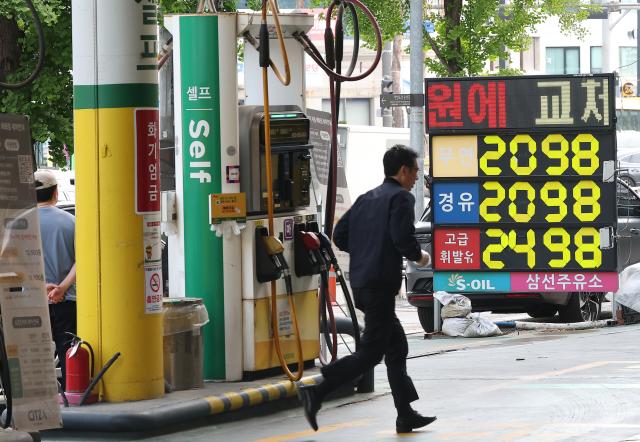
The South Korean government is considering lifting the oil price cap if global oil prices stabilize structurally. However, with the recent consumer price inflation rate soaring to 3.1%, officials plan to maintain the price cap to ensure stability in essential goods and services.
On June 4, Deputy Prime Minister and Minister of Economy and Finance Ku Yun-cheol chaired a task force meeting at the Government Seoul Office to discuss recent consumer price trends and response measures.
The government stated that it would review the possibility of lifting the price cap if supply uncertainties are resolved with the resumption of shipping through the Strait of Hormuz or if global oil prices stabilize and the risk of sharp increases diminishes. However, during ongoing uncertainties in the Middle East, officials plan to manage the price cap flexibly based on market conditions.
Since implementing the price cap in March following the outbreak of conflict in the Middle East, analysis has shown that without the cap, the consumer price inflation rate last month would have risen to 3.7%, 0.6 percentage points higher than the reported 3.1%. The reduction in fuel taxes is estimated to have contributed about 0.3 percentage points to this figure.
In light of persistently high oil prices, the government plans to alleviate the burden on vulnerable groups. This includes swiftly executing support payments for high fuel prices, raising the subsidy limit for diesel used by freight trucks by 52.8%, and providing price-linked subsidies for tax-exempt fuel for farmers and fishermen. The government is also considering additional incentives for gas stations that contribute to price stability, such as selecting and rewarding 'good gas stations.'
To stabilize essential goods prices, the government will implement measures to increase supply. This includes introducing tariff quotas for pork and chicken to boost supply volumes and considering emergency tariff quotas for the second half of the year. Discounts for agricultural and fishery products provided by the government and producer organizations will be expanded to a maximum of 50%.
Additionally, to stabilize egg prices, the government plans to increase imports of fresh eggs from the United States and Thailand, and release 8,000 tons of government stockpiled seafood, including pollock, mackerel, squid, and hairtail, at prices 30-40% lower than market rates. A task force will be established to ensure stable supply of agricultural and livestock products in preparation for summer heatwaves and heavy rains.
To manage prices for essential services, the government will conduct special inspections in collaboration with relevant departments to address excessive pricing and price collusion in accommodations ahead of the summer vacation season and local festivals. It plans to push for legal amendments to introduce a voluntary price reporting system for accommodations and establish consumer protection measures that require compensation of 200% of the accommodation fee for unjustified cancellations.
Furthermore, the government will launch a data plan that allows continued use of basic communication services even after the data limit is reached, aimed at reducing communication costs.
* This article has been translated by AI.
Copyright ⓒ Aju Press All rights reserved.