
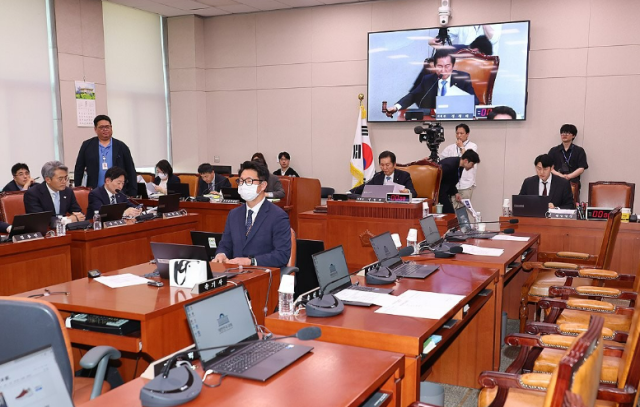
Following the local elections on June 3, the South Korean government and ruling party are expected to intensify discussions on prosecutorial reform legislation that had been postponed. The Prosecutorial Reform Promotion Team under the Prime Minister's Office plans to unveil a draft amendment to the criminal procedure law this month, with the future of supplementary investigation rights emerging as the primary issue in the second phase of prosecutorial reform.
According to legal sources on June 4, the Prosecutorial Reform Promotion Team intends to announce the draft amendment within this month. With the local elections concluded and the upcoming Democratic Party convention scheduled for August, discussions on prosecutorial reform are anticipated to gain momentum.
The most significant point of contention is the supplementary investigation rights of prosecutors. Concerns have been raised that if these rights are abolished, prosecutors would only be able to decide on indictments based on cases handed over by primary investigative agencies like the police, potentially leading to delays in case processing and gaps in investigations. The Supreme Prosecutors' Office reported that 45.6% of cases handled by prosecutors in March and April of this year underwent supplementary investigations, underscoring the need to maintain the system.
Conversely, hardliners within the ruling party argue that supplementary investigation rights are an extension of prosecutorial powers and should be abolished to uphold the principle of separating investigation and prosecution. They contend that allowing supplementary investigations could lead to an expansion of prosecutorial authority in the future.
While supplementary inquiry rights have been proposed as an alternative, there is considerable debate surrounding this issue. Critics argue that supplementary inquiry rights resemble administrative investigations rather than criminal investigations, making it difficult to recognize evidence in court and limiting the protection of defendants' rights, such as the right to refuse testimony and the right to legal counsel.
The law firm Hwawoo identified the fate of supplementary investigation rights as a crucial variable in prosecutorial reform in a report released on the same day, titled "Outlook on Corporate Regulatory Environment Following the June 3 Local Elections." Hwawoo stated, "The issue of granting supplementary investigation rights to public prosecutors will emerge as the key point determining the practical success of prosecutorial reform."
Discussions regarding the transition to a public prosecution and serious crimes investigation agency system, another key aspect of the second phase of prosecutorial reform, are also expected to become more active. The Serious Crimes Investigation Agency, which is being prepared for launch in October, will be responsible for investigating six major crimes: corruption, economic offenses, defense industry crimes, drug offenses, national security crimes, and cybercrimes. Consequently, a significant number of investigations currently handled by prosecutors in areas such as securities, finance, fair trade, and corporate crimes are likely to be transferred to the Serious Crimes Investigation Agency.
Hwawoo advised that businesses should focus on the diversification of investigative agencies rather than merely the reduction of prosecutorial powers. The report predicts that with the establishment of the public prosecution and serious crimes investigation agency system, companies will face a landscape where they must respond to multiple investigative bodies, including the police and special judicial police.
Discussions on the so-called "special prosecution law for fabricated charges," promoted by the ruling party, may also resume following the local elections. In April, the Democratic Party proposed a special prosecutor bill aimed at uncovering allegations of fabricated investigations and charges by the prosecution, the National Intelligence Service, and the Board of Audit and Inspection during the Yoon Suk Yeol administration. The provision allowing the special prosecutor to decide on the maintenance of charges for cases they inherit has sparked controversy among opposition parties, who have labeled it a "self-pardon" issue.
In addition to prosecutorial reform, corporate regulatory legislation is expected to be a major agenda item in the upcoming regular session of the National Assembly in the second half of the year. Hwawoo highlighted the establishment of a platform law and the abolition of exclusive reporting rights as key variables in the fair trade sector. According to the report, the platform law will regulate practices such as preferential treatment for a company's own products, tying sales, and demands for the best treatment, and discussions may also include the introduction of a cap on delivery app commissions.
The abolition of exclusive reporting rights is also a concern for businesses. Hwawoo predicts that the criminalization of fair trade cases could accelerate, with the possibility of direct indictments without going through the Fair Trade Commission and an expansion of reporting rights for local governments.
In the labor sector, extending the retirement age to 65 and mandating retirement pensions are identified as key legislative tasks. Hwawoo anticipates that the government and ruling party are likely to push for the extension of the retirement age, the expansion of labor law applicability, and the mandatory retirement pension system. Particularly, following the implementation of the Yellow Envelope Law, disputes surrounding the responsibilities of primary contractors and the scope of collective bargaining are expected to increase.
The legal community views the upcoming regular session of the National Assembly as a critical juncture for prosecutorial reform and regulatory legislation. Starting with the debate over supplementary investigation rights related to the amendment of the criminal procedure law, discussions on the transition to a public prosecution and serious crimes investigation agency, platform law, abolition of exclusive reporting rights, and labor legislation are expected to follow, making it increasingly important for businesses to address judicial and regulatory risks.
* This article has been translated by AI.
Copyright ⓒ Aju Press All rights reserved.