
The 9th nationwide local elections have concluded. Local governments across the country now face the task of turning the numerous promises made during the election campaign into actionable policies. Among the commitments that will shape the future of regions over the next four years, those related to culture and tourism require particularly careful reevaluation. The new local governments must first eliminate the repetitive, development-focused tourism pledges and establish clear roles and cooperative frameworks between regional and local governments.
Tourism is no longer a secondary policy area. It has become a key industry for revitalizing local economies and creating jobs amid declining populations and the threat of regional extinction. Yet, during election seasons, similar tourism promises are repeated across the nation. Regional governments compete by promoting their own landmarks and tourist facilities, leading to a cycle where local characteristics are lost and only the scale of projects increases.
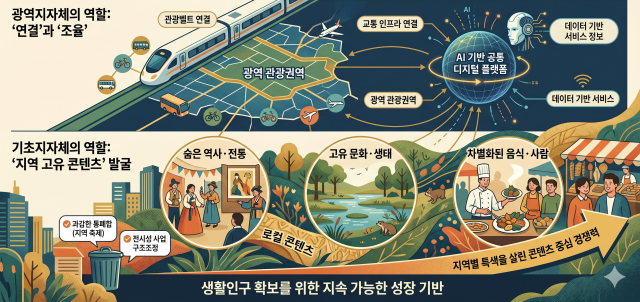
The role of regional governments is clear: it should focus on connection and coordination rather than development. For international tourists, administrative boundaries hold little significance. Tourists experience a region as a whole, not as individual cities or counties. However, some areas remain fixated on building unique brands, often sidelining strategies for collaboration with neighboring regions.
Regional governments should shift their focus from competing to develop individual tourist sites to creating inter-regional tourism belts and connecting transportation infrastructure. Expanding tourist mobility and increasing the length of stays are essential starting points for enhancing local tourism competitiveness. The establishment of AI-based tourism services and digital platforms is also a responsibility at the regional level. With local governments facing varying financial conditions, each creating their own apps and platforms can lead to redundant investments and budget waste. A structure where regional governments build common infrastructure and data, while local governments add regional content, aligns with common sense.
Conversely, local governments should focus on uncovering unique local attractions rather than pursuing massive development projects. However, the reality is different. Promises to install cable cars in mountainous areas or suspension bridges near rivers and seas are prevalent nationwide. While these large facilities may attract initial interest, they often leave behind maintenance burdens over time.
Consider this logically: in a situation where similar suspension bridges and observation decks are abundant across the country, why would tourists travel far to spend money? What tourists seek are experiences, not just facilities. They want stories, culture, food, and people unique to that area.
Amid the crisis of regional extinction, what areas need to secure is not just transient visitors but a resident population that stays and consumes. The power to achieve this does not come from massive concrete structures but from local content that embodies the region's history, traditions, culture, and the lives of its residents. Local governments should concentrate their administrative efforts on discovering hidden local assets and creating differentiated tourism content, moving away from competitive development promises.
With the government's push for regulatory reforms, including amendments to tourism promotion laws, local governments face significant challenges. Bold decisions are required, such as the consolidation of extravagant local festivals and restructuring showcase projects that consume tens or hundreds of millions in budgets.
The elections are over. Now is the time for harsh administrative realities. Blindly pushing through promises made to gain votes is not responsible governance. Regional governments must clarify their roles in connection and coordination, while local governments focus on content and on-the-ground realities. They need to stop competing in showy facilities and redundant investments and concentrate on enhancing local competitiveness. The future of local tourism does not lie in building bigger structures but in connecting the strengths of different regions and preserving their unique stories. It is hoped that the new local governments will lay the groundwork for sustainable regional growth through tourism policies based on fundamentals, principles, and common sense.
* This article has been translated by AI.
Copyright ⓒ Aju Press All rights reserved.