
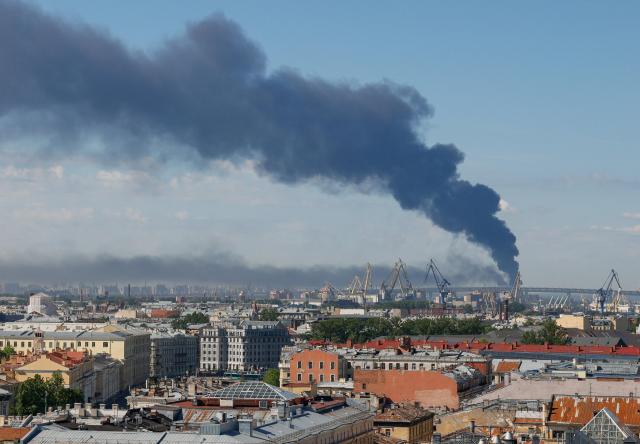
International politics has long been driven by the logic of power. It has been seen as a natural order for stronger nations to dominate weaker ones. However, recent conflicts around the world are challenging this notion. Unexpected resistance from 'Davids' against overwhelmingly powerful adversaries is shaking the status quo.
A prime example is Ukraine. Until last year, Ukraine's future appeared bleak. In the United States, then-President Donald Trump pushed for an early end to the conflict, while Russia demanded territorial concessions from Ukraine. Many believed that given Russia's population, resources, and military strength, Ukraine would ultimately be unable to withstand the pressure.
Contrary to expectations, Ukraine took a different path. It began actively utilizing its drone capabilities, akin to a 'surgical strike,' targeting Russian military facilities and supply lines. The sight of advanced weapon systems worth millions of dollars being threatened by relatively inexpensive drone attacks illustrates a new reality in modern warfare. Consequently, Russia has started to feel the burden of a prolonged conflict, and President Vladimir Putin has not completely ruled out the possibility of peace negotiations.
Iran presents a similar case. Despite facing severe economic sanctions and military pressure from the United States, Iran has not easily succumbed. The disparity in power between the U.S. and Iran is significant, yet Iran has leveraged its geopolitical position, regional influence, and various asymmetric capabilities to resist the pressure from stronger nations. By making it difficult for the powerful to achieve their desired outcomes, Iran has achieved considerable strategic effectiveness.
The cases of Ukraine and Iran impart a common lesson: in modern international politics, superiority in size does not guarantee victory. Even smaller nations can create difficulties for powerful adversaries if they possess asymmetric capabilities and strong resilience to exploit weaknesses.
This shift carries important implications for South Korea. Coldly speaking, South Korea is situated between major powers: the United States, China, Russia, and Japan. While its economy ranks among the world's top, in terms of geopolitical environment, it remains closer to the status of David. Therefore, our survival strategy should not solely rely on competing in size.
South Korea has already adopted a 'surgical strike' strategy in security, aiming to deliver decisive blows even against major powers in times of crisis. To achieve this, technological superiority is essential. Just as Ukraine changed the course of war with drones, South Korea must further enhance its future asymmetric capabilities, including AI-based unmanned systems, advanced missile technology, cybersecurity capabilities, and nuclear-powered submarines. Competitiveness in key industries such as semiconductors, artificial intelligence, batteries, and defense can also serve as a national 'surgical strike.' Instilling the perception that any disruption to South Korea could shake the entire global supply chain is a powerful deterrent.
Ukraine and Iran offer us significant lessons. David does not survive because he is stronger than Goliath; he survives by accurately identifying the weaknesses of his opponent and honing his unique weapons. The future and prosperity of South Korea will depend on whether it can develop a sharp 'surgical strike' that cannot be easily challenged.
* This article has been translated by AI.
Copyright ⓒ Aju Press All rights reserved.