
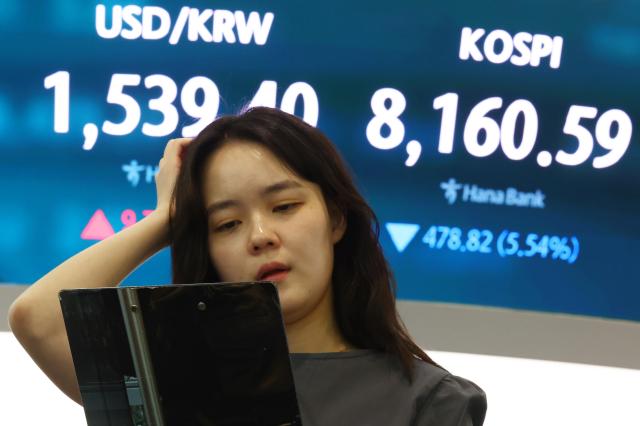
According to the Korea Exchange, the KOSPI index closed at 8160.59, down 478.82 points (5.54%) from the previous trading day. Over the week (June 1-5), the KOSPI and KOSDAQ fell by 3.72% and 6.73%, respectively. Notably, the KOSPI surged by 3.68% on June 1 and, on June 2, briefly crossed the 8900 mark for the first time. However, it subsequently dropped for two consecutive days, ultimately falling below 8100.
This week, the stock market exhibited extreme volatility as expectations and concerns surrounding semiconductors fluctuated. Early in the week, optimism regarding NVIDIA's AI PC prospects and expectations for CEO Jensen Huang's visit to South Korea boosted investor sentiment, leading to increased buying in Samsung Electronics and SK Hynix. However, Broadcom's disappointing AI chip revenue guidance and news of Micron's CEO selling shares triggered widespread profit-taking across the semiconductor sector.
Foreign selling pressure and rising exchange rates also contributed to the market's struggles. The dollar-won exchange rate soared to 1547 won, marking a 17-year high. Concerns over additional tariffs from the U.S. and potential capital shifts ahead of SpaceX's IPO heightened foreign investors' aversion to risk assets.
Internally, signs of a reduction in the concentration of semiconductor stocks emerged. The insurance, retail, and software sectors showed relative strength, while buying interest in semiconductor materials, components, and equipment stocks on the KOSDAQ, which had seen significant declines, began to increase.
Next week, several major global events are scheduled. The Apple WWDC 2026 will take place from June 8 to 12, with the market keenly observing how Apple integrates AI features into its operating systems and device ecosystem. Additionally, the U.S. CPI for May and the Bank of Canada (BOC) monetary policy meeting are set for June 10, followed by the ECB meeting on June 11.
If inflation comes in higher than expected, concerns about prolonged tightening by the Federal Reserve may grow. The ECB is also expected to consider a 0.25 percentage point increase in interest rates in response to signs of accelerating core inflation.
SpaceX's anticipated Nasdaq listing on June 12 is another significant variable. With an expected valuation exceeding $170 billion, this massive IPO is likely to impact global market liquidity. Some analysts have even suggested the possibility of early inclusion in the Nasdaq-100 index.
Short-term volatility is expected to continue, according to analysts. While the semiconductor sector's earnings momentum remains strong, upward revisions to earnings estimates may slow ahead of the July earnings season. Consequently, there is speculation that buying interest may shift from recently surging semiconductor stocks to financial and dividend stocks or sectors that have been relatively neglected.
Lee Jae-won, a researcher at Yuanta Securities, stated, "The justification for future adjustments should be sought in the rise of price-to-earnings ratios (PER) due to stock concentration in May, rather than factors like war or oil prices. The key in June remains not the exit of leading stocks but the expansion of rotation within leading stocks."
Labor Gil, a researcher at Shinhan Investment Corp., noted, "The June stock market has entered a seasonal off-peak period where upward revisions to earnings per share (EPS) are slowing. If price adjustments occur, defensive stocks may perform well, while if there is a period of adjustment, sectors that have lagged may see a gap-filling rally."
However, from a medium- to long-term perspective, the trend of expanding AI investments remains strong. While short-term volatility is inevitable due to macroeconomic variables such as U.S. inflation, interest rates, and Middle Eastern tensions, the ongoing investment in AI infrastructure and increasing demand for memory semiconductors suggest that the flow of leading stocks is unlikely to be disrupted. Therefore, analysts believe that a selective approach focusing on the AI value chain and semiconductor sector during this short-term adjustment phase is advisable.
* This article has been translated by AI.
Copyright ⓒ Aju Press All rights reserved.