
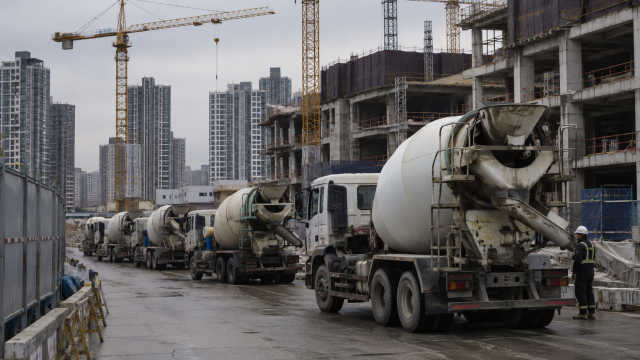
Concrete transport costs in the Seoul area are approaching 80,000 won per delivery this year. Over the past five years, transport costs have risen nearly 47%, with short-term work stoppages and price agreements occurring each time negotiations falter. The nationwide transport union's planned full-scale strike on June 8 is part of the ongoing struggle over transport pricing. An increase in transport costs could lead to higher concrete delivery prices, making this year's negotiations a significant factor for the construction industry.
The upward trend in costs has been steep. In the Seoul area, transport costs rose from 51,500 won in 2020 to 56,000 won in 2021, then to 63,700 won in 2022, 69,700 won in 2023, 72,430 won in 2024, and 75,730 won in 2025. Compared to 2020, this represents an increase of approximately 47%. Despite a decline in concrete demand due to a sluggish construction market, prices have not stabilized.
This year's negotiation baseline has already been set high. In April, Daejeon agreed to raise transport costs from 76,500 won to 81,000 won, marking a 5.88% increase. Currently, the average transport cost in the Seoul area is lower than in Daejeon, leading industry insiders to view 81,000 won as a potential minimum for negotiations in Seoul. If the Daejeon increase is applied, transport costs in the Seoul area would exceed 80,000 won. While specific demands have not been disclosed, the question of whether costs will reach the 80,000 won mark is a key point of interest in this year's negotiations.
The negotiation structure adds to the pressure. Traditionally, the Seoul area has set prices by region, but this year, the union is demanding integrated negotiations across the entire Seoul area. Manufacturers are concerned that if integrated negotiations succeed, the price differences between regions will disappear, leading to a standardization of higher transport costs. The union cites the establishment of a nationwide union and court rulings recognizing the employment status of transport workers as the basis for their demand for integrated negotiations.
Conflicts over transport costs in the Seoul area have previously led to short-term work stoppages and price agreements. In July 2022, a transport strike in the Seoul area halted operations at 158 concrete plants, resulting in estimated losses of about 30 billion won per day for manufacturers. The conflict was resolved within two days when an agreement was reached to raise transport fees by 24.5% over two years, from 56,000 won to 69,700 won. In July 2024, a three-day work stoppage was also called off, but transport costs subsequently rose again to 75,730 won in 2025.
As a result, this year's negotiations are drawing greater attention not just for the potential for a few days of work stoppage, but for the possibility of changing how transport costs in the Seoul area are determined in the future. If regional negotiations continue, some price differences may remain, but if integrated negotiations are enforced, there is a greater chance that transport costs in the Seoul area will be adjusted upward all at once. This is why manufacturers are hesitant about integrated negotiations.
A source in the concrete industry stated, "If we move to integrated negotiations, the prices that have been set regionally will inevitably align with the higher rates, and if the union's status is recognized, the balance of negotiations could shift significantly each year."
* This article has been translated by AI.
Copyright ⓒ Aju Press All rights reserved.