
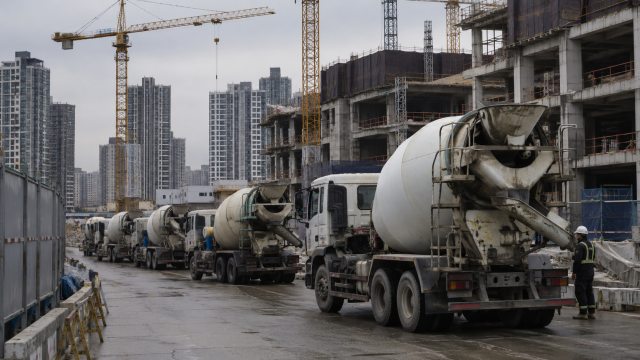
The concrete transport labor union will begin a strike on June 8, demanding wage increases and the establishment of a collective bargaining agreement. Approximately 8,000 trucks from the union in the metropolitan area will participate, with about 10% of these trucks assigned to transport materials for the construction of semiconductor plants operated by Samsung Electronics and SK Hynix, raising concerns about potential delays.
On June 7, the National Concrete Transport Labor Union condemned the company's lack of sincerity in negotiations and announced that it would commence the strike at 8 a.m. on June 8, followed by a rally at 11 a.m. in front of Yeouido Plaza in Seoul.
The strike is expected to involve 8,000 union members and around 11,000 concrete transport vehicles. Of these, approximately 1,100 trucks, or 10%, are reported to be dedicated to the construction sites of Samsung Electronics and SK Hynix. Unions outside the metropolitan area are currently engaged in separate negotiations and will not participate in the strike.
The union's demands include: 1) a collective bargaining agreement to improve transportation fees, 2) job security for transport workers, and 3) compliance with collective bargaining agreements.
The union criticized concrete manufacturers, stating, "While they negotiate the delivery prices of concrete annually with the Construction Materials Council under the Korea Construction Association, they ignore the legitimate bargaining requests of transport workers. This is an irresponsible act that denies the value of labor."
In contrast, concrete manufacturers argue that due to the downturn in the construction market, it is difficult to raise transportation fees. They also contend that transport workers, classified as special types of workers, operate as independent contractors, making compliance with collective bargaining agreements challenging. They claim that the prolonged slump in the construction market has led to a sharper increase in transportation costs compared to concrete prices, threatening the survival of manufacturers.
Manufacturers stated, "Despite a significant drop in concrete shipments to levels below those seen during the foreign exchange crisis, transportation fees have continued to rise. The cycle of strikes, negotiations, and fee increases has become a recurring practice every year."
Concrete must be poured within 90 minutes of mixing, making prompt transportation essential. As concrete cannot be stockpiled, any delays in the process can lead to production holdups and subsequent delays in foundational construction processes, such as rebar installation and concrete pouring. This is particularly concerning for national infrastructure projects like semiconductor plants.
The upcoming strike is led by concrete trucks from the metropolitan area that service semiconductor facilities, raising fears of delays in project timelines.
* This article has been translated by AI.
Copyright ⓒ Aju Press All rights reserved.