
"Governor, Chungnam is the heart of South Korea's manufacturing industry. However, in the age of AI, the winners will not be the regions with the most factories, but those that innovate the fastest. Will you keep Chungnam as a manufacturing city, or will you make it the capital of South Korea's AI manufacturing revolution?"
Chungnam has always been a hidden champion in South Korea's industrial history. Key industries such as semiconductors in Cheonan, automobiles and displays in Asan, steel in Dangjin, and petrochemicals in Seosan have supported the country's export and manufacturing competitiveness.
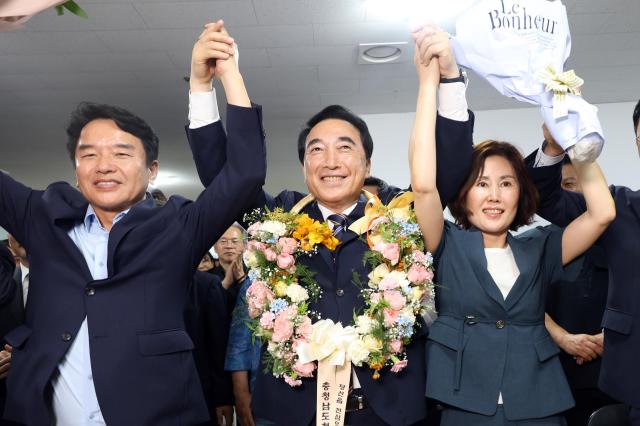
However, as AI changes the rules of industry, past success formulas can no longer guarantee the future. Park Soo-hyun, the newly elected governor of Chungnam, has made 'AI Capital Chungnam' his top pledge, declaring a 'Chungnam AI Transformation' that encompasses manufacturing, administration, agriculture, care, education, and healthcare. He also presented a broader vision of completing the administrative integration of Chungnam and Daejeon.
Chungnam now stands at a critical crossroads. Will it remain a success story of the industrial era, or will it redesign the future of South Korean industry through the AI manufacturing revolution?
Manufacturing Powerhouse Chungnam Faces a Future Without AI Transition
Chungnam's strength lies in its manufacturing sector. The region hosts South Korea's leading industries, including semiconductors, displays, automobiles, steel, petrochemicals, and batteries. During the industrial era, Chungnam's power was its production capacity; competitiveness was determined by how much could be produced and how quickly.
However, the AI era is redefining manufacturing itself. Now, competitiveness stems not from the size of factories but from the scale of data. It arises from algorithms that enhance productivity rather than sheer output, and from the ability to utilize AI rather than just machinery. In the past, labor determined productivity; in the future, AI will take that role. The era of predicting machine failures before they occur, analyzing supply chain risks in advance, and optimizing production processes autonomously has already begun.
Park Soo-hyun's emphasis on 'AI Capital Chungnam' reflects this reality. He defines AI not as a tool for specific industries but as a new public infrastructure that will transform all sectors of life, including manufacturing, agriculture, healthcare, education, and administration.
It is crucial to note the current situation in Chungnam. The region is not merely experiencing growth; it is in the midst of a significant industrial transformation. The steel and petrochemical industries face global oversupply and pressure for carbon neutrality. The battery industry is also confronting new challenges from slowing global market growth and competition from Chinese firms. The automotive sector is undergoing massive changes with the convergence of electric vehicles, hybrids, and autonomous driving technologies.
Ultimately, Chungnam's future depends not on how many new factories are built but on how quickly existing industries can integrate AI.
AI is not just an option for Chungnam; it is a matter of survival.
Bay Valley Must Evolve into an AI Mega-Cluster
A key aspect of Park Soo-hyun's administration is Bay Valley. However, it is important to clarify that Bay Valley is not a project originally proposed by Park. It is a super-regional economic project that former Governor Kim Tae-heum promoted as a core initiative of the 8th elected Chungnam administration. The plan envisions a large industrial belt connecting Cheonan, Asan, Dangjin, Seosan, and Yesan with Pyeongtaek, Hwaseong, Anseong, Ansan, and Siheung in Gyeonggi Province.
The challenge for Park's administration is not to create new projects but to upgrade the existing Bay Valley for the AI era.
The reason is clear. Bay Valley is already a core pillar of South Korea's manufacturing sector, with concentrations of semiconductors, displays, automobiles, batteries, steel, and energy. The issue is that these industries still remain in their respective domains.
In the AI era, the winners will be the regions that connect industries, not the individual industries themselves.
Semiconductors are no longer just about the semiconductor industry. They are connected to automobiles and AI. Batteries connect the automotive and energy sectors. Displays are becoming essential components for AI devices and future mobility.
Chungnam already possesses all these elements. Cheonan and Asan have semiconductors and displays. Asan has the automotive industry. Dangjin and Seosan have steel and energy industries.
The challenge lies in the connections. For Bay Valley to have true significance, it must evolve from an industrial belt into an AI mega-cluster. Semiconductor companies must connect with automotive firms, battery companies with AI firms, and universities, research institutes, startups, and large corporations must form a cohesive ecosystem.
The vision of AI Capital Chungnam articulated by Park Soo-hyun must start from this connectivity. Bay Valley should become a platform for industrial innovation, not just an expansion of industrial complexes.
Chungnam-Daejeon Integration: A Survival Strategy for the AI Era
Another key pledge from Park Soo-hyun is the administrative integration of Chungnam and Daejeon. Many view this integration as a simple administrative reorganization. However, Park sees it as having much greater significance. He views the integration of Chungnam and Daejeon as central to South Korea's balanced development strategy and has reiterated his commitment to pursuing this integration since his election.
In the AI era, the unit of competition is no longer individual cities but vast economic regions.
The United States has Silicon Valley, China has the Shenzhen-Guangdong economic region, and Japan has the Tokyo megacity.
Chungnam, on its own, has limitations.
However, when connected with Daejeon, the narrative changes. Chungnam is strong in manufacturing, while Daejeon excels in research and development. Chungnam has industrial sites, while Daejeon has research personnel. Chungnam has production capacity, while Daejeon has technology.
The combination of these strengths could create South Korea's largest AI manufacturing innovation belt.
The true significance of Park Soo-hyun's vision for AI Capital Chungnam lies here. It is not merely about attracting a few AI companies; it is about transforming the entire region into an AI-based economic zone. It aims to create a new growth axis where manufacturing, research and development, energy, mobility, universities, and industries are interconnected.
Ultimately, the success of Park Soo-hyun's administration will not be measured by the number of pledges made.
What matters is not how many factories were attracted, but how many factories have transitioned to AI. It is not about how much budget was secured, but how many future jobs were created. It is not about how many buildings were constructed, but how strong an innovation ecosystem was established.
In the AI era, Chungnam's competitors are not Chungbuk or Sejong. They are the manufacturing innovation regions of the United States, Shenzhen in China, and industrial clusters in Germany.
If Chungnam succeeds in the AI manufacturing revolution, South Korea's manufacturing sector could leap forward once again.
:SWOT Analysis:
Strength: Chungnam has the largest manufacturing belt in South Korea, encompassing semiconductors, displays, automobiles, steel, petrochemicals, and batteries. Governor Park Soo-hyun has proposed 'AI Capital Chungnam' as his top pledge and is pursuing an AI transformation strategy that applies AI across industries and administration, agriculture, and welfare. He also has a vision for the super-regional growth of Chungnam-Daejeon administrative integration.
Weakness: The AI industry base and venture ecosystem are relatively weaker compared to the capital region. The high proportion of traditional manufacturing industries like steel and petrochemicals may face shocks during the industrial transition.
Opportunity: The AI manufacturing revolution presents new opportunities for Chungnam. If Bay Valley and the Chungnam-Daejeon integration materialize, the largest AI industrial zone in the country could be formed, combining research and development with manufacturing.
Threat: Challenges such as slowing growth in the battery industry, competition from Chinese manufacturing, restructuring in the steel and petrochemical industries, and population decline pose real threats to Chungnam. Failure to transition to AI could weaken existing manufacturing competitiveness.
* This article has been translated by AI.
Copyright ⓒ Aju Press All rights reserved.