
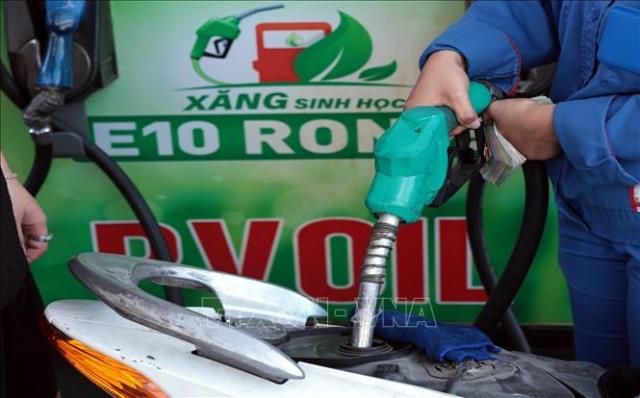
Vietnam has begun a nationwide rollout of E10 bioethanol gasoline, focusing on supply stability and price management. Amid rising international oil prices due to the ongoing conflict in the Middle East, the Vietnamese government aims to reduce its dependence on imported fuel through this initiative.
On June 9, the Vietnam Youth Newspaper reported that the Domestic Market Management Department under the Ministry of Industry and Trade emphasized strict adherence to regulations regarding biofuel blending and supply in a document issued the previous day. The department specifically called for a stable supply of biofuels to meet both consumption and production demands.
The policy aims to ensure that biofuel supply remains uninterrupted at all levels, from primary distributors to retail gas stations. It also mandates maintaining sufficient stock to guarantee normal sales under any circumstances. Additionally, the department instructed that supply and profits within the distribution network be shared reasonably to prevent market disruptions.
E10 refers to gasoline blended with 10% bioethanol. Since the nationwide implementation of E10, market reactions have been generally stable. Nguyen Thi Hien, deputy director of the Domestic Market Management Department, reported that after monitoring consumer feedback for a week, there were almost no negative responses. She noted that inquiries about quality and vehicle compatibility were the most common.
Petrolimex, a major Vietnamese oil company, also observed a cautious atmosphere during the initial rollout, but reported a shift towards a more positive sentiment as relevant information was adequately communicated, with no significant incidents reported.
Users have expressed that they have not noticed significant differences. Nguyen Minh Hoa, a resident of Ho Chi Minh City, stated, "I have driven about 30 kilometers daily for over a week, and my vehicle has operated normally with stable speed." Another user, Do Man Quang, reported no issues with power loss after fueling his 2020 Honda CRV with E10.
However, some users have reported changes in fuel efficiency. Nguyen Chan Thue noted that after using E10 in his motorcycle, he experienced increased fuel consumption. He suggested that the price should be lower than the current rate of 490 dong (about 28 cents) per liter, ideally around 1,500 dong (about 86 cents).
The Vietnamese government believes that the transition to E10 will significantly help reduce foreign currency expenditures. Preliminary statistics from the General Department of Customs indicate that from the beginning of the year until May 15, oil imports reached approximately 4.3 million tons, exceeding $4.5 billion. This figure represents an 86% increase compared to the same period last year due to rising oil prices. The Ministry of Industry and Trade explained that substituting just 10% of gasoline consumption with ethanol could save around $700 million to $1 billion annually.
Ha Ton Binh, chairman of Stella Management, stated, "E10 can save about $700 million to $1 billion a year while significantly improving the energy trade balance." However, he emphasized that the current domestic ethanol supply only meets about 25-30% of total demand, highlighting the need to enhance domestic ethanol production capacity to achieve the biofuel policy's goals.
Additionally, the government is working on a plan to establish a standard pricing mechanism. The Ministry of Industry and Trade is collaborating with the Ministry of Finance to draft a resolution that will announce the benchmark prices for E10 RON95-III and E5 RON92. These prices will reflect the average international market price of RON95, along with import and transportation costs, domestic production premiums, and fuel ethanol prices.
RON95 and RON92 indicate the octane ratings of gasoline, with higher numbers signifying higher quality fuel that is more resistant to engine knocking. Thus, E10 RON95-III is a grade 3 fuel made by blending RON95 gasoline with 10% ethanol, while E5 RON92 consists of RON92 gasoline mixed with 5% ethanol.
Vietnam's push to widely distribute ethanol-blended gasoline stems from two pressing challenges: the rising burden of oil imports and the need to reduce carbon emissions. The country cannot meet its total gasoline demand with domestic refining capacity alone, leading to substantial foreign currency expenditures on oil imports each year.
As international oil prices fluctuate, the trade balance is also affected, prompting ongoing calls to reduce import dependence for energy security. The Vietnamese government has been developing a biofuel roadmap since 2007, and after introducing E5 RON92 nationwide in 2018, it has now fully implemented E10, reflecting this ongoing strategy. The initiative aims to enhance the value added in agriculture by increasing the use of domestically produced ethanol from cassava while simultaneously reducing carbon emissions associated with fossil fuels.
* This article has been translated by AI.
Copyright ⓒ Aju Press All rights reserved.