
Artificial intelligence (AI) is transforming the world. ChatGPT writes text, AI assists in medical diagnoses, and robots operate factories. The financial industry is no exception. Asset management is increasingly handled by algorithms, insurance underwriting is performed by AI, and even customer service is being managed by chatbots. Many believe that AI will determine the future of financial companies.
However, every technological revolution comes with its paradox. As technology advances, the value of human touch becomes even more critical in certain areas. Insurance is a prime example. While it begins with contracts and numbers, it ultimately deals with people's lives, accompanying them through the most uncertain moments of illness, accidents, aging, and death.
Shin Chang-jae, chairman of Kyobo Life, recently emphasized that “in the age of AI, providing emotional satisfaction and meaningful experiences to customers is crucial.” He stated that the careful touch that comforts customers is the essence of insurance. This is not mere rhetoric; it is the reason Kyobo Life maintains a system centered around its financial planners (FPs) even amid rapid digital transformation, and it is a core aspect of Shin's management philosophy.
Interestingly, Shin is not a manager who shuns technology. He has pioneered a mydata initiative in the insurance industry, established a healthcare platform, and actively invests in AI strategies at the group level. He practices what he calls “ambidextrous management,” strengthening traditional insurance operations with one hand while pushing for digital innovation with the other.
Shin's entrepreneurial spirit in finance does not involve choosing between AI and humanity. Instead, it seeks to actively utilize AI while enhancing human values. This may be the direction the financial industry should take in the age of AI.
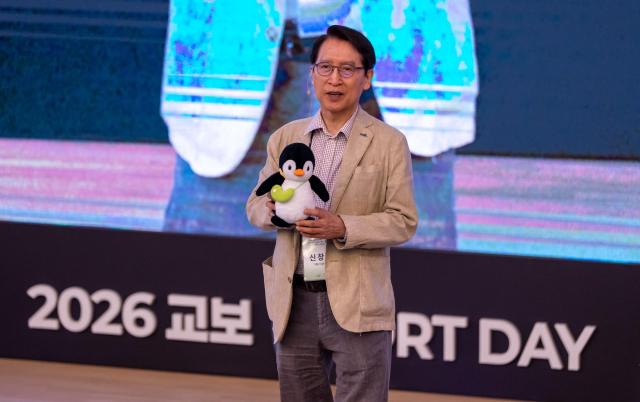
From Doctor to Insurer: A Consistent Perspective on Healing
Shin Chang-jae's career is one of the most unique in South Korea's financial sector. He graduated from Seoul National University’s medical school and was a professor of obstetrics and gynecology. He was on a completely different path from typical financiers or businesspeople until he joined management in 1996 at the suggestion of his father, Shin Yong-ho, the founder of Kyobo Life. At that time, many questioned whether a doctor could effectively manage an insurance company.
However, the outcome was different. Since becoming CEO in 2000, Shin has transformed Kyobo Life into a leading life insurance company in South Korea. Despite navigating through the Asian financial crisis, the global financial crisis, and a low-interest-rate environment, he has maintained a stable financial structure and established a unique position in the life insurance industry.
His management philosophy is deeply influenced by his medical background. A doctor treats patients' illnesses, while an insurer manages clients' risks. Although the subjects differ, both ultimately aim to protect lives.
Shin does not view insurance as a mere financial product; he sees life insurance as a social safety net. He emphasizes that insurance helps individuals recover their daily lives when faced with unexpected accidents and illnesses. This perspective frames insurance not as a product to sell, but as a support system for life.
This philosophy has led to stakeholder-centered management at Kyobo Life. He believes that for a company to develop sustainably, it must grow alongside customers, financial planners, employees, and the community. This focus on long-term trust over short-term profits has been a key factor in his management approach.
While many financial companies concentrate on performance-driven management, Shin repeatedly emphasizes customer value and trust. Although this may appear inefficient in the short term, he believes it can become the strongest competitive advantage in the long run.
The Value of Humanity Grows in the Age of AI
AI is reshaping the financial industry. Customer consultations are increasingly handled by chatbots, and investment advice is provided by algorithms. Insurance planning has also become largely automated. Amid this trend, many insurance companies are downsizing their financial planner organizations or shifting to a general agency sales model. However, Shin has chosen a different path.
He believes that the role of humans becomes even more important in the age of AI. Insurance operates not merely as a product sale but as a trust-based relationship with customers. Clients are not purchasing policy terms; they are buying peace of mind about the future. And that reassurance cannot be provided solely by technology.
This is why Kyobo Life maintains its exclusive FP system. Shin views FPs not just as salespeople but as pace-setters in customers' lives. He believes that a structure where FPs are responsible for the entire process—from policy enrollment to maintenance and claims payment—builds long-term customer trust.
Indeed, Kyobo Life boasts one of the highest contract retention rates in the industry, and its financial planner retention rate is also notably high compared to competitors. This reflects not just sales performance but the result of trust-based relationships.
AI can calculate risks, but it cannot soothe customer anxieties. AI can recommend optimal insurance products, but it cannot understand the grief of a customer who has lost a family member. AI can facilitate contract signings, but it cannot build trust. Shin emphasizes that as technology advances, the empathy and emotional value that humans provide become increasingly important.
This issue extends beyond the insurance industry. As AI becomes more widespread, understanding what unique value only humans can provide will likely become a central challenge across all industries.
Ambidextrous Management: Evolving Insurance Companies into AI Enterprises
To view Shin solely as a human-centered manager is to see only half the picture. He is also a strong advocate for digital innovation.
Shin has long believed that the future of the insurance industry lies in data and AI. This belief has led to initiatives such as the mydata project, the healthcare platform, and strategies for nurturing digital insurance companies.
Kyobo Life was the first in the insurance industry to launch mydata services, enhancing personalized services using customer data. This initiative aims to build a platform that encompasses not just insurance sales but also asset management and health management.
The healthcare business follows a similar trajectory. Kyobo Life has established a healthcare subsidiary, Kyobo Dasom Care, to strengthen health management services. This represents an effort to transform from a company that pays out insurance claims to one that actively manages customers' health.
At the center of these changes is AI. In analyzing customer data, predicting health conditions, and providing tailored services, AI becomes a core technology. Shin envisions the future of insurance not merely as a guarantee industry but as a data-driven platform industry.
Kyobo Life's continued support for Kyobo Life Planet, a digital-focused insurance company, aligns with this vision. While it may seem a challenging choice when viewed through the lens of short-term performance, it is an investment aimed at securing digital competitiveness in the long run.
Shin does not fear technology. Instead, he believes it should be used to assist humans rather than replace them. In this regard, his digital strategy aims not just for cost reduction but for value creation.
In the Age of AI, Expanding the Spirit of Mutual Assistance Digitally
The core of Shin's management philosophy is mutual assistance. He views a company not merely as an organization that exists for shareholders but as a community where customers, employees, and the local community grow together.
Recently, Kyobo Life provided AI training programs for small and medium-sized enterprises (SMEs), reflecting this philosophy. By offering generative AI training to SMEs that often lack such opportunities, the company aims to bridge the digital divide.
This is not just a social contribution activity. AI is likely to become a key infrastructure determining productivity and competitiveness in the future. While large corporations may adapt quickly, SMEs may struggle. Shin appears to believe that reducing this gap is ultimately a way to enhance the overall competitiveness of society.
Kyobo Life's Darwin service operates under the same principle. Named to symbolize “growing and developing together,” Darwin embodies the stakeholder-centered management philosophy.
Shin does not view AI merely as a tool for technological innovation. He sees it as a means to provide more opportunities to more people and enable more businesses to grow.
In the age of AI, mutual assistance begins with sharing technology. Shin is demonstrating a new model of social leadership in the AI era that goes beyond the traditional role of an insurer.
The AI revolution has already begun. The financial industry will become increasingly digitalized. A significant portion of underwriting, customer consultations, and asset management is likely to be replaced by AI.
However, as technology advances, human values will not diminish; they may become even more significant. Shin Chang-jae is a manager who understood this fact earlier than most. He has embraced AI while not abandoning humanity. He has pursued digital transformation while keeping trust with customers as the most important value. He has sought to transform an insurance company into a data-driven enterprise while preserving human warmth.
This may be the essence of Shin's entrepreneurial spirit in finance. The winner in the age of AI may not be the company with the best technology, but rather the one that utilizes technology without losing its humanity. Shin's experiments are aimed precisely at that future.
SWOT Analysis:
- Strengths: As the only owner CEO in the domestic life insurance industry, he can consistently pursue long-term strategies. The exclusive FP-centered sales network and high contract retention rates are strong competitive advantages. Proactive investments in future businesses such as mydata, AI, and healthcare are also strengths. Stakeholder-centered management and high brand trust are differentiating factors.
- Weaknesses: His cautious decision-making has led to missed opportunities for large-scale mergers and acquisitions. The pace of monetization in the digital business sector has not met expectations. Some new businesses still have limited results, and investment burdens persist.
- Opportunities: The entry into a super-aged society is increasing demand for health management and healthcare. AI, mydata, digital insurance, and financial holding transitions can become new growth engines. The acquisition of SBI Savings Bank also increases the potential for a leap into a comprehensive financial group.
- Threats: Low birth rates and population decline weaken the growth foundation of the life insurance industry. The entry of big tech and platform companies into finance poses a threat. The low-growth structure of the insurance industry and increasing interest and market volatility may also continue to be burdensome.
* This article has been translated by AI.
Copyright ⓒ Aju Press All rights reserved.