
The market's perception of Gaon Cable is shifting. Once regarded as a traditional manufacturer focused on medium and low-voltage cables, the company is now being reevaluated as a beneficiary of the growing U.S. AI data center market, positioning itself not merely as a "cable stock" but as a key player in "AI data center infrastructure."
According to industry sources on June 9, interest in companies providing power infrastructure for AI data centers has surged alongside AI semiconductor firms in global stock markets. The rapid increase in power demand due to advancements in AI models and the expansion of data centers has heightened the importance of reliable power supply and distribution infrastructure.
AI data centers consume significantly more power than traditional data centers. Next-generation AI data centers based on NVIDIA GPUs are reported to require hundreds of megawatts to over 1 gigawatt of power for a single campus. Consequently, investments in power infrastructure, including power grids, transformers, power cables, and bus ducts, have become critical components of data center construction.
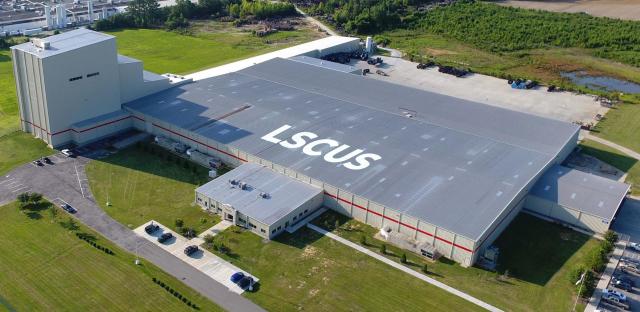
A major change for Gaon Cable is the expansion of its data center business centered around its U.S. subsidiary, LSCUS. LSCUS is enhancing its capabilities to execute data center projects locally and is broadening its business foundation to meet the surging demand for AI data center investments.
Notably, LSCUS has secured multiple supply contracts for bus ducts aimed at data centers with global tech giants, rapidly expanding its presence in the North American market. Reports indicate that LSCUS recently signed a supply contract worth approximately 1.2 trillion won (about $1 billion) with a global tech company for three years, followed by another long-term contract worth around 4 trillion won (about $3 billion) with another major tech firm for five years.
These contracts are significant not only as one-time orders but also as framework agreements that extend over several years. This structure allows for additional supply volumes as client companies expand their data center investments and construct new campuses, suggesting that actual supply levels could exceed the contracted amounts.
In the North American data center market, the increasing complexity of power wiring and cooling designs due to high-density GPU servers is leading to a growing trend of adopting bus ducts, which offer higher installation efficiency and stability compared to traditional cables.
AI data centers are characterized by ongoing expansions even after initial construction. With global tech giants like Meta, Microsoft, Amazon, and Google planning substantial investments in AI infrastructure over the coming years, the demand for data center power infrastructure is expected to rise accordingly.
Considering that Gaon Cable's annual revenue is around 2 trillion won, the recently secured long-term contracts exceed twice the company's annual revenue. Given the nature of framework contracts, there is potential for additional orders based on the scale of client data center expansions and investment plans, indicating that future supply volumes could grow even larger.
Industry experts believe that the expansion of AI data centers will not only drive demand for servers and GPUs but will also lead to overall growth in the power infrastructure market. In particular, the bus duct market, which efficiently distributes large amounts of power within data centers, is expected to be one of the rapidly growing sectors.
In this context, the AI power infrastructure value chain centered around LS Cable is also gaining attention. LS Cable is expanding its core power infrastructure businesses, including ultra-high voltage cables, submarine cables, HVDC, and bus ducts, to meet the demands of the AI era. The construction of a submarine cable factory in Virginia and increased investments in the North American power grid are further strengthening its market presence in the U.S.
LS Materials is also expanding its ultra-capacitor business. Ultra-capacitors are devices that stabilize power quality and compensate for instantaneous power fluctuations, finding increasing applications in data centers, power grids, and energy storage systems.
Analysts suggest that LS affiliates are evolving beyond traditional cable companies to become players in the AI infrastructure sector. One industry insider noted, "In the past, the focus was primarily on semiconductor companies as beneficiaries of data centers, but now attention is shifting to infrastructure companies that supply and distribute power. Gaon Cable is likely to be evaluated not just as a cable manufacturer but as an AI data center infrastructure company."
He added, "The long-term supply contracts secured by LSCUS hold significance beyond mere orders, as they establish a structure that can grow alongside the expanding AI investments of global tech companies, indicating potential for a reevaluation of corporate value in the future."
* This article has been translated by AI.
Copyright ⓒ Aju Press All rights reserved.