
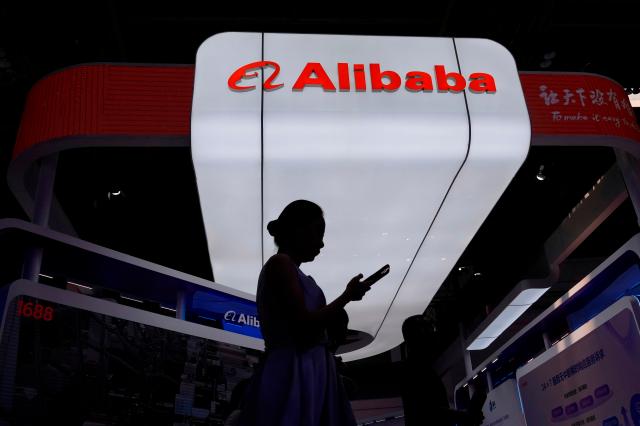
China's state media has ridiculed the U.S. Department of Defense's blacklist of companies linked to the Chinese military, suggesting it has become an honorary hall of fame for high-tech firms in China. This criticism follows the recent addition of 188 Chinese high-tech companies, including Alibaba and BYD, to the blacklist.
In an opinion piece published on June 10, the Global Times stated, "The absurd spectacle of the U.S. military-related blacklist should come to an end." It criticized the expanding scope of the blacklist, which now includes companies in artificial intelligence (AI), e-commerce, electric vehicles, batteries, semiconductors, robotics, and biopharmaceuticals.
The opinion piece highlighted that this year's list features numerous companies representing China's advanced manufacturing and emerging technology sectors, claiming it resembles a "hall of fame" showcasing China's new productive capacity. It condemned the blacklist as an unjust suppression of Chinese companies and a blatant challenge to global trade and market rules.
The article pointed out that the blacklist includes e-commerce, search engine, and electric vehicle companies that have no military ties, as well as AI, cloud computing, and battery firms, which have been labeled as "linked to the Chinese military" or "threats to U.S. national security" solely due to their competitive edge in technology. It criticized the arbitrary and absurd criteria used for the blacklist.
It further argued that merely being a competitive global technology company is enough for a Chinese firm to be classified as military-related, indicating that the U.S. views the entire Chinese tech industry as a strategic competitor rather than targeting specific companies.
The Global Times assessed that the U.S. blacklist paradoxically reveals American anxiety about China's technological capabilities. It stated, "The blacklist implicitly acknowledges China's technological advancements and reflects U.S. fears and insecurities regarding China's core competitiveness."
The expanding scope of the blacklist suggests that the U.S. strategy of pressuring specific Chinese companies has not achieved its intended effects. The opinion piece noted, "While this may exert short-term pressure on competitors, it will ultimately undermine the openness and innovative efficiency of the global supply chain."
It concluded that the U.S. Department of Defense is not safeguarding security but rather disrupting normal international business cooperation, disturbing international trade order, and creating artificial risks for the global economy. The blacklist will serve as evidence of how Chinese companies have overcome technological barriers and external blockades while achieving breakthroughs in new productive capacity.
On June 8, the U.S. Department of Defense added Alibaba, Baidu, and BYD to its list of companies linked to the Chinese military. Inclusion on the list does not immediately trigger sanctions or export controls, but it may disadvantage these companies in future U.S. defense procurement or contracting processes, serving as a warning to them within the U.S. government and military supply chain.
The Chinese government and companies responded swiftly. On June 9, the Chinese Foreign Ministry urged the U.S. to correct its wrongful practices and cease the unjust repression of Chinese companies, indicating that necessary measures would be taken to protect the legitimate rights and interests of Chinese firms.
Alibaba stated through a Hong Kong Stock Exchange announcement that there is no basis for including the company on the blacklist and that it would take all possible legal actions against attempts to damage its corporate image. The company emphasized that it is unrelated to U.S. military procurement, asserting that this action would not have a substantial impact on its global operations, including in the U.S.
Chinese electric vehicle manufacturer NIO also stated it would actively communicate with the U.S. Department of Defense to resolve the blacklist issue, including legal measures if necessary, to protect the interests of the company and all its shareholders. BYD and Baidu similarly argued that they are neither military enterprises nor military-civilian fusion companies, asserting that there is no justifiable reason for their inclusion on the list.
* This article has been translated by AI.
Copyright ⓒ Aju Press All rights reserved.