
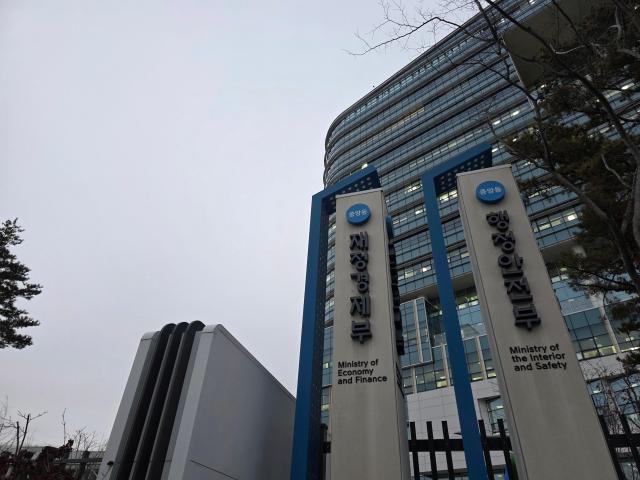
[Photo by Kim Yu-jin]
The Ministry of Economy and Finance has named the Korea Water Resources Corporation's "Digital Twin Water Management Platform" as the top project in its selection of exemplary uses of artificial intelligence (AI) in public institutions.
On June 10, the ministry announced the results of its "Top 10 Public Institution Innovation Projects". This initiative, aimed at achieving a major transformation in AI and fostering a hyper-innovative economy, was introduced last August as a key task for public institutions. The government evaluated 62 projects identified by 31 public enterprises.
The evaluation was based on five criteria, including alignment with objectives, technological capability, and contribution to public value, through expert written assessments and presentations.
The top project was the Korea Water Resources Corporation's "Digital Twin Water Management Platform." Digital twin technology replicates real-world conditions in a virtual space, allowing for simulations that help predict future issues and outcomes, thereby aiding optimal decision-making. The government expects this project to serve as a leading example of AI utilization in response to climate change.
The Korea Expressway Corporation's "AI + CCTV Integrated Traffic Control" was also recognized as an exemplary case. This project focuses on enhancing traffic accident prevention by monitoring 8,828 CCTV cameras on highways in real-time.
Other notable projects included the Korea Marine Environment Corporation's "AI-based Marine Debris Distribution Survey and Collection" and the Korea Real Estate Agency's "Strengthening AI-based Monitoring of Abnormal Real Estate Transactions." The government anticipates that these initiatives will lead to tangible improvements in public services, such as marine environmental conservation and the prevention of rental fraud and illegal real estate transactions.
To promote the dissemination of these exemplary cases, the Ministry of Economy and Finance plans to incorporate the results into the AI innovation bonus (1.5 points) for the 2025 public institution management evaluation. Additionally, it will share these cases through sector-specific AI utilization councils in areas such as energy and social overhead capital, and will facilitate visits to outstanding project sites.
Furthermore, the government will conduct the "2026 Public Institution AI Innovation Challenge" for all 342 public institutions by August 28, aiming to discover exemplary cases of field-centered innovation and expand AI services that citizens can experience firsthand.
On June 10, the ministry announced the results of its "Top 10 Public Institution Innovation Projects". This initiative, aimed at achieving a major transformation in AI and fostering a hyper-innovative economy, was introduced last August as a key task for public institutions. The government evaluated 62 projects identified by 31 public enterprises.
The evaluation was based on five criteria, including alignment with objectives, technological capability, and contribution to public value, through expert written assessments and presentations.
The top project was the Korea Water Resources Corporation's "Digital Twin Water Management Platform." Digital twin technology replicates real-world conditions in a virtual space, allowing for simulations that help predict future issues and outcomes, thereby aiding optimal decision-making. The government expects this project to serve as a leading example of AI utilization in response to climate change.
The Korea Expressway Corporation's "AI + CCTV Integrated Traffic Control" was also recognized as an exemplary case. This project focuses on enhancing traffic accident prevention by monitoring 8,828 CCTV cameras on highways in real-time.
Other notable projects included the Korea Marine Environment Corporation's "AI-based Marine Debris Distribution Survey and Collection" and the Korea Real Estate Agency's "Strengthening AI-based Monitoring of Abnormal Real Estate Transactions." The government anticipates that these initiatives will lead to tangible improvements in public services, such as marine environmental conservation and the prevention of rental fraud and illegal real estate transactions.
To promote the dissemination of these exemplary cases, the Ministry of Economy and Finance plans to incorporate the results into the AI innovation bonus (1.5 points) for the 2025 public institution management evaluation. Additionally, it will share these cases through sector-specific AI utilization councils in areas such as energy and social overhead capital, and will facilitate visits to outstanding project sites.
Furthermore, the government will conduct the "2026 Public Institution AI Innovation Challenge" for all 342 public institutions by August 28, aiming to discover exemplary cases of field-centered innovation and expand AI services that citizens can experience firsthand.
* This article has been translated by AI.
Copyright ⓒ Aju Press All rights reserved.