
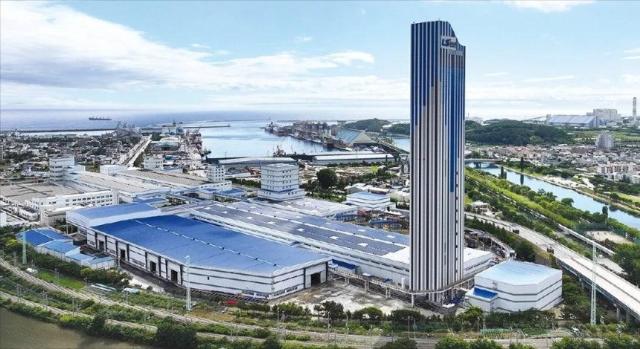
LS Cables, the leading cable manufacturer in South Korea, has announced plans to file a significant lawsuit against Daehan Cable, the second-largest company, over allegations of technology theft related to submarine cables. If the prosecution decides to indict those involved, a historic civil lawsuit is expected to unfold alongside the criminal proceedings.
According to industry sources on June 10, LS Cables is preparing a robust legal response following the police's referral of 13 individuals, including Daehan Cable executives and representatives from the architectural firm Goun, to the prosecution for alleged trade secret violations.
Daehan Cable is accused of unlawfully acquiring and utilizing critical technical information, including design blueprints and production layouts, during the construction of its cable manufacturing facility in Dangjin, South Chungcheong Province. The police concluded that Goun, which was responsible for the design of LS Cables' Donghae factories 1 through 4, violated confidentiality agreements by providing internal documents to Daehan Cable. This conclusion comes nearly three years after the investigation began.
LS Cables asserts that the damages claim could be substantial, considering the costs incurred for establishing submarine cable production facilities, technology development, and lost opportunities for domestic and international projects. The company invested approximately 1 trillion won in building its Donghae submarine cable factory, claiming that the unauthorized use of its technology has resulted in losses amounting to hundreds of billions of won. They argue that this issue is critical to South Korea's industrial competitiveness, as the technology in question is designated as a national core technology.
An LS Cables representative stated, "Daehan Cable secured contracts for submarine cable supply projects for the Anma Offshore Wind Farm and the Yeonggwang Nakwol Offshore Wind Farm based on the factory implicated in the technology theft. The Nakwol Offshore Wind project is already underway, and we anticipate damages could reach hundreds of billions based on the scale of various projects."
Lawsuits involving damages in the trillions of won between domestic companies are rare. The most recent case involved LG Energy Solution (then LG Chem) and SK Innovation, which faced a potential damages claim in the trillions over a trade secret dispute regarding battery technology. The dispute concluded in 2021 when SK Innovation agreed to pay LG Chem 2 trillion won.
The initiation of the lawsuit depends on the prosecution's decision. The police have submitted their findings with an indictment recommendation, and the prosecution plans to review the investigation records before making a final decision. With the prosecution reform plan set to take effect in October, which separates investigative and indictment functions, a resolution is expected before then.
Submarine cables are considered essential infrastructure for power supply in the era of artificial intelligence (AI). As demand for electricity surges due to the expansion of AI data centers, establishing submarine cables capable of long-distance and high-capacity transmission is crucial for supplying power generated from offshore wind and nuclear power to metropolitan areas and industrial complexes.
The production facilities and process know-how are critical for ensuring product quality, with LS Cables and Daehan Cable forming a duopoly in the market. LS Cables is advancing its submarine cable business centered around its Donghae factory, while Daehan Cable is focusing on its Dangjin facility.
In response, Daehan Cable has countered that the allegations pertain only to a small part of its overall production system. A Daehan Cable representative stated, "The current investigation targets only specific designs and equipment related to the submarine cable factory, not the overall production technology or system. Most of the costs for establishing submarine cable production facilities and technology development investments are not included in this investigation, and the submarine cable factory in question is unrelated to the national core technology designation."
Daehan Cable also argues that a lawsuit seeking damages in the trillions is inappropriate. They emphasized, "The research and development investments or total construction costs for the submarine cable business cannot be directly claimed as damages. Major projects like the Anma Offshore Wind and Yeonggwang Nakwol Offshore Wind were secured after rigorous evaluations of technology, quality, and execution capabilities by the clients, and claims linking specific design materials to contract outcomes lack objective evidence. The scale of damages claimed by the competitor is merely an unsubstantiated estimate made before any factual or legal determinations have been established."
* This article has been translated by AI.
Copyright ⓒ Aju Press All rights reserved.