Iran's UN Ambassador Urges Trump to Halt Threats Amid Rising Tensions
by Hwang Jin HyunPosted : June 11, 2026, 09:09Updated : June 11, 2026, 09:09
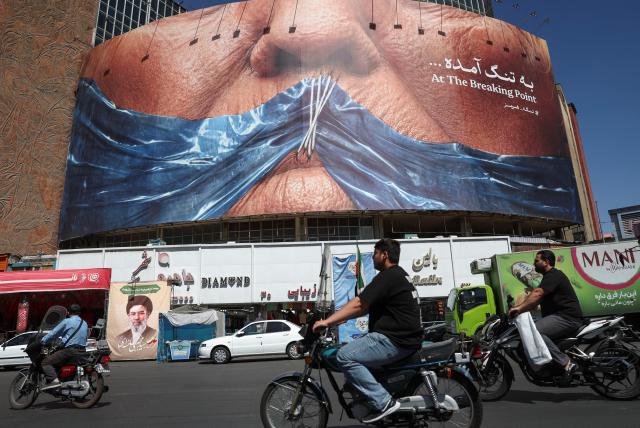
Citizens of Tehran pass by a billboard [Photo: Reuters & Yonhap]
Amir Saeed Iravani, Iran's ambassador to the United Nations, called on President Donald Trump to cease his repeated threats against Iran.
During a high-level open debate of the UN Security Council held at the UN headquarters in New York on June 10, Iravani urged Trump to "refrain from repeated threats against Iran, including the newly raised threat of military action today."
He stated, "The United States has repeatedly pursued failed policies and should have learned that threats and military intimidation are counterproductive. If the U.S. is genuinely interested in a diplomatic resolution, it must abandon the language of fear and engage in dialogue with Iran based on mutual respect, equality of sovereignty, and full compliance with international law."
Iravani emphasized, "The U.S. will bear full responsibility for any consequences arising from illegal actions and the resulting escalation of tensions."
Earlier, Trump told reporters at the White House, "We hit Iran hard yesterday. Today, we will hit Iran even harder."
The open debate was chaired by Gustavo Petro, President of Colombia, which holds the presidency of the Security Council for June. The meeting's theme was 'Enhancing Political Solutions in the Middle East: Mediation and Dialogue for Lasting Peace.'
UN Secretary-General António Guterres also expressed concern during the briefing about the ceasefire situation in the Gulf region. He noted, "As seen in the attacks and the expansion of threats over the past 48 hours, the ceasefire in the Gulf is closer to a lesser-fire than a complete ceasefire," warning that this situation should not be underestimated as it risks escalating into full-scale conflict.
Guterres further stressed, "It is time to seek a new security architecture in the Gulf region based on respect for the sovereignty and territorial integrity of all states, non-interference in internal affairs, and enhanced multilateral cooperation."