
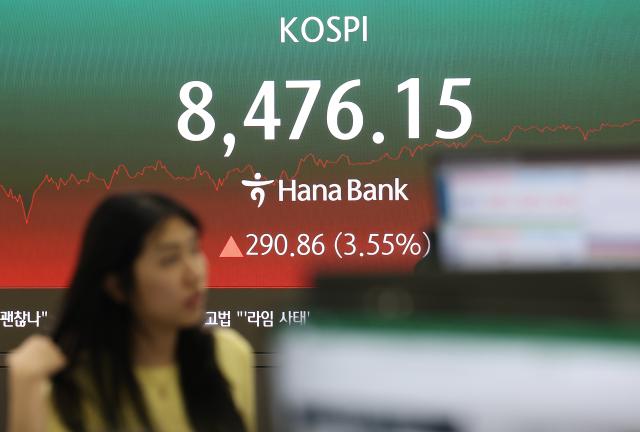
Last month, as the KOSPI soared, demand for stock investments led to a significant increase in household loans from banks.
According to the Bank of Korea's report on financial market trends released on June 11, the balance of household loans from deposit banks, including policy mortgage loans, reached 1,181.8 trillion won at the end of May, an increase of 6.9 trillion won from the previous month.
Household loans rose sharply, particularly in other loans, compared to an increase of 2.1 trillion won in the previous month. The balance of credit loans and other loans stood at 240.2 trillion won. After a decline of 600 billion won in April, this category saw a surge of 3.7 trillion won in May, marking the largest increase since April 2021, when it rose by 11.8 trillion won.
This surge is attributed to a combination of significant individual stock investments and seasonal funding needs during the traditional family month. Park Min-cheol, head of the Bank of Korea's market management team, stated, "While there is typically an increase in funding needs during the family month, this year's rise in May is largely driven by substantial demand for personal stock investment funds."
He added, "In May, foreign investors engaged in large-scale selling for profit-taking and portfolio rebalancing, but individual investors absorbed a significant portion of this selling. It appears that leverage investments using margin loans and bank loans have also increased during this process. However, while investment is a personal decision, it is important to note that if stock prices decline in the future, forced selling could increase market volatility."
Mortgage loans rose by 3.2 trillion won to 940.8 trillion won. While the demand for jeonse loans continued to decline, housing transactions in the mid-to-low price range in the metropolitan area increased, along with a rise in demand for interim payments on previously sold properties. Jeonse loans fell by 600 billion won in May, following decreases of 400 billion won in March and 600 billion won in April.
Corporate funding needs also grew. Last month, the balance of corporate loans from banks increased by 10.6 trillion won to 1,408.3 trillion won. Loans to large corporations rose by 5.2 trillion won to 317.1 trillion won, while loans to small and medium-sized enterprises increased by 5.4 trillion won to 1,091.2 trillion won.
The increase in large corporate loans was driven by ongoing lending activities from banks and the need for working capital to repay corporate bonds, expanding from a previous increase of 5 trillion won. Small and medium-sized enterprise loans continued to grow as banks maintained a trend of expanding corporate credit for productive finance.
Corporate bond issuance faced challenges due to rising interest rates, leading to a net repayment of 1.1 trillion won as companies turned to bank loans and other alternative funding sources. Commercial paper and short-term bonds also shifted from a net issuance of 4.9 trillion won last month to a net repayment of 2.1 trillion won.
Looking ahead, the flow of household loans is expected to change in response to government real estate policies and stock market trends. Park noted, "After the end of the capital gains tax exemption, the government may introduce measures, and there is uncertainty regarding the direction of the housing market. The stock market is also likely to see significant volatility in other loans depending on market conditions."
* This article has been translated by AI.
Copyright ⓒ Aju Press All rights reserved.