
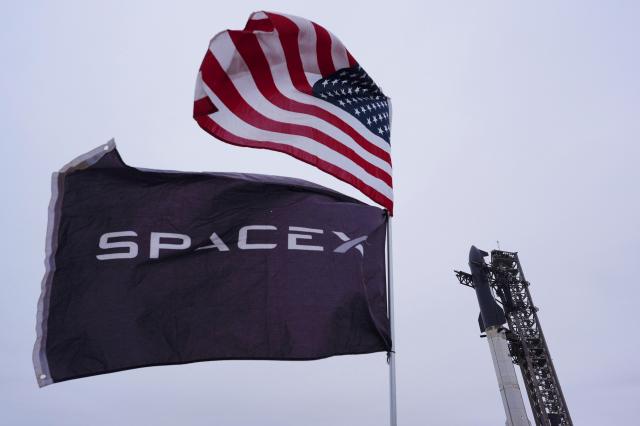
According to Bloomberg News on June 10, demand for SpaceX's IPO has exceeded four times the number of shares available. Underwriters are expected to halt order-taking from institutional investors after the market closes on June 11, New York time.
SpaceX plans to offer 555.6 million shares at $135 each, aiming to raise about $75 billion (approximately 114 trillion won). This would value the company at around $1.8 trillion. The shares are set to trade on the Nasdaq and Nasdaq Texas under the ticker symbol 'SPCX'.
If successful, this IPO would surpass Saudi Aramco's $29.4 billion (approximately 45 trillion won) listing in 2019, making it the largest IPO in history.
However, the valuation has sparked significant controversy. Notable short-seller Jim Chanos criticized the SpaceX IPO as a "hope and dream IPO" during the IConnections conference held in New York on the same day.
He pointed out that SpaceX's valuation of $1.75 trillion is approximately 90 times its revenue of $19 billion (about 29 trillion won), significantly higher than Tesla's valuation of around 14 times its revenue.
Chanos stated, "I do not see how this company can be worth $1.75 trillion under any reasonable assumptions over the next five years." He acknowledged that existing businesses like Starlink could support a valuation in the hundreds of billions, but questioned whether the remaining segments justify a $1.5 trillion valuation.
The Associated Press highlighted concerns regarding SpaceX's losses and debt burden ahead of the IPO, as well as Elon Musk's concentrated voting power and the potential for increased stock volatility due to retail investor participation.
According to AP, SpaceX reported a loss of $4.9 billion last year and recorded a $4.3 billion loss in the first quarter of this year, with debt reaching $29.1 billion as of the end of March.
Additionally, the Class A shares being offered in the IPO carry only one vote per share, while Musk's Class B shares grant him ten votes each, allowing him to maintain control over more than 82% of the voting power post-IPO. Concerns have also been raised that up to 30% of the offering could be allocated to retail investors, potentially leading to significant stock volatility immediately after the listing.
However, analysts suggest that aggressive short-selling may not occur immediately. Reuters reported that while SpaceX is viewed as a logical target for short-selling due to its overvaluation and governance concerns, the recent strong performance of large-cap tech stocks valued over $1 trillion has resulted in significant losses for short-sellers, leading to a more cautious approach.
Gabriel Shahin, CEO of Falcon Wealth Planning, noted that there is considerable interest from bullish investors, including retail investors, labeling SpaceX as an "extremely risky short-selling target." He added that if SpaceX is included in major indices like the Nasdaq 100, it could attract substantial index-tracking funds, which would pose additional challenges for short-sellers. Mark Spiegel of Stanfield Capital Partners indicated that if SpaceX is added to indices like the Nasdaq 100, it could lead to significant inflows of index-tracking funds, while also noting that the costs and difficulties associated with borrowing shares for short-selling would increase immediately after the IPO, with more shares becoming available for borrowing after the lock-up period expires.
* This article has been translated by AI.
Copyright ⓒ Aju Press All rights reserved.