
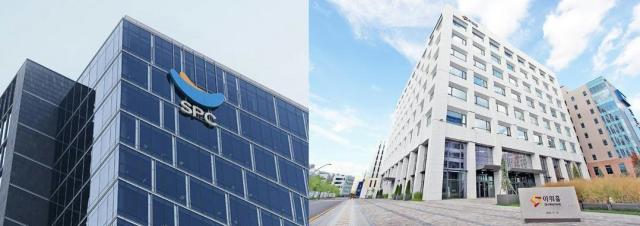
Recent entrapment incidents at SPC Group's subsidiaries, Shani and Auhome, have raised serious concerns about safety management in the food industry. Both facilities have a history of similar accidents, leading to criticism that the companies' promised measures to prevent recurrences are not being implemented effectively.
According to industry sources, on June 10, a Vietnamese migrant worker, identified as A, was injured at the Shani factory in Daegu's Dalseong County when he became trapped in an automatic panning machine. This equipment is designed to automatically align shaped dough on baking trays. A sustained serious injuries to his right arm and was transported to a hospital. Authorities are investigating the circumstances of the accident and potential violations of industrial safety laws.
This is not the first incident at SPC's facilities. In 2022, a worker in his 20s died after becoming trapped in a sauce mixer at the SPL factory in Pyeongtaek. In 2023, a worker in his 50s lost his life in a similar accident involving a dough machine at the Shani factory in Seongnam. Additionally, in May of last year, a worker in his 50s died after becoming trapped in a conveyor belt at the SPC Samlip factory in Siheung. In April of this year, two employees at the same factory suffered finger amputations while performing maintenance and cleaning tasks. Despite President Lee Jae-myung's visit to the Siheung factory last year, where he called for fundamental measures to prevent such accidents, incidents continue to occur.
The Food and Chemical Workers Union issued a statement asserting, "Industrial accidents are recurring at SPC subsidiaries," and emphasized that the recent incident should not be attributed to language barriers or worker negligence. The union is demanding special negotiations with management, joint investigations into accidents, support for affected workers, expanded multilingual safety training, implementation of two-person work teams, and enhanced safety measures for hazardous machinery. They are also calling for thorough investigations and accountability for management from the Ministry of Employment and Labor and the police.
Earlier, on June 8, a worker from a subcontractor at Auhome's second factory in Yongin, Gyeonggi Province, suffered serious injuries after becoming trapped in a conveyor belt while packaging products. The worker was found in cardiac arrest and was transported to a hospital, where he is currently in critical condition.
Auhome's CEO, Kim Tae-won, issued an apology, stating, "We deeply regret that an incident occurred that should never happen in the workplace. We will completely halt operations on the production line where the accident occurred and conduct urgent safety inspections across all facilities."
The issue is compounded by the fact that this factory also has a history of accidents. In April of last year, a worker died after becoming trapped in machinery on the fish cake production line, and in March, a foreign worker's arm was caught in equipment, prompting a police search of the facility.
Industry experts cite aging equipment, excessive operational demands focused on productivity, and inadequate safety training and oversight as chronic issues. Despite the introduction of automated systems, entrapment incidents continue to occur during cleaning, maintenance, and debris removal processes, indicating a need for a complete redesign of work procedures.
Indeed, industrial accidents are on the rise. According to the Ministry of Employment and Labor, 605 workers died from industrial accidents last year, an increase of 16 (2.7%) from the previous year, which recorded 589 fatalities. Falls accounted for the highest number of deaths (249), followed by incidents involving being struck by or caught in objects, with 50 fatalities attributed to entrapment accidents.
Lee Ju-hee, a sociology professor at Ewha Womans University, stated, "Protecting workers' lives and safety is the most fundamental obligation of a company. If a company cannot even fulfill this basic duty repeatedly, society must send a more severe legal and social message about whether such a company deserves to exist."
* This article has been translated by AI.
Copyright ⓒ Aju Press All rights reserved.