
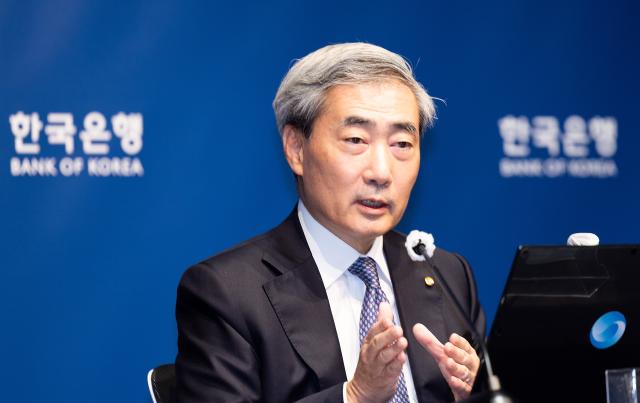
Shin Hyun-sung, the Governor of the Bank of Korea, stated on June 12 that "price pressures are expected to exceed target levels for an extended period," emphasizing the need for a timely interest rate hike.
During the 76th anniversary ceremony of the Bank of Korea held in Jung-gu, Seoul, he noted, "While the government's price stabilization measures will help alleviate upward pressures, the impact of supply shocks is expanding, and demand-side price pressures are also increasing."
He pointed out that the core inflation rate, which had been stable, has risen to the mid-2% range, and living costs, closely related to perceived inflation, are increasing at a rate higher than consumer prices. This situation could influence household expectations of inflation.
Shin acknowledged that monetary policy often faces conflicting variables, but he believes that the current conflicts are not significant. He stressed the importance of prioritizing price stability and implementing interest rate hikes without delay.
He projected that the national economy would continue to grow steadily. "With the semiconductor sector performing well, domestic demand is recovering due to increased tax revenue from nominal GDP growth, income improvement, and expanded investment," he said. However, he cautioned that reliance on the IT sector for growth remains high, highlighting persistent disparities across sectors.
Shin forecasted that exchange rates would gradually stabilize. He explained that a significant current account surplus would increase demand for the won through corporate tax payments and domestic investment. However, he warned that continued high volatility in exchange rates due to developments in the Middle East could exacerbate inflationary pressures through rising import prices.
He also emphasized the need for targeted fiscal policies to support vulnerable groups, stating, "Interest rate hikes will inevitably increase the debt repayment burden for businesses and households. Since monetary policy impacts the market indiscriminately, targeted support for these challenges is most effective through fiscal policy."
Looking ahead, he committed to closely monitoring potential risks in the housing market and household debt from a financial perspective, while continuing collaboration with the government on macroprudential policies. He also mentioned the necessity of easing concentration in the metropolitan area and facilitating the flow of funds into productive sectors, along with enhancing the depth of the foreign exchange market.
Shin underscored the importance of expanding investments to enhance future growth potential based on strengthened fiscal capacity and corporate financial conditions. He stated, "Efforts to alleviate polarization among regions, generations, and social classes must continue," and called for ongoing solutions to accumulated structural issues, including demographic changes.
* This article has been translated by AI.
Copyright ⓒ Aju Press All rights reserved.