
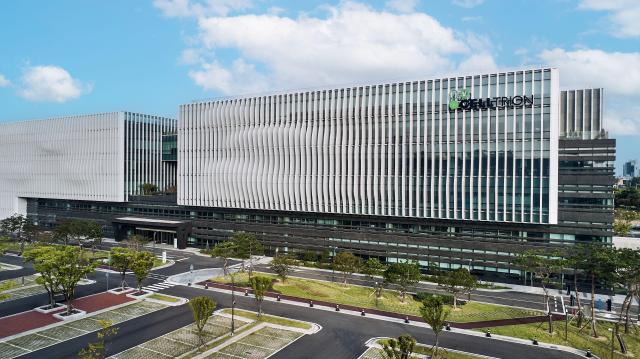
Celltrion has confirmed the innovative efficacy of its next-generation multi-antibody immuno-oncology drug, CT-P72/ABP-102. Notably, the drug demonstrated strong anti-cancer effects in gastric cancer, where existing treatments have lost effectiveness, showcasing its potential as a "best-in-class" therapy.
On June 12, during the "World Dual-Specific Antibody & T-Cell Engager Summit South Korea" held in Seoul, Celltrion unveiled the preclinical research results for CT-P72/ABP-102. The company stated that the drug has shown promise for expanding treatment indications as a therapy for HER2 (human epidermal growth factor receptor 2) overexpressing solid tumors.
In in vitro cytotoxicity tests, CT-P72/ABP-102 exhibited strong anti-cancer effects against HER2 overexpressing tumors, while showing significantly reduced lethality against HER2 low-expressing cells. This indicates a high selective response to cancer cells and suggests that the design successfully minimizes toxicity to normal cells.
Pharmacokinetic (PK) and toxicity tests using primates confirmed excellent tolerability even at high doses of 80 mg/kg. The structural design appears to effectively reduce the risk of chronic side effects associated with immunotherapies, such as cytokine release syndrome (CRS), compared to existing treatments.
In animal experiments involving gastric cancer with acquired resistance to existing therapies, CT-P72/ABP-102 demonstrated a powerful anti-cancer effect that surpassed previous drug efficacy. The drug also showed excellent anti-cancer effects in HER2 overexpressing bladder cancer, cholangiocarcinoma, and breast cancer, suggesting potential for expanding treatment indications.
In breast cancer experiments, the drug's strong anti-cancer effects were confirmed using a microphysiological system (MPS) with organoids, which allows for observing drug responses in an artificial environment similar to that of actual patients. This enhances the reliability of predicting treatment efficacy before administration to patients.
Based on these research results, Celltrion plans to accelerate the clinical development of CT-P72/ABP-102, aiming to overcome the limitations of existing HER2-targeted therapies (such as Enhertu) regarding resistance and tolerability, and to address unmet medical needs with this best-in-class new drug.
CT-P72/ABP-102 is an immuno-oncology drug co-developed by Celltrion and the U.S. biotech firm Abpro Holdings. It is a T-cell engager (TCE) therapy that connects cancer cells expressing HER2 protein with T-cells.
In December of last year, the drug received approval from the U.S. Food and Drug Administration (FDA) for Phase 1 clinical trials and is currently in the patient screening phase for full-scale clinical development. The company plans to apply for FDA fast-track designation within the year.
Celltrion's financial performance also supports the acceleration of new drug development. In the first quarter, the company reported consolidated sales of 1.145 trillion won, a 36% increase compared to the same period last year. Operating profit surged by 115.5% to 321.9 billion won, marking the highest first-quarter performance in the company's history.
The global sales expansion of five high-revenue new biosimilars has driven this performance. Sales from the new product line increased by 67% year-on-year, reaching 581.2 billion won, and for the first time, accounted for over 60% of total product sales.
The outlook for this year's performance is also positive, with the company setting a target of over 5.3 trillion won in annual sales and over 1.8 trillion won in operating profit.
On June 12, during the "World Dual-Specific Antibody & T-Cell Engager Summit South Korea" held in Seoul, Celltrion unveiled the preclinical research results for CT-P72/ABP-102. The company stated that the drug has shown promise for expanding treatment indications as a therapy for HER2 (human epidermal growth factor receptor 2) overexpressing solid tumors.
In in vitro cytotoxicity tests, CT-P72/ABP-102 exhibited strong anti-cancer effects against HER2 overexpressing tumors, while showing significantly reduced lethality against HER2 low-expressing cells. This indicates a high selective response to cancer cells and suggests that the design successfully minimizes toxicity to normal cells.
Pharmacokinetic (PK) and toxicity tests using primates confirmed excellent tolerability even at high doses of 80 mg/kg. The structural design appears to effectively reduce the risk of chronic side effects associated with immunotherapies, such as cytokine release syndrome (CRS), compared to existing treatments.
In animal experiments involving gastric cancer with acquired resistance to existing therapies, CT-P72/ABP-102 demonstrated a powerful anti-cancer effect that surpassed previous drug efficacy. The drug also showed excellent anti-cancer effects in HER2 overexpressing bladder cancer, cholangiocarcinoma, and breast cancer, suggesting potential for expanding treatment indications.
In breast cancer experiments, the drug's strong anti-cancer effects were confirmed using a microphysiological system (MPS) with organoids, which allows for observing drug responses in an artificial environment similar to that of actual patients. This enhances the reliability of predicting treatment efficacy before administration to patients.
Based on these research results, Celltrion plans to accelerate the clinical development of CT-P72/ABP-102, aiming to overcome the limitations of existing HER2-targeted therapies (such as Enhertu) regarding resistance and tolerability, and to address unmet medical needs with this best-in-class new drug.
CT-P72/ABP-102 is an immuno-oncology drug co-developed by Celltrion and the U.S. biotech firm Abpro Holdings. It is a T-cell engager (TCE) therapy that connects cancer cells expressing HER2 protein with T-cells.
In December of last year, the drug received approval from the U.S. Food and Drug Administration (FDA) for Phase 1 clinical trials and is currently in the patient screening phase for full-scale clinical development. The company plans to apply for FDA fast-track designation within the year.
Celltrion's financial performance also supports the acceleration of new drug development. In the first quarter, the company reported consolidated sales of 1.145 trillion won, a 36% increase compared to the same period last year. Operating profit surged by 115.5% to 321.9 billion won, marking the highest first-quarter performance in the company's history.
The global sales expansion of five high-revenue new biosimilars has driven this performance. Sales from the new product line increased by 67% year-on-year, reaching 581.2 billion won, and for the first time, accounted for over 60% of total product sales.
The outlook for this year's performance is also positive, with the company setting a target of over 5.3 trillion won in annual sales and over 1.8 trillion won in operating profit.
* This article has been translated by AI.
Copyright ⓒ Aju Press All rights reserved.