
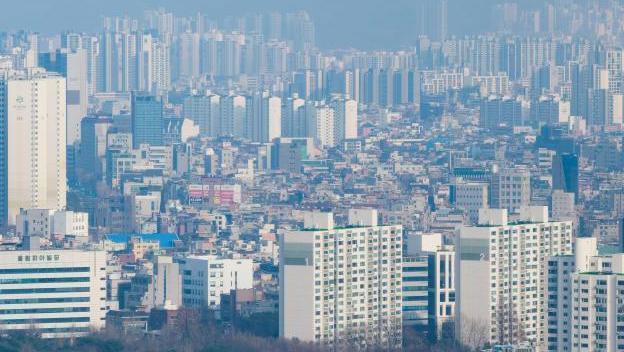
Apartment prices in Seoul continue to rise, but transaction activity is cooling. While reconstruction and redevelopment areas and regions near the semiconductor industrial belt are showing strength, high-end districts in Gangnam are experiencing a wait-and-see attitude, causing the proportion of record transactions in the metropolitan area to drop below 10% for the first time this year. In the new sales market, the average price for standard apartments in Seoul has surpassed 2.1 billion won, increasing the financial burden on buyers.
According to the Korea Real Estate Agency's weekly apartment price trends released on June 11, the average sale price of apartments in Seoul rose by 0.27% compared to the previous week, an increase of 0.02 percentage points from the prior week's growth of 0.25%.
In Seoul, districts such as Dongdaemun (0.39%), Dobong (0.39%), and Seongbuk (0.35%) showed strong price increases, while in Gangnam, districts like Gangseo (0.42%), Guro (0.40%), and Songpa (0.33%) also saw rises. In contrast, Gangnam (0.25%) and Seocho (0.20%) experienced more limited increases.
In Gyeonggi Province, prices rose by 0.20%, a significant increase from the previous week's 0.12%. Notably, Dongtan in Hwaseong surged by 1.98%, leading the price rise in the province. Other areas such as Bundang (0.62%), Jungwon (0.48%), and Guri (0.33%) also reported increases.
The rental market remains strong as well. Apartment rental prices in Seoul increased by 0.32%, with a cumulative rise of 4.11% this year, significantly higher than the 0.73% increase during the same period last year.
However, the transaction market appears to be slowing down. According to an analysis by Zigbang on June 8 of actual transaction data from the Ministry of Land, Infrastructure and Transport, the proportion of record transactions for apartments in the metropolitan area fell to 9.7% in May, dropping below 10% for the first time this year. This decline is attributed to the expansion of land transaction permit zones and stricter lending regulations, which have dampened buyer sentiment.
The wait-and-see attitude is particularly pronounced in Gangnam. The proportion of record transactions in Gangnam dropped to 19.3%, a decrease of 31.1 percentage points compared to the same period last year, with Seocho and Yongsan also experiencing declines. Conversely, districts like Yeongdeungpo (41.2%), Dongjak (35.3%), and Dongdaemun (31.8%) saw significant increases in record transaction proportions.
In Gyeonggi Province, Guri and Suji in Yongin also reported rising proportions of record transactions, while Dongtan recorded a 12.0% share, marking six consecutive months of increases.
In the new sales market, the financial burden is growing. On June 8, Realhouse, a private apartment evaluation firm, announced that the average sale price for private apartments in Seoul with a size of 84 square meters reached 213.6 million won last month, surpassing 210 million won for the first time in history.
This increase is attributed to high-priced complexes like 'Summit The Hill' and 'Acro River Sky' that were launched in Dongjak last month, with sale prices for 84 square meters set at around 290 million won and 270 million won, respectively.
Industry experts note that while transactions in Gangnam are slowing, areas focused on reconstruction and the semiconductor industrial belt continue to see demand. Additionally, the rapid rise in new sale prices is exacerbating the regional and price-based polarization in the metropolitan real estate market.
Meanwhile, the auction market is seeing concentrated demand for mid-priced properties below 1.5 billion won in the outskirts of Seoul and Gyeonggi Province. According to a report released on June 10 by Gigi Auction, a data firm specializing in auctions, the successful bid rate for Seoul apartments in May was 100.8%, up 0.3 percentage points from the previous month’s 100.5%. This indicates that there were numerous cases where properties sold for prices exceeding their appraised values.
However, the bid rate fell to 40.0%, down from 48.7% the previous month. While the high-end apartment market is experiencing a wait-and-see attitude, demand is shifting toward mid-priced properties and those with development potential, indicating a selective investment trend in the auction market.
* This article has been translated by AI.
Copyright ⓒ Aju Press All rights reserved.