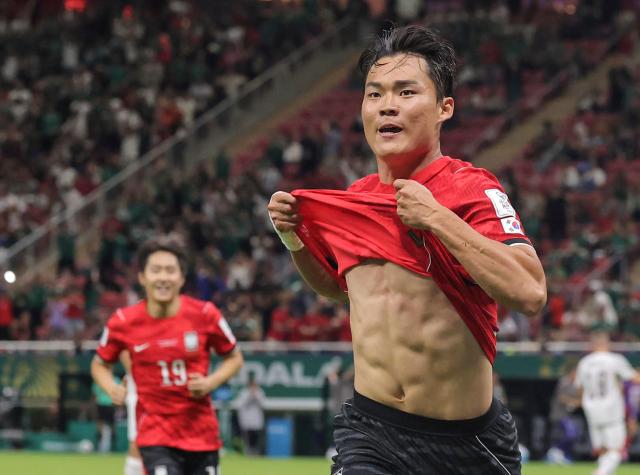
It also brought a reality check.
The 2-1 comeback in Guadalajara showed Hong Myung-bo's side possesses the resilience and attacking quality to survive difficult moments. The next match against Mexico will reveal whether it can thrive against a team many expect to challenge for top spot in Group A.
Both nations opened their World Cup campaigns with victories on Thursday. Korea recovered from a goal down to defeat Czechia, while Mexico dispatched South Africa 2-0 with the efficiency expected of a host nation playing before a partisan crowd.
The reward is an early heavyweight clash.
When the teams meet at Guadalajara Stadium on June 18 local time (10 a.m. KST on June 19), the winner will take a commanding position in the group and move within touching distance of the knockout stage.
For Korea, the Czechia match provided a blueprint as well as a warning.
Hong's side struggled whenever the game became physical. Czechia's aerial threat, long throw-ins and set pieces repeatedly tested a Korean defense that looked uncomfortable when forced into direct confrontations. Ladislav Krejci's opening goal, arriving from a long throw and a powerful header, exposed a vulnerability that stronger opponents will have noted.
Yet Korea's response revealed its greatest strength.
Rather than matching Czechia's physicality, Korea accelerated the game. Hwang In-beom's equalizer came from a penetrating run and quick combination play. Oh Hyeon-gyu's winner followed another swift attacking move, with Korea exploiting space before Czechia could reorganize.
The lesson was clear: Korea is at its most dangerous when the ball moves quickly and defenders are forced to turn and chase.
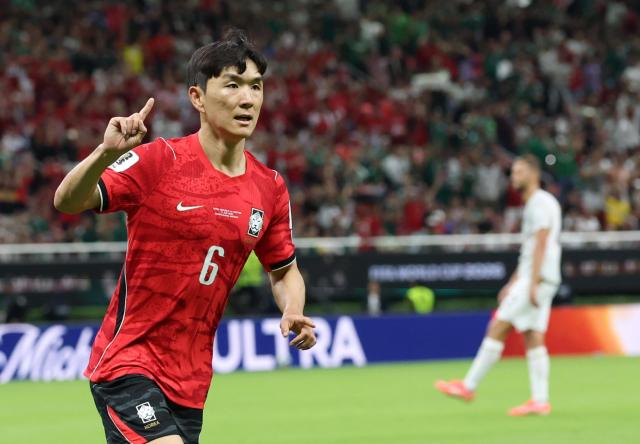
Where Czechia sought to dominate through size and aerial pressure, Mexico prefers to control territory, possession and tempo. Against South Africa, the hosts looked comfortable dictating where the game was played, stretching the field through wide areas before striking at decisive moments.
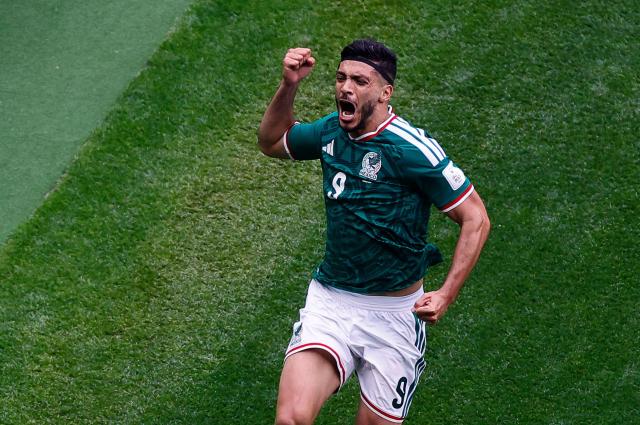
Julian Quinones opened the scoring after a South African error, and Raul Jimenez sealed the victory with a trademark header. It was not a spectacular performance, but it was a professional one — the kind often associated with teams that expect to advance deep into tournaments.
For Korea, that changes the defensive equation.
The concern is no longer long throw-ins arriving every few minutes. Instead, it is Mexico's ability to pin opponents back, circulate possession and create overloads in wide areas. Jimenez remains a dangerous target in the penalty area, but the greater threat may come from the movement around him.
There is, however, an opening.
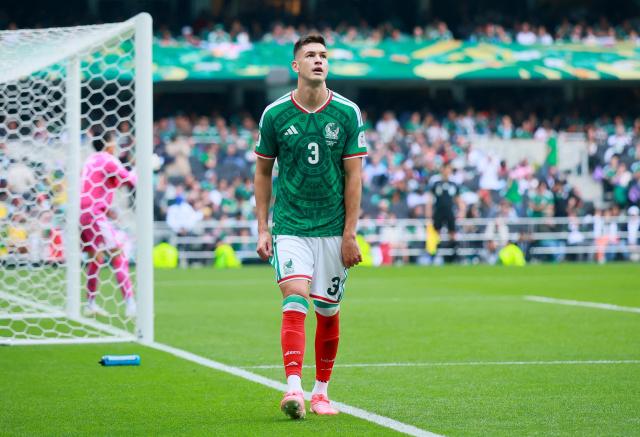
Mexico will be without central defender Cesar Montes after his late red card against South Africa. Montes is one of the side's defensive leaders and an important presence in both penalty areas. His absence forces coach Javier Aguirre to reshuffle a back line that looked settled in the opening match.
Should defensive midfielder Edson Alvarez drop into central defense, Mexico would retain experience and physicality but potentially lose some authority in midfield.
That is precisely where Korea's most influential players operate.
Lee Kang-in's creativity between the lines, Hwang In-beom's late runs and Lee Jae-sung's intelligent movement could become increasingly important if Mexico's midfield structure is altered. Son Heung-min, meanwhile, will relish any opportunity to attack space behind an unfamiliar defensive partnership.
A compact mid-block would help Korea remain organized and invite opportunities to counterattack through Son, Hwang and Lee Kang-in. Yet surrendering territory to Mexico carries obvious risks, particularly against a side comfortable building pressure over long stretches.
An open game, on the other hand, could favor Korea's pace and movement but would expose a defense that occasionally looked vulnerable against Czechia.
The balance between those two approaches may decide the match.
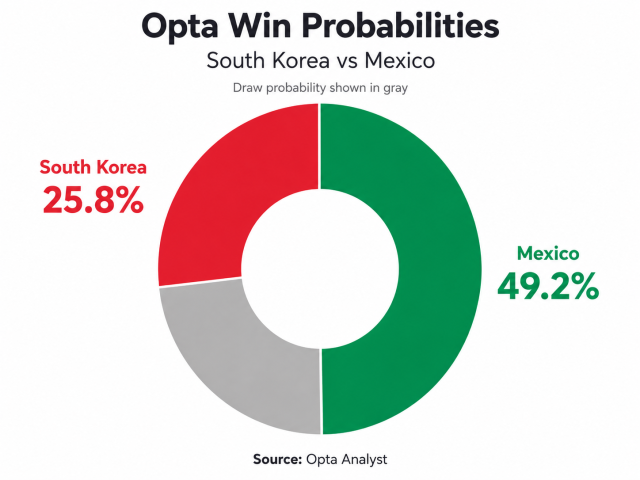
History suggests Mexico should be favored. The hosts are playing in familiar conditions, backed by enormous support and carrying greater tournament expectations. Opta gives Mexico a 49.2 percent chance of victory, compared with Korea's 25.8 percent.
Korea arrives with momentum, confidence and the knowledge that it has already overcome adversity once in Guadalajara. Against Czechia, it showed character. Against Mexico, it will discover how far that character can take it.
By Friday morning in Seoul, Group A may look very different.

Copyright ⓒ Aju Press All rights reserved.