
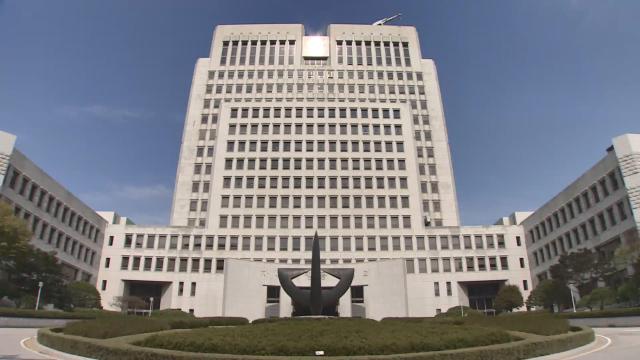
The Supreme Court has acknowledged DNA evidence submitted two and a half years after a rape incident, overturning a previous conviction.
On June 14, legal sources reported that the Supreme Court's first division, led by Justice Cheon Dae-yeop, annulled the second trial's guilty verdict against an individual identified as A, and ordered the Gwangju High Court to re-examine the case.
The case stems from a rape incident that occurred in August 2021, where A was accused of assaulting B in his vehicle. However, the first and second trials reached entirely different conclusions.
Initially, the first trial acquitted A, stating, "The prosecution did not prove beyond reasonable doubt that A assaulted B," and pointed out a lack of evidence.
In contrast, the second trial found A guilty, citing DNA evidence from the pants worn by the victim at the time of the assault, which matched A's DNA. The court also noted signs of damage to the pants, which were attributed to B's struggle during the incident.
However, the Supreme Court reversed the second trial's guilty verdict, emphasizing that the pants, which were crucial evidence, were submitted to authorities over two years after the incident, in January 2024.
The court stated, "Scientific evidence must be based on facts that are proven to be true, and the method of inference must be scientifically valid, with error possibilities being negligible or dismissed entirely for it to hold significant weight in fact-finding."
This highlights the lack of investigation into whether the pants were tampered with or damaged during the long period they were kept by the victim, as well as the circumstances surrounding the late submission of evidence.
Additionally, the Supreme Court noted that DNA from an unidentified third party was also found on the pants, raising concerns about contamination or alteration of the evidence.
The court also criticized the second trial's reasoning, stating that for it to overturn the first trial's findings, there must be clear evidence that the first trial's assessment of the evidence was fundamentally flawed or that new objective reasons emerged during the appeal process that could influence the formation of the court's opinion.
* This article has been translated by AI.
Copyright ⓒ Aju Press All rights reserved.