
Last month, supercar giant Ferrari unveiled its first all-electric vehicle, the 'Luce.' Despite a performance that included a symbolic gesture of driving Pope Leo XIV in the driver's seat and presenting the steering wheel as a gift, public reception was lukewarm. While the electrification of the automotive market is an unavoidable trend, many critics argue that it is "no longer Ferrari-like." The brand's identity, built over decades, is now in question.
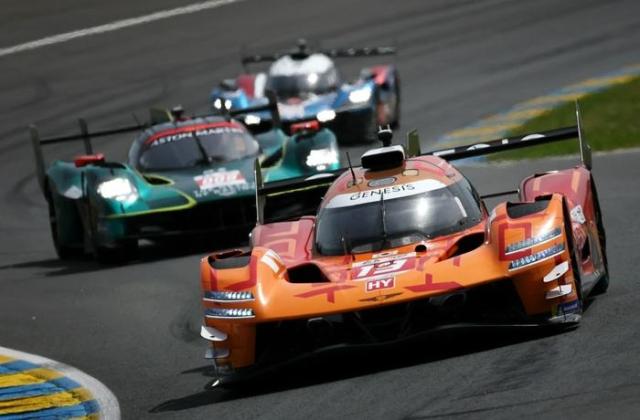
On June 14, at the Circuit de la Sarthe in France, the Genesis Magma Racing Team's car No. 19 crossed the finish line in 13th place overall in the hypercar class of the '2026 24 Hours of Le Mans' race. This marked the debut performance of Hyundai's Genesis at one of the world's most prestigious racing events.
The team surprised competitors by placing both of its race cars in the top 10 during qualifying. Despite the pressure of their first appearance, they achieved a stable finish, breaking the preconceived notion that "Hyundai cannot compete." While they were far from winning, their performance was sufficient to signal the start of a new chapter in motorsports.
Both cases raise an important question for the industry: What is legacy?
Companies view legacy as an asset. Long-standing history, technological prowess, brand value, and customer trust are competitive advantages that cannot be easily replicated. However, the narrative changes when technological paradigms shift.
With the advent of the smartphone era, Nokia and BlackBerry fell from grace. The emergence of digital cameras led Kodak to fade into obscurity. The age of artificial intelligence (AI) is accelerating the pace of such changes. Generative AI, robotics, autonomous driving, and physical AI are rewriting the industrial order.
South Korea's economy is no exception. Recently, the symbol of our industrial competitiveness has undoubtedly been memory semiconductors. Samsung Electronics and SK Hynix are regarded as the biggest beneficiaries in the AI era. In particular, high-bandwidth memory (HBM) has become a key component in the AI semiconductor race, elevating the status of the Korean semiconductor industry.
Today's competitiveness was not built overnight. It is the result of bold investments and research and development that have spanned since the 1980s, along with enduring numerous failures. At that time, the global market was dominated by Japanese companies. South Korean firms were latecomers but did not give up. The technological and production capabilities accumulated over more than 40 years have ultimately changed the landscape of the global memory market.
Legacy is not eternal.
China is aggressively pursuing semiconductor self-sufficiency with vast financial resources. The United States is leading supply chain restructuring with AI semiconductor dominance as a weapon. Competition in the HBM market is becoming increasingly fierce. The AI supercycle presents both an opportunity and a crisis for the Korean semiconductor industry.
The challenges faced by Ferrari and the ambitions of Genesis ultimately converge on the same question. If one cannot adapt to change, legacy becomes a heavy burden that cannot be easily set aside. Conversely, if new value is created amid change, legacy can serve as a powerful competitive advantage.
The Korean industry also stands at a crossroads. The industrial assets accumulated over decades in semiconductors, automobiles, and shipbuilding are invaluable. However, merely preserving them will not ensure survival. New successes must be forged in emerging areas such as AI, robotics, and future mobility.
Legacy is not a relic to be stored in a museum, defined by past glories. It is a value that shines when connected to the future through continuous innovation.
* This article has been translated by AI.
Copyright ⓒ Aju Press All rights reserved.