
On June 15, 2026, the United States and Iran declared an end to a 106-day war. On the surface, it appeared to be a victory for the U.S., given its status as the world's strongest military power and Iran's long-standing economic sanctions. The U.S. deployed aircraft carrier strike groups, stealth fighters, satellites, and AI-based intelligence systems, while Israel contributed its formidable military capabilities in the region. In contrast, Iran had been under severe economic sanctions and international isolation. However, history is not always explained by numbers alone. Wars are not solely determined by weaponry; a nation's history, culture, religion, spirit, and collective memory often shape the outcome. This was true in the Vietnam War, the Afghanistan War, and the Iraq War, and it holds for the current conflict with Iran as well.
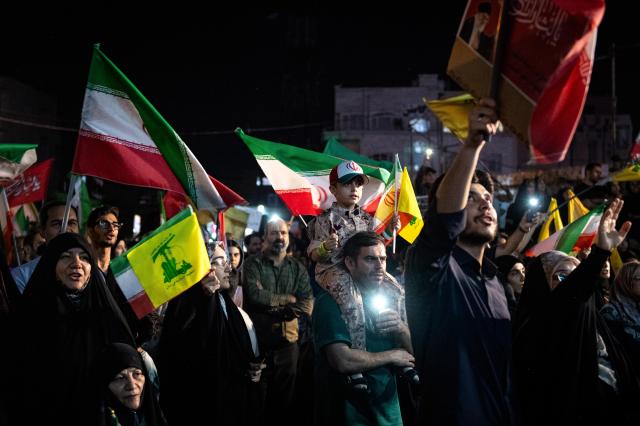
The first realization when observing this war is that the U.S. did not fully understand Iran. The U.S. viewed Iran as a theocratic state that emerged after the 1979 Islamic Revolution. However, Iran is more than just a theocracy; it is Persia, one of the oldest and most resilient civilizations in human history. The U.S. is a relatively young nation, founded 250 years ago, while Iran has a civilization that has thrived for 5,000 years alongside Mesopotamian culture. The U.S. possesses the power to dominate the world, but Iran has the experience of witnessing the rise and fall of numerous empires over millennia. The current war can be seen as a clash between a modern superpower and an ancient civilization.
To understand Iran's roots, one must grasp the significance of Cyrus the Great. Emerging in the 6th century B.C., Cyrus II was not merely a conqueror; he unified Media and Lydia and conquered Babylon, establishing the Achaemenid Persian Empire. For Americans, George Washington is the founding father; for Iranians, Cyrus the Great is the nation's founder and architect of civilization. His legacy as a great monarch is defined not by military might but by tolerance. He allowed the Jewish people, held captive in Babylon, to return and supported the rebuilding of the Jerusalem Temple. As a result, Jews still remember him as a liberator, and he is regarded as a special monarch in the Old Testament.
While most empires suppressed the religions of conquered peoples and destroyed their cultures, Persia took a different approach. It recognized the religions and traditions of various ethnic groups. The 'Cyrus Cylinder,' considered one of the earliest declarations of human rights, reflects this governance philosophy. This is why Iranians see themselves not merely as a state but as a civilization-building nation. The U.S. believed it was facing military power in this war, but it was actually confronting a civilization's pride built over thousands of years.
Another historical trait of Persia is its resilience. While Rome symbolizes Western civilization, it could not conquer Persia. The rivalry between Persia and Rome lasted nearly 700 years through the Parthian and Sassanian dynasties. Roman general Crassus suffered a crushing defeat at the Battle of Carrhae, and although Emperor Trajan occupied Mesopotamia, he could not maintain control. Later, the Eastern Roman Empire and Sassanian Persia also faced off for centuries, with no clear victor. However, the crucial fact is that Persia survived. In the collective unconscious of modern Iranians lies a historical pride: 'If Rome could not conquer us, can the U.S. do so?'
Persia's strength was not solely military; commerce and diplomacy were also significant assets. Goods such as silk and paper from China's Chang'an, spices and jewels from India, and gold and silver from Rome all passed through Persia. The Silk Road was not just a trade route but a vital artery for cultural exchange. Persian merchants learned languages, understood cultures, and connected Eastern and Western civilizations. Today, while Iranian diplomacy may appear hardline, it is grounded in a pragmatic approach to negotiations. They prioritize calculation over emotion, having learned through thousands of years of history that even wars must ultimately conclude with negotiations.
The biggest mistake the U.S. made in this war was viewing Iran solely as it exists today. The U.S. saw Iran as a nation formed after the 1979 revolution, but Iran existed before the revolution and will continue to exist after it. The U.S. perceived Iran as a religious state, but it is, first and foremost, a civilization. The U.S. regarded Iran as a regional power in the Middle East, while Iran sees itself as the heir to Persian civilization. This difference is more significant than it may seem. States can be defeated, and regimes can collapse, but civilizations do not easily vanish. Alexander the Great passed, the Arab Empire faded, and the Mongol Empire declined. Britain and Russia have also come and gone. Yet Persia remains.
The 106-day war has ended. However, the conclusion of the war does not mean that everything is over. In fact, the real questions begin now. What has made Iran so resilient? Why has this country not collapsed despite numerous invasions, sanctions, wars, and revolutions? The answer lies not simply in military or economic power. It is found in the flames of Zoroastrianism, the martyrdom spirit of Shia Islam, and the unique national system created by the 1979 revolution.
The U.S. saw missiles, but Iran saw history. The U.S. thought in four-year election cycles, while Iran thought in terms of centuries of civilization. That difference was the essence of this war.
While the war has ended, Persia endures—as the land of Cyrus the Great, the nation that stood against Rome, the civilization that dominated the Silk Road, and a civilization that will not easily fade away.
* This article has been translated by AI.
Copyright ⓒ Aju Press All rights reserved.